


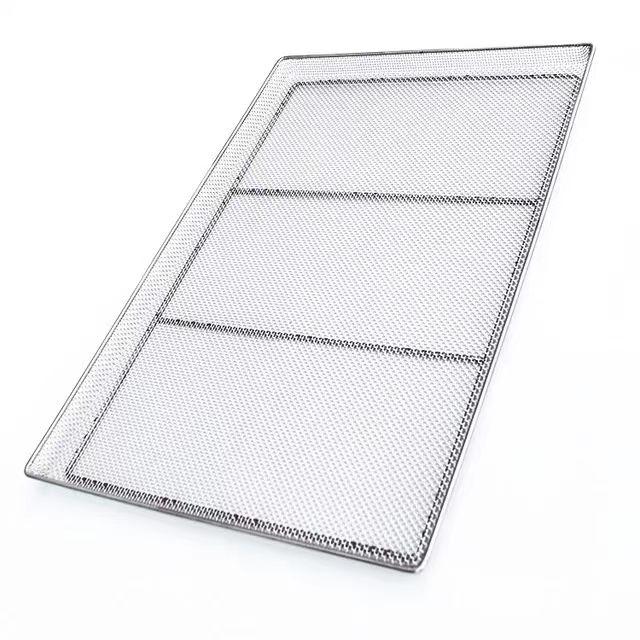
304 Stainless Steel Tray Sourcing Guide for Industrial Buyers
Product Introduction
In industrial procurement, a 304 stainless steel tray is rarely just a metal sheet with raised edges. It is a process-critical component used to move, dry, cool, store, or protect products across continuous production environments. For importers, distributors, and industrial buyers, the specification of this tray directly affects line efficiency, hygiene compliance, and long-term maintenance costs. This tray is typically fabricated from 304-grade stainless steel and formed into a rigid, cleanable platform for food contact, pharmaceutical handling, and general manufacturing use. Unlike consumer-grade trays, industrial trays must withstand repeated washing, chemical exposure, high-frequency handling, and consistent load cycles. A poorly specified tray can deform under load, trap moisture, or fail hygiene audits. A well-engineered tray becomes a durable asset that supports production reliability. From a manufacturer's perspective, the 304 stainless steel tray is designed for environments where hygiene, load stability, and long-term operation reliability are critical. Buyers sourcing this product need to evaluate material grade, forming method, weld quality, surface finish, and dimensional tolerance—not simply compare unit prices. This guide covers the engineering and purchasing considerations that matter in real B2B sourcing decisions.
Product Features and Engineering Advantages
Industrial trays are subjected to repeated lifting, stacking, washing, and transport. Their structural design must address these forces without adding unnecessary weight. A typical 304 stainless steel tray for industrial use features a reinforced frame or hemmed edge that improves load stability during repeated transportation and high-frequency industrial handling. Corner welds are often ground and polished to eliminate crevices where bacteria or cleaning agents can accumulate. The tray bottom may be flat, perforated, or mesh-based depending on drainage and airflow requirements.
Manufacturing details matter. Laser cutting or stamping ensures consistent dimensions, while press-brake forming creates uniform bends that fit standard racking systems. For mesh and perforated trays, wire diameter and mesh opening are controlled to balance load capacity with drainage or air circulation. Surface treatment—such as pickling and passivation—removes heat tint and restores the chromium oxide layer, improving corrosion resistance after welding.
Key engineering advantages include:
- High corrosion resistance for food contact and wet cleaning environments
- Easy cleaning surface with smooth, crevice-free welds
- Stable load capacity through reinforced frames and controlled material thickness
- Custom manufacturing options for non-standard equipment dimensions
- Stackability and compatibility with existing racks and trolleys
These features matter in procurement because they reduce replacement frequency, minimize product damage, and support audit compliance. A tray that deforms after weeks of use creates downtime and rework costs that far exceed the initial price difference.
Application Scenarios
Industrial buyers specify 304 stainless steel trays across multiple sectors, each with distinct requirements.
Food processing: Trays are used for receiving, blanching, cooling, and transporting raw and cooked products. 304 stainless steel provides reliable corrosion resistance for food contact applications and daily industrial cleaning environments. Perforated or mesh designs allow water and steam to drain, supporting hygiene and process efficiency.
Bakery and commercial baking: Trays carry dough, pastries, and baked goods through proofing, baking, and cooling. They must resist thermal cycling and sugar or fat residue while maintaining flatness for consistent product shape.
Industrial manufacturing: Trays hold small parts during degreasing, coating, drying, and assembly. Mesh trays are common for parts washing because they allow fluid passage and rapid drainage.
Drying processes: A stainless steel drying tray supports airflow and moisture removal in oven, tunnel, and ambient drying systems. Mesh openings are selected based on product size and air velocity.
Cleaning and sanitizing: Trays hold components during ultrasonic cleaning, CIP support, and sanitizing cycles. Smooth surfaces and welded construction prevent residue buildup.
Storage and transportation: Stackable trays improve warehouse density and protect products during internal logistics. Reinforced corners reduce damage during forklift and pallet handling.
Pharmaceutical and laboratory: Trays are used for glassware handling, sample drying, and cleanroom transfer. Dimensional accuracy and surface finish are critical.
In each scenario, the tray is selected because it solves a specific production problem—drainage, airflow, load stability, hygiene, or compatibility with automated handling equipment.
Material Options and Manufacturing Details
Material selection is a central procurement decision. The following grades are commonly available:
- 304 stainless steel: Provides reliable corrosion resistance for food contact applications and daily industrial cleaning environments. Suitable for most food processing, bakery, and general manufacturing applications.
- 316 stainless steel: Offers higher resistance to chlorides and aggressive chemicals. Used in pharmaceutical, marine, and high-salt food environments where 304 may show pitting over time.
- 201 stainless steel: Lower-cost alternative with reduced corrosion resistance. Sometimes used for dry storage or light-duty applications where cost pressure is high, but not recommended for wet or food-contact environments.
- Aluminum: Lightweight and cost-effective for dry handling and some baking applications, but lower corrosion resistance and not suitable for aggressive cleaning chemicals.
Manufacturing details also vary. Trays can be fabricated by welding, riveting, or stamping. Welded construction provides stronger joints but requires post-weld cleaning. Stamped trays offer consistent geometry for high-volume runs. Surface finishes range from mill finish to brushed or polished, with pickling and passivation recommended for welded 304 trays. For buyers, the key is to match material and finish to the actual cleaning chemistry, operating temperature, and hygiene standard—not simply select the lowest-cost grade.
Specifications and Technical Parameters
Procurement teams should confirm the following parameters before issuing a purchase order:
- Size: Length, width, and height, including flange or stacking dimensions. Available sizes can be customized according to equipment dimensions and production requirements.
- Thickness: Common range is 0.8 mm to 2.0 mm for sheet trays, depending on load and handling frequency.
- Load capacity: Static and dynamic load ratings should be confirmed for the intended stacking and transport method.
- Mesh opening and wire diameter: For mesh trays, specify opening size and wire diameter to balance drainage, airflow, and load support.
- Layers and compatibility: Confirm compatibility with existing racks, trolleys, and automated handling systems.
- Surface treatment: Specify pickled, passivated, brushed, or polished finish.
- Production tolerance: Dimensional tolerances should be agreed in writing, especially for automated lines.
Where exact parameters are not yet fixed, buyers should provide product samples, equipment drawings, and operating conditions so the manufacturer can recommend a specification.
Custom OEM Manufacturing Service
For buyers requiring non-standard trays, an experienced OEM stainless steel tray manufacturer can support the full development process. Services typically include custom size and design, material selection, logo marking, special packaging, prototype development, and bulk production. Prototypes allow buyers to verify fit, load performance, and cleaning before committing to volume orders.
Documentation is equally important. Manufacturers should provide material certificates, dimensional inspection reports, and surface finish records. Packaging must protect edges and surfaces during ocean freight and internal distribution. For custom requirements, please contact our team to discuss drawings, samples, and target volumes.
Purchasing Guide for Industrial Buyers
Buyers evaluating an industrial mesh tray supplier or sheet tray manufacturer should follow a structured process:
- Confirm working environment: Identify cleaning chemicals, temperature range, and hygiene standard.
- Check material requirements: Select 304, 316, 201, or aluminum based on corrosion exposure and budget.
- Verify equipment compatibility: Confirm dimensions, stacking, and handling interface with existing racks and trolleys.
- Evaluate supplier production capacity: Review forming, welding, surface treatment, and quality control capabilities.
- Assess export experience: Confirm packaging standards, documentation, and delivery reliability for international orders.
- Review quality control: Request inspection reports and sample verification before bulk production.
For bulk procurement, buyers should clarify lead times, minimum order quantities, and warranty terms. A supplier with in-house cutting, forming, welding, and passivation can control quality more consistently than a trading intermediary. Site audits or video inspections are recommended for first orders.
常见问题
What stainless steel grade is recommended for food processing applications?
304 stainless steel is the standard choice for most food processing trays because it offers reliable corrosion resistance and cleanability. For high-chloride or aggressive chemical environments, 316 stainless steel may be specified. Buyers should confirm the cleaning chemistry and hygiene standard before finalizing the grade.
Can the tray size be customized?
Yes. Most industrial tray manufacturers offer custom sizes based on equipment dimensions, rack systems, and production requirements. Buyers should provide drawings or samples, along with tolerance requirements, before quotation.
Do you provide OEM manufacturing service?
Yes. OEM services typically include custom design, material selection, logo marking, special packaging, prototype development, and bulk production. Buyers should discuss target volumes and documentation requirements early in the process.
What information should buyers provide before quotation?
Buyers should provide dimensions, material grade, surface finish, load requirements, operating environment, quantity, and packaging needs. Drawings or samples help manufacturers quote accurately and avoid specification errors.
How do you control product quality?
Quality control should include incoming material inspection, dimensional checks during production, weld and surface inspection, and final pre-shipment inspection. Material certificates and inspection reports should be available for each order.
What is the typical lead time for bulk orders?
Lead time depends on customization, quantity, and surface treatment requirements. Buyers should confirm production schedules and shipping terms in the purchase agreement, and allow buffer time for international freight.
How should trays be packaged for export?
Packaging should protect edges and surfaces from scratches and deformation. Common methods include edge protectors, shrink wrap, and reinforced cartons or pallets. Buyers should specify packaging requirements before shipment.

