


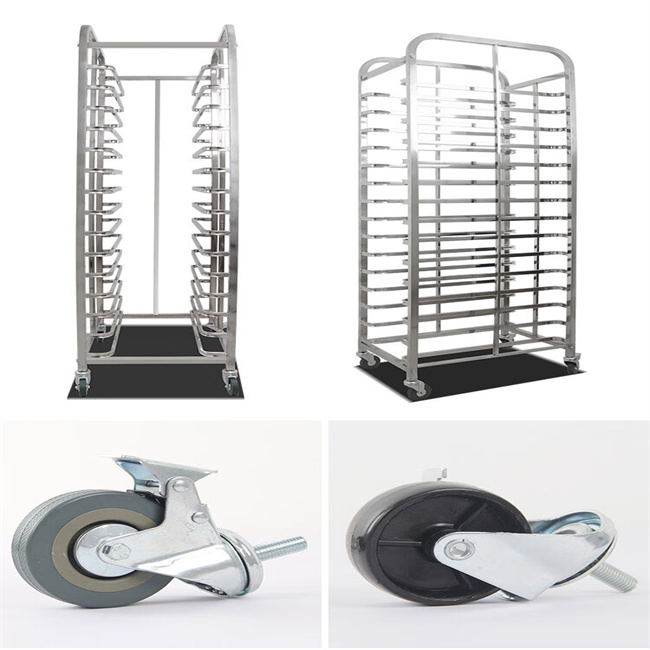
316 Stainless Steel Food Trolley: The B2B Buyer's Guide to Material Selection, Customization, and Supplier Vetting
Product Introduction: What a 316 Stainless Steel Food Trolley Is and Why It Matters
When you're sourcing equipment for food processing, bakery, or pharmaceutical production, a 316 stainless steel food trolley is often the difference between smooth operations and costly downtime. Unlike standard utility carts, these trolleys are engineered to withstand aggressive cleaning agents, high-moisture environments, and heavy daily loads while maintaining strict hygiene standards.
At its core, a 316 stainless steel food trolley is a mobile platform—typically with shelves, racks, or solid trays—designed to transport ingredients, finished products, or tools across a facility. The choice of 316 stainless steel (vs. 304 or 201) is deliberate: it resists pitting corrosion from chlorides, making it suitable for meat processing, seafood handling, and dairy operations where salt and sanitizers are common.
From a procurement perspective, the trolley solves three problems: cross-contamination risk (smooth, non-porous surfaces), labor efficiency (ergonomic handles, smooth-rolling casters), and regulatory compliance (NSF, FDA, and EU hygiene standards). If your facility runs high-volume production with frequent washdowns, a 316-grade trolley is not a luxury—it's a necessity.
Product Features: Design, Material, and Performance Details That Matter in Industrial Use
Industrial buyers don't need marketing fluff; they need to know why a design holds up under repeated stress. Here's what separates a heavy-duty 316 stainless steel trolley from a generic cart:
- Reinforced frame structure: The tubular frame is typically 25mm to 32mm in diameter with wall thickness of 1.2mm to 1.5mm. This improves load stability during repeated transportation and industrial handling—even when the trolley is fully loaded and pushed over uneven floors.
- 316 stainless steel construction: Contains 2-3% molybdenum, which provides superior resistance to chlorides and acids. This is critical in food environments where lactic acid, salt, and bleach-based sanitizers are used daily.
- Welded vs. bolted joints: Fully welded joints eliminate crevices where bacteria can harbor. Bolted designs are easier to replace parts but require regular torque checks in high-vibration environments.
- Caster selection: Industrial-grade casters (typically 100mm to 150mm diameter) with polyurethane or nylon wheels and stainless steel brackets. Look for load ratings of at least 150kg per caster to handle dynamic forces.
- Surface finish: A 2B or No.4 brushed finish is standard. For pharmaceutical or dairy applications, an electrophished finish (Ra ≤ 0.8µm) reduces bacterial adhesion.
From a performance standpoint, the trolley should be tested for load capacity (typically 200kg to 500kg), temperature range (from -40°C to 120°C for freezer-to-oven applications), and chemical resistance (tested against common sanitizers like peracetic acid and quaternary ammonium).
Application Scenarios: Where 316 Stainless Steel Trolleys Deliver ROI
Different industries have unique challenges. Here's how a 316 stainless steel food trolley performs across key sectors:
- Food Processing: In meat and poultry plants, trolleys move raw materials from receiving to deboning lines. The 316 grade resists blood, fat, and salt-based brines. A typical configuration uses three shelves with a 100mm lip to contain liquids.
- Bakery: Bakeries use trolleys for proofing, baking, and cooling. 316 stainless steel withstands the steam and heat of proofing cabinets (up to 100°C) and the sugar and yeast residues that corrode lesser grades.
- Industrial Manufacturing: In electronics or automotive parts cleaning, trolleys carry components through aqueous wash cycles. 316 resists detergents and deionized water.
- Cleaning and Sanitation: Janitorial teams use trolleys to transport chemicals, mops, and waste. 316 is resistant to bleach and caustic soda.
- Drying and Storage: In drying rooms, trolleys hold trays of herbs, spices, or pet food. The open design promotes airflow; 316 prevents rust from humidity.
- Transportation: Between buildings or across loading docks, trolleys with pneumatic casters handle rough surfaces. 316 ensures the frame doesn't corrode from rain or snow.
In each case, the ROI comes from reduced replacement frequency. A 201 stainless trolley might last 6–12 months in a chloride-rich environment; a 316 trolley can last 5–10 years with proper maintenance.
Material Comparison: 304 vs. 316 vs. 201 vs. Aluminum
Choosing the wrong material is the most common procurement mistake. Here's a direct comparison:
- 304 Stainless Steel: Good general corrosion resistance, but susceptible to pitting in chloride environments. Suitable for dry bakeries and low-moisture storage. Lower cost than 316.
- 316 Stainless Steel: Contains molybdenum for chloride resistance. Ideal for meat, seafood, dairy, and pharmaceutical applications. Higher upfront cost but lower lifecycle cost.
- 201 Stainless Steel: Lower nickel and chromium content; replaces nickel with manganese. Cheaper but prone to rust in humid or acidic environments. Only suitable for dry, non-corrosive settings.
- Aluminum: Lightweight and rust-resistant (due to oxide layer), but reacts with acidic and alkaline cleaners. Not suitable for food contact in most hygiene standards. Cannot be welded easily; typical for light-duty carts.
For B2B buyers, the decision matrix is simple: if your environment includes chlorides, acids, or frequent washdowns, specify 316. If it's dry and clean, 304 is acceptable. Avoid 201 and aluminum for any wet or food-contact application.
Specification Parameters: What to Include in Your RFQ
When requesting quotes from a 316 stainless steel food trolley supplier, provide these parameters to get accurate pricing and avoid back-and-forth:
- Dimensions: Overall length, width, height (e.g., 1200mm x 600mm x 950mm). Also specify shelf spacing and clearance.
- Thickness: Tube wall thickness (1.2mm, 1.5mm) and sheet metal thickness for shelves (0.8mm, 1.0mm, 1.2mm).
- Capacity: Load per shelf and total load (e.g., 80kg per shelf, 300kg total).
- Number of Shelves/Layers: 2, 3, 4, or custom. Include whether shelves are solid, perforated, or wire mesh.
- Load Capacity: Static vs. dynamic load. Dynamic load is typically 60-70% of static.
- Hole Diameter / Mesh Size: For perforated shelves, specify hole diameter (e.g., 5mm, 8mm) and pitch. For wire mesh, specify aperture (e.g., 10mm x 10mm).
- Tray Compatibility: If the trolley holds standard baking trays (e.g., 600mm x 400mm), specify the tray size and required clearance.
- Surface Treatment: 2B, No.4 brushed, electrophished, or mirror polished. Specify Ra value if hygiene-critical.
- Caster Type: Wheel diameter, material (polyurethane, nylon, rubber), brake type, and swivel/rigid configuration.
Include a drawing or reference photo. A reputable manufacturer will confirm feasibility and provide a detailed quotation within 48 hours.
Customization Services: OEM/ODM Capabilities for Your Specific Needs
Off-the-shelf trolleys rarely fit every workflow. A capable manufacturer should offer:
- Custom Size: Adjust length, width, and height to fit your production line or elevator.
- Custom Design: Modify shelf configuration, add side panels, or integrate hooks for hanging tools.
- Logo and Branding: Laser-etch or stamp your company logo on the frame.
- Packing: Custom crating for sea freight, including moisture barriers and corner protection.
- Special Requirements: E.g., ESD-safe casters for electronics, high-temperature wheels for oven loading, or RFID tags for asset tracking.
When evaluating a supplier's OEM capability, ask for previous custom projects, lead times, and minimum order quantities (MOQs). A factory with in-house laser cutting, bending, and welding can typically handle MOQs of 10–50 units for custom designs. For standard models, MOQs can be as low as 1 unit for samples.
Procurement Guide: How to Choose Size, Material, and Supplier
Use this checklist to make informed decisions:
- How to choose size? Measure your narrowest aisle, doorways, and elevator dimensions. Add 100mm clearance. Consider turning radius if using in tight corners.
- How to choose material? Match to environment: 316 for wet, chloride-rich, or acidic; 304 for dry, clean; avoid 201 and aluminum for food contact.
- How to confirm specifications? Request a CAD drawing and material certificate (mill test report) for the stainless steel. Verify wall thickness with a caliper upon sample arrival.
- How to judge supplier capability? Look for ISO 9001 certification, NSF listing (for food equipment), and a factory audit report. Ask for references from similar industries. A supplier that only trades but doesn't manufacture will struggle with custom requests.
For custom requirements, please contact our team. We provide free design consultation and samples for qualified B2B buyers.
Image ALT text suggestion: "316 stainless steel food trolley with three shelves and heavy-duty casters in a food processing plant."
Frequently Asked Questions (FAQ)
Q1: What is the difference between 304 and 316 stainless steel for food trolleys?
A1: 316 contains molybdenum, which provides better resistance to chlorides, acids, and salt. 304 is acceptable for dry environments but will corrode faster in meat, seafood, or dairy plants. 316 has a higher upfront cost but lower total cost of ownership.
Q2: Can I use a 316 stainless steel trolley in a freezer?
A2: Yes, but you must specify casters and lubricants rated for low temperatures (e.g., -40°C). Standard nylon wheels may become brittle. Also, ensure the stainless steel is not sensitized (avoid welding without post-treatment).
Q3: What is the typical lead time for a custom food trolley?
A3: For standard models, 15–25 days. For custom designs, 30–45 days after drawing approval. Sea freight adds 20–40 days depending on destination.
Q4: How do I clean and maintain a 316 stainless steel trolley?
A4: Use warm water with a mild detergent. Avoid chloride-based cleaners (bleach) if possible; if used, rinse thoroughly. Passivate the surface annually with citric acid or nitric acid to restore the passive layer.
Q5: What load capacity should I choose?
A5: Calculate the maximum weight you'll place on the trolley, then add 30% safety margin. For dynamic loads (moving over uneven floors), use the static load rating. Typical industrial trolleys range from 150kg to 500kg.
Q6: Do you provide NSF-certified trolleys?
A6: Yes, we can manufacture to NSF/ANSI 2 standards. Specify this in your RFQ, as it affects design (e.g., no crevices, specific caster types) and adds 10–15% to cost.
Q7: Can I get a sample before placing a bulk order?
A7: Yes, we offer samples for qualified buyers. Sample cost is typically refundable upon bulk order. Lead time for samples is 7–10 days.
Q8: What surface finish is best for hygiene?
A8: For most food applications, a No.4 brushed finish (Ra ≤ 0.8µm) is sufficient. For pharmaceutical or dairy, specify electrophished (Ra ≤ 0.4µm). Mirror polish is visually appealing but can show scratches.
SEO Metadata
SEO Title: 316 Stainless Steel Food Trolley | B2B Custom Manufacturer
Meta Description: Source 316 stainless steel food trolleys for food processing, bakery, and industrial use. Custom sizes, NSF options, and factory-direct pricing. Get a quote today.
SEO Keywords: 316 stainless steel food trolley, stainless steel trolley manufacturer, food grade trolley supplier, custom food trolley, industrial food cart, 316 vs 304 stainless steel, NSF food trolley, heavy duty food trolley, stainless steel trolley for bakery, food processing trolley

