


Aluminum vs Stainless Steel Bakery Trolley: A Procurement Guide for B2B Buyers
Product Introduction: What Is a Bakery Trolley and Why Material Matters
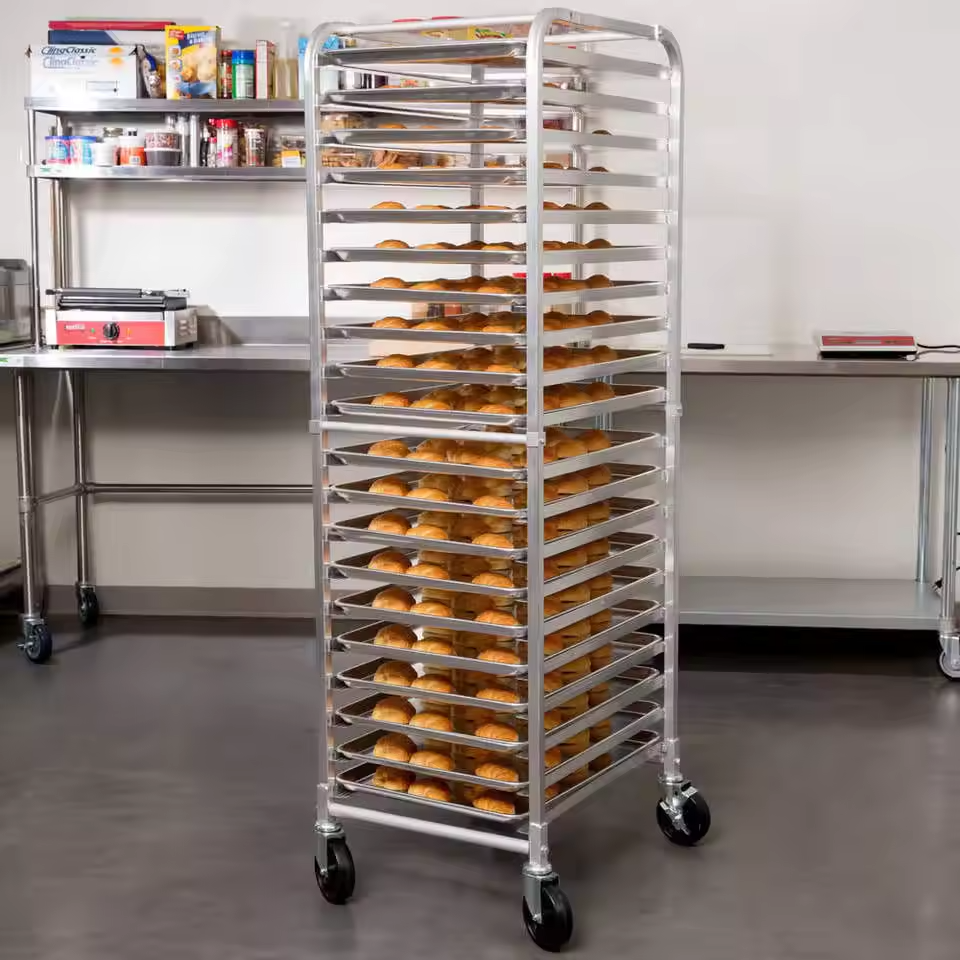
In commercial bakeries and food processing plants, a bakery trolley (also known as a rack trolley or oven rack) is a wheeled frame designed to hold multiple baking trays, allowing efficient movement of products through proofing, baking, cooling, and storage. The choice between aluminum vs stainless steel bakery trolley is critical: it affects load capacity, corrosion resistance, hygiene compliance, and long-term operational costs. As a manufacturer with over 15 years of experience serving industrial clients, we've seen how the wrong material leads to premature failure, safety risks, and unnecessary downtime. This article provides a technical comparison to guide your purchasing decision.
Product Features: Structural Design and Material Advantages
Industrial bakery trolleys are built to withstand continuous heavy loads, high temperatures, and frequent washdowns. Key design features include:
- Reinforced frame structure: Both aluminum and stainless steel trolleys use welded or bolted frames, but stainless steel offers higher rigidity, reducing flex under heavy loads during repeated transportation.
- Corrosion resistance: Stainless steel (especially 304) provides superior resistance to moisture, detergents, and acidic foods, making it ideal for wet environments. Aluminum naturally forms an oxide layer but can corrode in alkaline or chloride-rich conditions.
- Weight and maneuverability: Aluminum trolleys are approximately 40% lighter than stainless steel, reducing operator fatigue and enabling easier movement in tight spaces. However, lighter weight may compromise stability when fully loaded.
- Temperature tolerance: Both materials handle baking temperatures up to 250°C (482°F), but stainless steel retains strength better at extreme temperatures, while aluminum may soften above 200°C.
- Cleanability: Stainless steel with a #4 brushed finish is easy to sanitize and meets FDA and EU food-contact standards. Aluminum requires careful cleaning to avoid scratching and oxidation.
Application Scenarios: Where Each Material Excels
Different industries have unique requirements. Here's how aluminum and stainless steel trolleys perform across key applications:
- Food Processing: Stainless steel 304 is preferred for raw meat, dairy, and ready-to-eat products due to its non-porous, easy-to-clean surface. Aluminum is less common in high-hygiene zones.
- Bakery: Aluminum trolleys are popular for proofing and baking because of their light weight and excellent heat conduction, which can reduce baking time. However, stainless steel is favored for final cooling and transport where durability matters.
- Industrial Manufacturing: Stainless steel 316 is used in chemical or pharmaceutical plants where corrosion resistance to chlorides is essential. Aluminum finds use in dry assembly areas.
- Cleaning and Drying: Stainless steel trolleys withstand steam cleaning and harsh chemicals. Aluminum may oxidize, leading to black marks on trays.
- Storage and Transportation: For cold storage, stainless steel resists condensation-induced rust. Aluminum is lighter for manual handling but can dent easily.
Material Specifications: 304 vs 316 vs 201 Stainless Steel and Aluminum
Understanding material grades is essential for procurement. Below is a technical comparison:
- 304 Stainless Steel: The industry standard for food contact. Contains 18% chromium and 8% nickel. Excellent corrosion resistance, good formability, and withstands temperatures up to 870°C. Ideal for most bakery and food processing trolleys.
- 316 Stainless Steel: Adds 2-3% molybdenum for superior resistance to chlorides and acids. Used in marine, pharmaceutical, and chemical environments. Higher cost but longer lifespan in harsh conditions.
- 201 Stainless Steel: Lower nickel content, replaced with manganese. Cheaper but less corrosion resistant. Suitable for dry storage or light-duty applications. Not recommended for wet or high-humidity areas.
- Aluminum: Lightweight, good thermal conductivity, and rust-free in normal atmospheres. However, it is soft, prone to denting, and can corrode in alkaline environments. Often alloyed with magnesium (e.g., 6061) for better strength.
Specification Parameters: What Buyers Should Check
When specifying a bakery trolley, consider these parameters:
- Dimensions: Standard sizes include 18x26 inches, 18x30 inches, and custom sizes. Overall trolley height typically ranges from 1600mm to 1800mm.
- Thickness: Stainless steel frames usually use 1.2mm to 2.0mm tubing; aluminum frames range from 1.5mm to 2.5mm for equivalent strength.
- Capacity: Load capacity per trolley varies from 200kg to 500kg. Stainless steel trolleys generally handle higher loads.
- Number of Layers: Common configurations are 10, 15, 20, or 30 tray slots. Custom layers available.
- Load Capacity: Per tray, 5kg to 15kg. Ensure even weight distribution.
- Hole Diameter and Mesh: For mesh trays, hole sizes range from 5mm to 20mm. Not applicable for solid tray trolleys.
- Tray Compatibility: Must match your existing tray size (e.g., 600x400mm, 18x26 inches).
- Surface Treatment: Stainless steel: brushed or mirror polished. Aluminum: anodized or mill finish.
- Wheels: Swivel casters with brakes, typically 100mm to 150mm diameter, made of nylon or polyurethane for quiet operation.
Customization Services: OEM/ODM Capabilities
As a manufacturer, we offer full OEM/ODM services to meet specific client requirements. Our production capability includes:
- Custom Size: Adjust trolley dimensions to fit your oven or proofing cabinet.
- Custom Design: Modify frame structure, number of layers, or wheel type.
- Logo: Laser-engraved or printed branding on the frame.
- Packing: Customized packaging for safe sea or air freight, including palletizing and shrink wrapping.
- Special Requirements: Anti-static wheels, high-temperature coatings, or reinforced frames for heavy loads.
For custom requirements, please contact our team with your specifications, and we will provide a detailed quotation within 48 hours.
Procurement Guide: How to Choose the Right Trolley
Based on our experience with industrial buyers, here are key questions to ask:
- How to choose the size? Measure your oven, proofing cabinet, and storage area. Ensure trolley height and width fit through doors and around corners. Consider future expansion.
- How to choose the material? For wet, high-hygiene, or corrosive environments, choose 304 or 316 stainless steel. For dry, light-duty, or frequent lifting, aluminum may suffice. Avoid 201 in wet areas.
- How to confirm specifications? Request a detailed drawing with tolerances. Check load capacity, wheel type, and surface finish. Ask for material certificates.
- How to judge supplier capability? Look for ISO 9001 certification, factory audit reports, and references. Request samples or a small trial order. Verify production capacity and lead times.
- What about after-sales support? Ensure spare parts (wheels, bolts) are available. A good supplier offers a 1-2 year warranty.
Frequently Asked Questions (FAQ)
Q1: Which material is better for a bakery trolley—aluminum or stainless steel?
A1: It depends on your application. Aluminum is lighter and cheaper, ideal for dry baking environments where maneuverability is key. Stainless steel (304) is more durable, corrosion-resistant, and hygienic, making it the preferred choice for wet, high-humidity, or food-contact areas. For heavy loads, stainless steel is superior.
Q2: Can aluminum trolleys be used in wet environments?
A2: Not recommended. Aluminum can oxidize and corrode when exposed to moisture, alkaline detergents, or acidic foods. If your process involves regular washdowns, choose stainless steel 304 or 316.
Q3: What is the load capacity of a standard bakery trolley?
A3: Standard trolleys handle 200-300kg total, with 10-15kg per tray. Heavy-duty stainless steel models can support up to 500kg. Always check with the manufacturer for specific load ratings.
Q4: Do you offer custom sizes and designs?
A4: Yes. As a manufacturer, we provide OEM/ODM services. We can customize dimensions, number of layers, wheel types, and branding. Send us your requirements for a tailored solution.
Q5: What is the lead time for bulk orders?
A5: For standard models, lead time is 15-20 days. For custom orders, it is 25-35 days depending on complexity. We ship worldwide with FOB, CIF, or DDP terms.
Q6: How do I maintain stainless steel trolleys?
A6: Clean regularly with mild detergent and warm water. Avoid abrasive cleaners or steel wool. For 304 and 316, passivation can restore corrosion resistance. Lubricate wheels periodically.
Q7: Can you provide samples for testing?
A7: Yes, we can provide samples for a fee, which is refundable upon bulk order. Sample lead time is 7-10 days.
Q8: What certifications do your trolleys have?
A8: Our trolleys are CE certified and meet FDA and EU food-contact standards. We can provide material certificates and test reports upon request.
Image ALT Text Suggestions
For product images, use descriptive ALT text to improve SEO and accessibility:
- "Stainless steel bakery trolley with 20 trays in a commercial bakery"
- "Aluminum bakery rack trolley with swivel casters for easy maneuverability"
- "304 stainless steel trolley frame with reinforced welding for heavy loads"
- "Custom bakery trolley with logo and adjustable tray slots"
SEO Meta Information
SEO Title: Aluminum vs Stainless Steel Bakery Trolley: B2B Buyer's Guide
Meta Description: Compare aluminum vs stainless steel bakery trolleys for industrial use. Learn material grades, specs, and procurement tips from a leading manufacturer. Get a quote today.
SEO Keywords: bakery trolley, aluminum vs stainless steel, stainless steel bakery trolley, aluminum bakery trolley, industrial bakery trolley, 304 stainless steel trolley, bakery rack trolley, custom bakery trolley, B2B bakery equipment, food grade trolley

