




Automotive Parts Cleaning Baskets: Design for Oil, Heat & Corrosion
Why the Right Cleaning Basket Matters
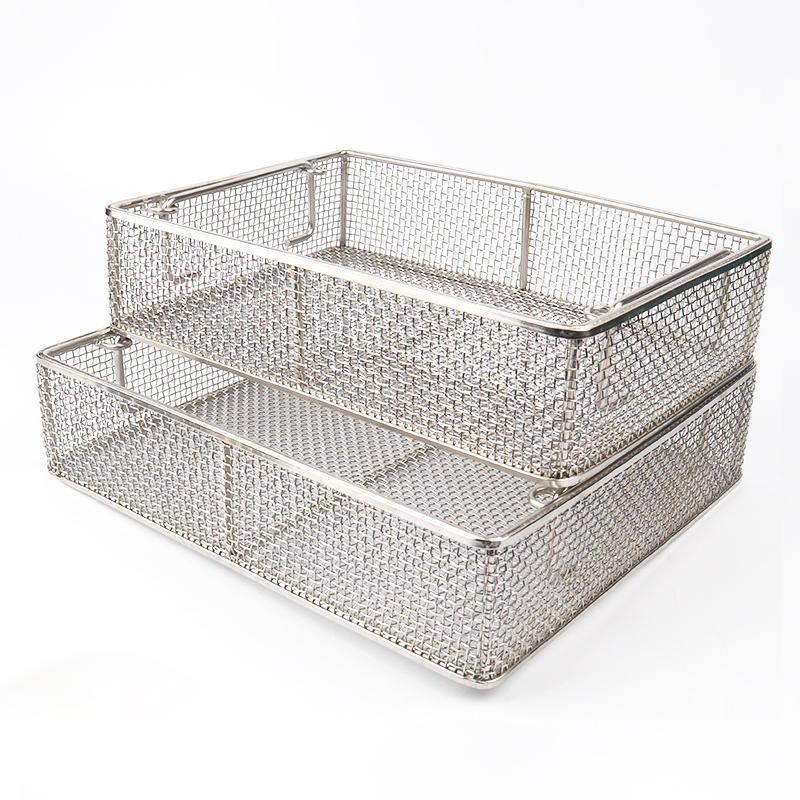
For automotive parts cleaning, the basket is a critical component in processes like ultrasonic washing, spray washing, and solvent degreasing. A poorly designed basket can trap debris, impede drainage, or corrode prematurely, leading to costly downtime and rework. The automotive parts cleaning basket must withstand harsh chemicals, high temperatures, and repeated use—all while ensuring optimal cleaning results. As a professional manufacturer, we prioritize these engineering requirements to deliver baskets that perform reliably in demanding production environments.
Core Design Requirements for Automotive Parts Cleaning Baskets
When designing a cleaning basket for automotive parts, three factors dominate: oil resistance, high-temperature resistance, and corrosion resistance. Below we break down each requirement and how it shapes our manufacturing process.
Oil and Solvent Resistance: Automotive parts often come coated with heavy oils, greases, and machining fluids. The basket must not degrade or swell when exposed to these substances. Stainless steel grades like SUS 304 and SUS 316 offer excellent chemical inertness, ensuring the basket remains stable in alkaline or solvent-based cleaners. Additionally, the open mesh design allows oil and contaminants to wash away freely, preventing residue buildup that could compromise cleaning quality.
High-Temperature Resistance: Cleaning processes often involve hot water, steam, or heated chemicals—sometimes exceeding 80°C. The basket must maintain structural integrity without warping or losing strength. Our stainless steel baskets are engineered to handle continuous operation temperatures up to 400°C, depending on the alloy, making them suitable for hot washing, degreasing, and even drying ovens. This high-temperature resilience extends the basket's service life and ensures consistent performance.
Corrosion Resistance: Exposure to water, acidic or alkaline cleaners, and salt residues can cause rapid corrosion in inferior baskets. We use SUS 316 stainless steel for environments with high chloride exposure, as its molybdenum content offers superior pitting resistance. For standard cleaning baths, SUS 304 provides excellent cost-effective corrosion protection. Our baskets undergo passivation to enhance the protective oxide layer, further extending their lifespan.
Material Selection and Manufacturing Excellence
Choosing the right material is only the first step. The manufacturing process determines the basket's strength and durability. We offer three stainless steel grades: SUS 201 (economical, for mild environments), SUS 304 (general-purpose, excellent corrosion resistance), and SUS 316 (premium, for corrosive or high-chloride conditions). Our welded construction uses precise TIG welding to create strong, smooth joints that resist cracking and crevice corrosion. Reinforced edges prevent bending, and optional handles—fixed, foldable, or custom—ensure safe handling. For delicate parts, we offer a fine mesh option, while larger parts benefit from a thicker wire diameter. Surface treatment options include electro-polishing for a smooth finish and passivation for enhanced rust protection. Every basket undergoes strict quality checks for dimensions, weld integrity, and load capacity.
Customization Options for Your Cleaning Process
Since automotive parts vary widely in size, shape, and weight, we provide full customization to match your specific application. You can customize the following:
- Size and shape: from small precision baskets to large pallet-style racks.
- Mesh opening: from fine 0.5mm mesh to large openings (e.g., 100mm) for optimal fluid flow.
- Wire diameter: thicker wires support heavier loads; thinner wires minimize part contact.
- Basket height and loading capacity: engineered to fit your washing equipment and weight requirements.
- Handle type: standard, drop-side, or customized lifting points.
- Material grade: choose SUS 201, 304, or 316 based on your cleaning chemistry.
- Surface treatment: electro-polishing, powder coating (for non-stick), or plain finish.
- Packaging: export-grade packaging to prevent transit damage.
Applications in Automotive and Other Industries
Our automotive parts cleaning baskets are used in various sectors beyond automotive, including:
- Ultrasonic cleaning of engine components, injection nozzles, and brake parts
- Industrial parts washing in machinery and heavy equipment
- Food processing and bakery production for safe, hygienic washing
- Medical sterilization and laboratory cleaning processes
- Drying ovens and conveyor systems
- Material handling between process stations
The same design principles—oil resistance, temperature endurance, and corrosion resistance—apply across these industries, making our baskets a versatile investment.
Procurement Guide: How to Choose the Right Basket
Selecting the right automotive parts cleaning basket involves several factors. Here are answers to common questions we receive from engineers and buyers:
How to select the right stainless steel basket? Start by evaluating your cleaning chemistry, temperature, and load weight. For mild, neutral pH cleaners, SUS 304 is often sufficient. For acidic or chloride-rich solutions, upgrade to SUS 316. Determine basket dimensions based on your parts and equipment, and choose mesh openings that allow contaminant flow while preventing small parts from falling through.
Which stainless steel grade is suitable for industrial cleaning? In most industrial cleaning environments, SUS 304 is a balanced choice. However, if you use high chloride content (e.g., with bleach or salt), SUS 316 is necessary. For cost-sensitive, non-corrosive applications, SUS 201 can be an option, but we generally recommend 304 as the baseline.
How do mesh size and wire diameter affect cleaning? A smaller mesh opening provides better support for tiny parts but can restrict flow and make cleaning less effective. A larger mesh promotes faster drainage and better water impact. Wire diameter influences basket strength—for heavy parts, use thicker wires to prevent deformation. We'll help you balance these factors.
Common Questions from Our Customers
Q: Can stainless steel mesh baskets be customized to fit our washing machine?
A: Absolutely. We regularly produce baskets to exact specifications, including custom diameters, heights, and handle placements. Provide your equipment drawings, and we'll engineer a basket that fits perfectly.
Q: How long does a basket last in a harsh cleaning environment?
A: With proper material selection and maintenance, a SUS 316 basket can last several years, even in demanding conditions. Regular rinsing after use and avoiding unmatched chemicals will extend its life.
Q: Do you offer spare parts like lids or handles?
A: Yes, we can supply replacement parts or modify existing baskets. Customization is our specialty.
Contact us for customized stainless steel wire mesh basket solutions. We'll help you select the right design, material, and manufacturing process to ensure your automotive parts cleaning operates efficiently and cost-effectively.