


Bakery Equipment OEM Factory: A Strategic Guide for B2B Procurement
Why Bakery Equipment OEM Factory Partnerships Drive Industrial Efficiency
In the competitive landscape of commercial baking, off-the-shelf machinery often fails to align with specific production workflows, space constraints, or regional compliance standards. This is where a bakery equipment OEM factory becomes a strategic asset. Rather than adapting your process to a generic machine, an OEM partnership allows you to commission equipment engineered precisely for your dough types, baking profiles, and output targets. For B2B buyers, this means reduced integration downtime, optimized labor allocation, and a lower total cost of ownership over the equipment's lifecycle. This article outlines the technical and commercial considerations for establishing a successful OEM collaboration.
Product Introduction: What OEM Bakery Equipment Encompasses
An OEM bakery equipment factory produces a wide spectrum of machinery under a client's brand or to their proprietary specifications. Core categories include:
- Mixing and Dough Processing: Spiral mixers, planetary mixers, dough sheeters, and dividers.
- Forming and Shaping: Baguette moulder, croissant laminators, and bun rounding machines.
- Baking Systems: Convection ovens, deck ovens, rack ovens, and tunnel ovens.
- Cooling and Handling: Spiral coolers, conveyor systems, and proofing cabinets.
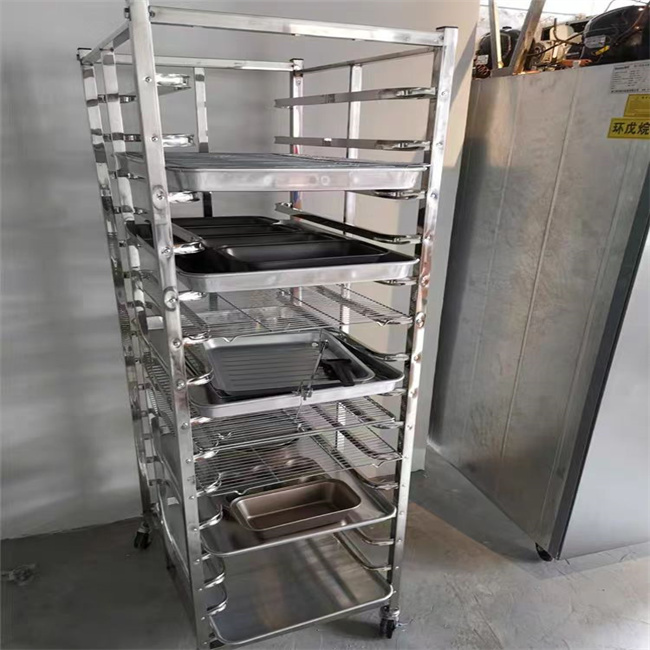
- Support Equipment: Stainless steel work tables, racks, and custom trays.
The primary purpose of engaging an OEM factory is to solve specific operational bottlenecks. For example, a high-volume facility producing artisan sourdough may require a divider that maintains dough structure without degassing, a specification not met by standard models. The OEM model ensures the equipment addresses these precise pain points.
Product Features: Engineering for Industrial Durability
When evaluating OEM bakery equipment, features must be assessed against industrial usage, not just aesthetic appeal. Key technical differentiators include:
- Frame and Chassis Construction: Heavy-gauge steel frames with reinforced gussets minimize vibration during high-speed mixing or conveying. This design directly reduces wear on bearings and extends maintenance intervals.
- Drive Systems: Direct-drive or heavy-duty belt systems with overload protection are preferred over chain drives in dusty flour environments to prevent premature failure.
- Control Integration: PLC-based controls with recipe storage allow for consistent product quality across shifts and reduce operator error. For OEM projects, these controls can be programmed to interface with your existing SCADA or MES systems.
- Sanitation Design: Removable covers, tool-less disassembly, and sloped surfaces that prevent flour accumulation are critical for food safety compliance (e.g., USDA, FDA, or EU hygiene standards).
The value of these features lies in uptime. A mixer that can run three shifts daily for five years without structural fatigue is a better investment than a lower-cost unit requiring quarterly rebuilds.
Application Scenarios Across Industries
OEM bakery equipment serves multiple sectors, each with unique demands:
- Industrial Bakeries: High-capacity tunnel ovens and automated proofing systems integrated into continuous production lines. Equipment must handle 24/7 operation with minimal manual intervention.
- Food Processing Plants: Equipment for processing frozen dough, par-baked goods, and specialty breads. Stainless steel construction (304 or 316) is mandatory for washdown environments.
- Central Commissaries: Flexibility to switch between product lines (e.g., bread, pastries, pizza) requires modular OEM designs with quick-change tooling.
- Institutional Catering: Rack ovens and compact convection units for hospitals, schools, and military bases, where space and energy efficiency are paramount.
- Retail Chains: In-store baking systems that balance footprint with output, often requiring custom ventilation and safety guarding.
In each scenario, the OEM factory's role is to adapt standard platforms to meet specific throughput, utility, and spatial constraints.
Material Selection: Stainless Steel Grades and Alternatives
Material choice directly impacts hygiene, corrosion resistance, and cost. Procurement teams should specify based on the operating environment:
- 304 Stainless Steel: The industry standard for food contact surfaces. Excellent corrosion resistance against most bakery ingredients (flour, sugar, yeast). Suitable for mixers, bowls, and conveyor frames.
- 316 Stainless Steel: Recommended for high-salinity or acidic environments, such as dough containing high salt or tomato-based fillings. Also preferred in coastal facilities to resist chloride corrosion.
- 201 Stainless Steel: A lower-cost alternative with reduced nickel content. Acceptable for non-food-contact structural components (e.g., external panels) in dry environments, but not for wet or acidic zones.
- Aluminum: Lightweight and导热, often used for baking trays and some structural elements. However, it requires protective coatings (e.g., anodizing) to prevent oxidation and reaction with alkaline doughs.
For OEM projects, material certificates (Mill Test Reports) must be provided to verify compliance with ASTM or EN standards.
Specifications and Customization Parameters
B2B buyers must define specifications precisely to avoid costly retrofits. Key parameters include:
- Dimensions: Overall footprint, working height, and clearance required for maintenance access.
- Capacity: For mixers, bowl volume (liters) and maximum dough weight (kg). For ovens, baking area (m²) and tray capacity.
- Thickness: Stainless steel sheet thickness (e.g., 1.5mm, 2.0mm) affects structural rigidity and heat retention.
- Load Capacity: Racks and conveyors must be rated for dynamic loads (e.g., 200kg per rack) with a safety factor of 1.5.
- Mesh and Aperture: For cooling conveyors, mesh size (e.g., 10mm x 10mm) must balance airflow with product support.
- Tray Compatibility: Specify standard tray sizes (e.g., 600x400mm, 18"x26") to ensure seamless integration.
- Surface Finish: #4 brushed finish for food contact, or #2B for non-contact areas. Ra value (roughness) should be ≤0.8µm for hygienic zones.
OEM factories typically offer custom size, custom design, logo placement, and special packing to align with your brand and logistics requirements.
Procurement Guide: Selecting the Right OEM Partner
Choosing a supplier for bakery equipment OEM manufacturing involves technical due diligence:
- How to Select Dimensions? Map your production flow. Measure available space, including doorways and ceiling height. Consider future product lines that might require larger trays or higher output.
- How to Choose Materials? Match the grade to the cleaning regime. If using caustic or acidic sanitizers, 316 stainless steel is non-negotiable.
- How to Confirm Specifications? Request detailed engineering drawings (2D/3D) and material lists. Cross-check against your utility supplies (voltage, phase, air pressure).
- How to Judge Supplier Capability? Audit their in-house fabrication (laser cutting, bending, welding), quality control processes (pressure testing, electrical safety), and after-sales support. A factory with a dedicated R&D team and experience in export markets is a stronger partner.
For custom requirements, please contact our team to discuss your project specifications.
Frequently Asked Questions
Q1: What is the typical lead time for a custom bakery equipment order?
A1: Standard OEM lead times range from 45 to 90 days, depending on design complexity, material availability, and production queue. Prototyping may add 2-3 weeks.
Q2: Can you manufacture equipment to comply with UL or CE standards?
A2: Yes. Our engineering team designs to meet UL, CE, and NSF requirements. We provide third-party inspection certificates upon request.
Q3: What is the minimum order quantity (MOQ) for OEM production?
A3: MOQ varies by product. For standard tray and rack lines, MOQ may be 50 units. For complex machinery, MOQ is often 1-5 units, as each is built to order.
Q4: Do you offer installation and training support?
A4: Yes. We provide remote commissioning assistance and on-site support for large projects. Detailed operation and maintenance manuals are included.
Q5: How do you ensure the equipment matches our existing production line?
A5: We request interface data (height, speed, communication protocols) and conduct a compatibility analysis before design freeze. Physical fit checks can be simulated using 3D models.
Q6: What is the warranty policy for OEM equipment?
A6: We offer a 12-24 month warranty on core components, covering manufacturing defects. Wear parts (belts, seals) are excluded but available for fast replenishment.
Q7: Can we use our own brand logo on the equipment?
A7: Absolutely. We provide laser etching, screen printing, or metal nameplates for branding, subject to your design files.
SEO and Meta Information
SEO Title: Bakery Equipment OEM Factory | Custom Industrial Baking Solutions
Meta Description: Source custom bakery equipment from a leading OEM factory. We specialize in industrial mixers, ovens, and conveyors with 304/316 stainless steel options. Request a quote.
SEO Keywords: bakery equipment OEM factory, custom bakery machinery, industrial baking equipment supplier, OEM dough mixer manufacturer, commercial oven OEM, stainless steel bakery equipment, bakery equipment customization, B2B bakery equipment procurement
Image ALT Text Suggestions: "Industrial spiral mixer with 304 stainless steel bowl in OEM bakery factory", "Custom conveyorized tunnel oven for high-volume bread production", "Stainless steel bakery rack with reinforced frame for heavy loads"

