


Bakery Rack Trolley Dimensions: A Strategic Sourcing Guide for B2B Buyers
Product Introduction: What Is a Bakery Rack Trolley and Why Dimensions Matter
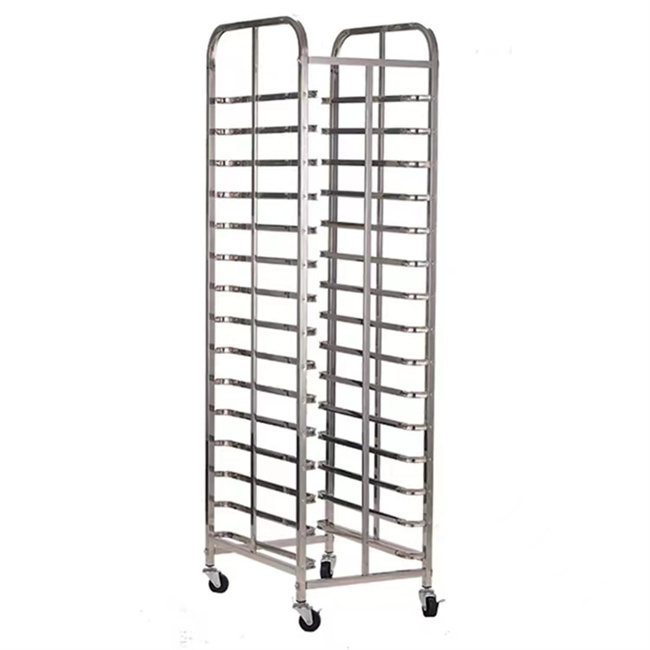
A bakery rack trolley, also known as a bakery pan rack, sheet pan trolley, or bakery rack, is a mobile storage and transport unit designed to hold multiple baking trays, sheet pans, or bakery baskets. Its primary purpose is to streamline the movement of goods between proofing, baking, cooling, and packaging stages. In industrial baking operations, bakery rack trolley dimensions directly influence how efficiently you can load, move, and unload products without damaging baked goods or causing bottlenecks. Selecting the wrong size can lead to incompatible tray fits, unstable loads, or wasted floor space. For B2B buyers, the goal is to match trolley dimensions with existing oven configurations, rack ovens, conveyor systems, and storage areas. As a manufacturer with over a decade of experience serving food processing and industrial clients, we know that dimensions are not just numbers—they are the foundation of a smooth production line.
Product Features: Structural Design, Material Advantages, and Performance Characteristics
Industrial bakery rack trolleys are built for repeated heavy loads and harsh environments. Unlike consumer-grade carts, they feature reinforced frame structures that improve load stability during repeated transportation and industrial handling. Key design elements include:
- Welded steel construction: Robot welding ensures consistent joint strength, reducing the risk of frame failure under dynamic loads.
- Reinforced base and corner gussets: These absorb impact during forklift or pallet jack movement, extending service life.
- Corrosion-resistant surface treatment: Options include galvanized finish, powder coating, or electropolishing for stainless steel models.
- Heavy-duty casters: Swivel casters with brakes, available in nylon, polyurethane, or rubber, matched to floor type and load capacity.
- Adjustable or fixed tray guides: Designed to hold standard 18" x 26" or 600mm x 400mm baking trays securely without slipping.
These features matter because in a 24/7 bakery, a trolley that wobbles or sheds its load creates product waste, employee injuries, and downtime. For example, a leading European bakery reduced pan damage by 30% after switching to our reinforced trolleys with precise tray guide spacing.
Application Scenarios: Where Bakery Rack Trolleys Are Used Across Industries
While the name suggests bakeries, these trolleys serve a wide range of industrial sectors. Understanding your specific application helps narrow down the right dimensions:
- Food processing: Transporting raw ingredients, finished products, or packaged goods between processing zones. Trolleys must fit through wash-down areas and withstand moisture.
- Bakery and confectionery: Moving dough trays through proofers, ovens, and coolers. Trolley height must align with oven rack heights to prevent manual lifting.
- Industrial manufacturing: Holding small parts, tools, or components in assembly lines. Trolleys may need ESD-safe casters or static-dissipative materials.
- Cleaning and drying: Used in commercial dishwashing or parts cleaning operations. Stainless steel 304 is typical for hygiene and rust resistance.
- Storage and transportation: As mobile shelving in warehouses or for loading goods onto trucks. Dimensions must match pallet sizes and truck door clearances.
In each scenario, the dimensions—length, width, height, and tray capacity—must be tailored to the environment. For instance, a trolley for a rack oven must have a height that allows the entire rack to roll directly into the oven chamber, eliminating double handling.
Material Selection: 304 vs 316 vs 201 Stainless Steel and Aluminum
The material of your bakery rack trolley affects its durability, corrosion resistance, and cost. Here is a practical comparison for B2B buyers:
- 304 stainless steel: The industry standard for food processing and bakery applications. Excellent corrosion resistance, easy to clean, and withstands most chemicals. Ideal for wet or humid environments.
- 316 stainless steel: Superior corrosion resistance, especially against chlorides and acids. Recommended for coastal areas, meat processing, or applications with aggressive cleaning agents. Higher cost but longer life in harsh conditions.
- 201 stainless steel: A lower-cost alternative with moderate corrosion resistance. Suitable for dry storage or light-duty applications where budget is a priority. Not recommended for frequent wash-down.
- Aluminum: Lightweight and rust-resistant, but lower load capacity and not as durable under heavy impact. Often used for smaller trolleys or where weight is a concern.
From a manufacturing perspective, we advise clients to choose material based on the cleaning regime and load requirements. For example, a bakery using high-pressure hot water cleaning should opt for 304 or 316 stainless steel to avoid rust streaks on products.
Specification Parameters: Key Dimensions and Technical Details to Confirm
When specifying a bakery rack trolley, you need to define the following dimensions and parameters. We recommend creating a checklist to share with your supplier:
- Overall dimensions (L x W x H): Standard sizes range from 700mm x 500mm x 1700mm to 1200mm x 800mm x 2000mm. Custom sizes are common.
- Tray capacity and spacing: Number of trays (e.g., 10, 15, 20) and vertical distance between tray guides (e.g., 75mm, 100mm, 150mm).
- Load capacity: Static and dynamic load ratings. Typical industrial trolleys handle 200kg to 500kg.
- Tube thickness and diameter: For frame strength. Common tubes: 25mm x 1.5mm, 32mm x 2.0mm.
- Mesh or perforation: If shelves are mesh, specify aperture size (e.g., 50mm x 50mm) to prevent small items falling through.
- Tray compatibility: Ensure guides fit your existing tray size, such as 18" x 26" (457mm x 660mm) or 600mm x 400mm.
- Surface treatment: Polished, brushed, galvanized, or powder-coated. Affects hygiene and appearance.
- Caster type and size: Wheel diameter (100mm, 125mm, 150mm), material, and brake options.
For example, a client in the US required trolleys to fit through a 900mm door while holding 15 sheet pans. We designed a trolley with overall width of 850mm and adjustable tray guides to accommodate their existing pans.
Customization Services: OEM/ODM Capabilities for Your Specific Needs
As a manufacturer, we understand that standard sizes rarely fit every production line. Our OEM and ODM services cover:
- Custom size: Modify length, width, height, and tray capacity to match your ovens, proofers, and storage racks.
- Custom design: Adjust frame structure, caster placement, handle style, and tray guide configuration.
- Logo and branding: Laser-engraved or stenciled logos on frames or panels.
- Packing: Custom crates or pallets for safe ocean shipping, with labeled parts for easy assembly.
- Special requirements: ESD-safe casters, high-temperature wheels, or stainless steel grades for specific environments.
Our engineering team provides 3D drawings and samples for approval before mass production. For custom requirements, please contact our team to discuss your project. We have delivered custom trolleys to bakeries in over 30 countries, from small artisan shops to large industrial plants.
Procurement Guide: How to Select Dimensions, Materials, and Suppliers
Buying bakery rack trolleys is a strategic decision. Here are practical answers to common procurement questions:
- How to choose dimensions? Start by measuring your existing trays and the narrowest passage the trolley must pass through. Consider the height of your oven or proofer opening. If you use a rack oven, the trolley must fit inside the oven chamber. Always add 10-20mm clearance for easy movement.
- How to choose material? Match material to cleaning chemicals and humidity. For wet environments, choose 304 or 316 stainless steel. For dry storage, 201 or aluminum may suffice. Consult your supplier for a material recommendation based on your wash-down schedule.
- How to confirm specifications? Request a detailed spec sheet with tolerance ranges. Check tube thickness (not just outer diameter), caster load rating, and weld quality. Ask for a sample or visit the factory if possible.
- How to judge supplier capability? Look for a manufacturer with in-house welding, polishing, and assembly lines. Check certifications (ISO 9001, NSF if applicable). Ask for references in your industry. A supplier that offers customization and technical support is more likely to meet your long-term needs.
In our experience, buyers who involve their production team early in the specification process avoid costly rework. We recommend a trial order of one or two units before committing to a large batch.
Frequently Asked Questions (FAQ)
Q1: What are the standard bakery rack trolley dimensions?
A1: Common sizes include 700mm x 500mm x 1700mm, 900mm x 600mm x 1800mm, and 1200mm x 800mm x 2000mm. However, custom sizes are widely available to fit specific ovens and trays.
Q2: Can I use a bakery rack trolley in a freezer or high-temperature oven?
A2: Yes, but you need to specify the temperature range. Standard casters may not perform well in extreme temperatures. We offer high-temp wheels for up to 250°C and freezer-grade casters for -40°C.
Q3: What is the load capacity of a typical stainless steel trolley?
A3: Most industrial trolleys handle 200kg to 500kg dynamic load. The capacity depends on frame design and caster rating. Always confirm both static and dynamic load ratings.
Q4: How do I choose between 304 and 316 stainless steel?
A4: Choose 304 for general bakery and food processing. Choose 316 if your cleaning agents contain chlorides or if you are in a coastal environment. 316 offers better pitting resistance.
Q5: Do you provide OEM services for custom trolley sizes?
A5: Yes, we offer full OEM and ODM services, including custom dimensions, tray guide spacing, logos, and packaging. Our engineering team can design from your drawings or create a new design based on your requirements.
Q6: What is the lead time for a custom order?
A6: For standard sizes, lead time is 15-20 days. For custom orders, it is 25-35 days after drawing approval, depending on quantity and complexity.
Q7: How do I maintain the trolley to ensure long life?
A7: Regularly inspect casters for debris, tighten bolts, and clean with mild detergent. Avoid using steel wool on stainless steel. Lubricate casters every 3 months in heavy-use environments.
Q8: Can you provide samples before mass production?
A8: Yes, we can provide a sample for evaluation. Sample cost and freight are negotiable and can be credited toward your bulk order.
Image ALT Text Suggestions
For product images, use descriptive ALT text for SEO and accessibility:
- "Stainless steel bakery rack trolley with 15 tray capacity in a commercial bakery"
- "Industrial bakery pan rack trolley dimensions diagram showing height and width"
- "304 stainless steel bakery trolley with swivel casters and brakes"
SEO Information
SEO Title: Bakery Rack Trolley Dimensions: B2B Sourcing Guide
Meta Description: Learn how to choose bakery rack trolley dimensions for industrial use. Compare materials, specs, and custom options from a manufacturer. Get a quote today.
SEO Keywords: bakery rack trolley dimensions, bakery pan rack, stainless steel bakery trolley, industrial bakery rack, custom bakery trolley, bakery rack trolley manufacturer, sheet pan trolley, bakery trolley specifications

