


Bakery Trolley Loading Capacity: How to Select the Right Load Rating for Your Production Needs
Understanding Bakery Trolley Loading Capacity
In industrial baking, a bakery trolley is not just a rack—it's a critical component of your production line. The bakery trolley loading capacity defines the maximum weight the trolley can safely support during loading, transport, and storage. Selecting the wrong capacity can lead to structural failure, product damage, and costly downtime. As a manufacturer with over 15 years of experience, we've seen how improper load ratings cause premature wear and safety hazards. This article provides procurement teams with actionable insights to choose the ideal load rating.
Product Overview: What Is a Bakery Trolley?
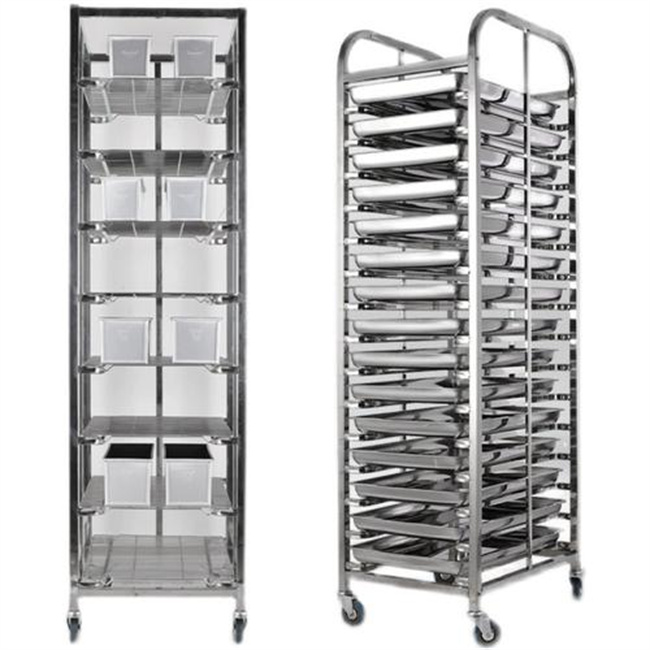
A bakery trolley, also known as a bakery rack or pan trolley, is a wheeled frame designed to hold baking pans, trays, or baskets. It facilitates the movement of dough, pastries, bread, and other baked goods through proofing, baking, cooling, and packaging stages. The primary problem it solves is efficient material handling in high-volume bakeries, reducing manual labor and minimizing product contact. When specifying, buyers must consider not only the static load but also dynamic forces during movement over uneven floors or ramps.
Key Features That Influence Load Capacity
Several design and material factors determine the actual load capacity of a bakery trolley:
- Reinforced frame structure: Heavy-gauge steel or stainless steel tubing with cross-bracing improves load stability during repeated transportation and industrial handling. For example, a 25mm x 25mm x 1.5mm wall thickness offers higher rigidity than 1.2mm.
- Welded joints: Continuous welds, rather than spot welds, distribute stress more evenly, increasing the trolley's ability to withstand dynamic loads.
- Caster quality: High-capacity casters with sealed bearings (e.g., 125mm diameter, 300kg each) ensure smooth rolling and reduce point loading on the frame.
- Base design: A reinforced base plate or perimeter frame prevents deflection under heavy loads. For instance, a 40mm x 40mm angle iron base is common for 500kg capacity trolleys.
These features are not just about durability—they directly affect your bottom line by reducing replacement frequency and maintenance costs.
Applications Across Industries
Bakery trolleys are used in various sectors, each with unique load requirements:
- Food processing: Transporting raw ingredients or finished products in hygienic environments. Load capacities range from 200kg to 800kg.
- Bakeries: Moving dough troughs, proofing trays, and baked goods. Typical capacity: 300-600kg.
- Industrial manufacturing: Holding components during assembly or painting. Capacities up to 1000kg.
- Cleaning and drying: Supporting parts through wash lines or drying ovens. Stainless steel construction is essential.
- Storage and transportation: Used as mobile storage racks in warehouses. Capacities vary based on racking density.
For instance, a large commercial bakery running 24/7 might require trolleys with 500kg capacity to hold 20 pans of bread dough (each pan ~15kg) plus the trolley's own weight. Understanding your specific application is the first step.
Material Selection: 304 vs 316 vs 201 Stainless Steel and Aluminum
Material choice impacts load capacity, corrosion resistance, and cost. Here's a breakdown:
- 304 stainless steel: General-purpose, good corrosion resistance, suitable for most bakery environments. Yield strength ~205 MPa. Common for capacities up to 600kg.
- 316 stainless steel: Superior corrosion resistance, ideal for high-humidity or chemical-exposed areas (e.g., wash-down stations). Yield strength ~205 MPa but better chloride resistance. Higher cost, used for 400-800kg capacities.
- 201 stainless steel: Lower cost, moderate corrosion resistance. Yield strength ~275 MPa (higher than 304), but less ductile. Suitable for dry environments and capacities up to 500kg.
- Aluminum: Lightweight, corrosion-resistant, but lower strength. Yield strength ~40-50 MPa. Typically used for light-duty trolleys (max 150kg) where portability is key.
From a procurement perspective, 304 is the workhorse for most bakeries, while 316 is specified for strict hygiene zones. 201 can be a budget option if corrosion is not a concern.
Specifications That Matter for Load Capacity
When evaluating a supplier's product, request detailed specifications. Key parameters include:
- Dimensions: Standard footprint (e.g., 600mm x 800mm or 700mm x 900mm) affects load distribution. Larger base = higher stability.
- Thickness: Tube wall thickness (1.2mm to 2.5mm) and frame steel thickness (2mm to 5mm). Thicker walls increase capacity but add weight.
- Number of shelves/levels: More levels increase total load but may reduce per-level capacity. Common: 10-20 levels for pan racks.
- Load capacity: Static vs dynamic. Always ask for the dynamic load rating, as it's lower due to movement forces.
- Hole diameter and mesh size: For perforated or wire mesh shelves, hole size (e.g., 10mm) affects airflow and weight. Smaller holes = higher load capacity but less airflow.
- Tray compatibility: Ensure shelf spacing matches your pan heights (e.g., 75mm pitch for standard 65mm pans).
- Surface treatment: Polished, brushed, or galvanized. Polished 304 offers easy cleaning and resists bacterial growth.
As a manufacturer, we provide detailed load test reports for each model, so you can verify capacity claims.
Customization and OEM/ODM Services
Every bakery has unique needs. We offer full customization:
- Custom size: Adjust width, depth, and height to fit your oven or proofing cabinet.
- Custom design: Modify shelf pitch, add handles, brakes, or bumpers.
- Logo and branding: Laser-etch your logo on the frame for brand identity.
- Packing: Custom crates or pallets for safe shipping.
- Special requirements: E.g., extra reinforcement for heavy loads, anti-static casters, or high-temperature wheels.
For custom requirements, please contact our team to discuss your specifications.
Procurement Guide: How to Choose the Right Load Rating
Follow these steps to ensure you select a trolley that meets production demands:
- Calculate total load: Sum the weight of all items (product + pans + accessories) and add 20-30% safety margin.
- Determine dynamic vs static: If the trolley will be moved frequently, use a higher capacity rating (e.g., static 600kg may only be 400kg dynamic).
- Select material: Based on environment (humidity, chemicals) and budget. 304 for most, 316 for wash-down, 201 for dry storage.
- Verify specifications: Request load test certificates and check wall thickness, caster rating, and weld quality.
- Assess supplier capability: Look for a factory with in-house welding, CNC bending, and polishing. Ask for references from similar industries.
- Consider future needs: If production may increase, choose a higher capacity now to avoid early replacement.
Common pitfalls: underestimating dynamic loads, ignoring caster quality, and choosing 201 steel for wet environments. Our engineers can help you avoid these.
Frequently Asked Questions (FAQ)
What is the typical load capacity of a bakery trolley?
Standard bakery trolleys range from 200kg to 800kg. Light-duty models for small bakeries: 150-300kg. Heavy-duty for industrial lines: 500-1000kg. Always check dynamic rating.
How does stainless steel grade affect load capacity?
Grade affects strength and corrosion resistance. 304 and 316 have similar yield strength (~205 MPa), but 201 has higher yield (~275 MPa) yet lower ductility. For heavy loads, 304 or 316 with thicker walls is preferred.
Can I increase the load capacity by adding more shelves?
Adding shelves increases total load but may reduce per-shelf capacity. The frame and casters must be rated for the total weight. Consult the manufacturer before modifying.
What is the difference between static and dynamic load capacity?
Static capacity is the maximum load when stationary. Dynamic capacity is lower (typically 60-70% of static) because movement introduces forces from acceleration, braking, and floor irregularities.
How do I choose the right caster for my bakery trolley?
Select casters with a load rating at least 25% higher than the total trolley load. For wet areas, use stainless steel or nylon casters. For high-temperature ovens, use heat-resistant wheels (e.g., phenolic).
Do you provide custom load testing for special applications?
Yes. We can perform finite element analysis (FEA) and physical load tests to certify capacity for your specific use case. Contact our engineering team.
What is the lead time for custom bakery trolleys?
Standard models: 15-20 days. Custom orders: 25-35 days depending on complexity. We provide weekly production updates.
Image ALT Text Suggestions
For product images, use ALT text like: "Stainless steel bakery trolley with 500kg load capacity" or "Heavy-duty bakery rack with reinforced frame and casters".
SEO Title:
Bakery Trolley Loading Capacity: Select Right Load Rating
Meta Description:
Learn how to choose the right bakery trolley loading capacity for your production. Compare materials, specs, and supplier tips. Optimize efficiency and safety.
SEO Keywords:
bakery trolley loading capacity, bakery rack load rating, stainless steel bakery trolley, industrial bakery trolley, bakery trolley manufacturer, custom bakery trolley, heavy duty bakery trolley, bakery pan trolley, bakery trolley specifications, bakery trolley supplier

