


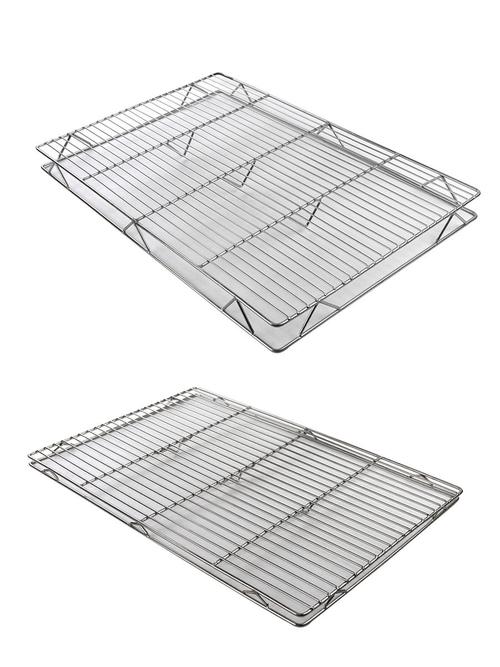
Commercial Baking Tray Sourcing: A B2B Procurement Guide for Industrial Buyers
Product Introduction
In industrial baking and food processing environments, the commercial baking tray is not a simple accessory—it is a critical component that directly affects production efficiency, product quality, and operational safety. These trays are designed to withstand continuous high-temperature cycling, heavy loads, and frequent handling in bakeries, food manufacturing plants, and institutional kitchens. Unlike consumer-grade bakeware, industrial trays must maintain structural integrity under repeated thermal stress, resist corrosion from cleaning chemicals, and ensure consistent heat transfer for uniform baking results. For procurement teams, selecting the right tray means balancing upfront cost with long-term reliability, hygiene compliance, and compatibility with existing rack systems and conveyor equipment. A poorly specified tray can lead to production downtime, product waste, and premature replacement costs that far exceed the initial savings. This guide is written for B2B buyers who need practical, experience-based criteria for sourcing commercial baking trays from manufacturers.
Product Features and Engineering Advantages
Industrial baking trays are engineered for durability and performance in demanding production environments. Key features include:
- Reinforced frame construction – The perimeter frame is typically formed from heavier-gauge material or reinforced with additional bends to prevent distortion during repeated handling and thermal cycling. This is essential for trays that are loaded and unloaded hundreds of times per shift.
- Precision welding and joint integrity – Spot welds or continuous seams must be uniform and fully penetrated to avoid weak points that can crack under load or trap food particles. Manufacturers with automated welding equipment deliver more consistent joint quality than manual operations.
- Surface treatment options – Depending on the application, trays may be supplied with a natural mill finish, polished surface, or non-stick coating. For food contact, a smooth, easily cleanable surface is critical to meet hygiene standards and reduce cleaning time.
- Corrosion resistance – Material selection and surface passivation directly impact the tray's ability to withstand acidic foods, salty environments, and caustic cleaning agents. This is particularly important in meat processing and ready-meal production.
- Dimensional stability – Trays must maintain flatness and squareness after repeated heating and cooling. Warped trays cause uneven baking, jam automated handling systems, and create safety hazards for operators.
- Load capacity – Engineered to support the weight of dense doughs, heavy protein products, or multiple stacked items without deflection. Load ratings should be verified against actual production loads, not just nominal specifications.
These engineering advantages translate directly into lower total cost of ownership through reduced replacement frequency, fewer production interruptions, and improved product consistency. Buyers should request samples and run them through actual production conditions before committing to bulk orders.
Application Scenarios
Commercial baking trays are used across a wide range of industrial sectors, each with specific requirements:
- Industrial bakeries – For bread, rolls, pastries, and cakes. Trays must withstand temperatures up to 250°C and resist staining from sugars and fats. Perforated designs are often preferred for even heat distribution and moisture release.
- Food processing plants – For ready meals, frozen foods, and portioned products. Trays must be compatible with blast freezers, ovens, and automated conveyor lines. Hygiene design is paramount.
- Pharmaceutical and laboratory – For drying, sterilizing, and sample preparation. Trays require high cleanliness, corrosion resistance, and often certification for contact with sensitive materials.
- Drying and dehydration – For fruits, vegetables, and pet food. Mesh or perforated trays allow airflow for efficient moisture removal. Material must resist prolonged exposure to humid, warm environments.
- Storage and transportation – For bulk ingredients, work-in-progress, and finished goods. Trays must stack securely and withstand forklift or pallet jack handling without deformation.
- Cleaning processes – Trays used in wash-down areas must be designed to drain fully and resist chemical attack from detergents and sanitizers.
In each scenario, the tray is selected not only for its primary function but also for its compatibility with existing equipment, cleaning protocols, and production flow. Buyers should map the tray's journey through their facility—from receiving to baking to cooling to cleaning—to identify potential failure points before finalizing specifications.
Material Options and Manufacturing Details
The choice of material is one of the most consequential decisions in tray sourcing. Common options include:
- 304 stainless steel – The industry standard for food contact applications. Provides reliable corrosion resistance against most foods and cleaning agents. Suitable for bakery ovens, food processing, and general industrial use. Not recommended for high-chloride environments.
- 316 stainless steel – Offers superior corrosion resistance, particularly against chlorides and acidic foods. Ideal for meat processing, seafood, and pharmaceutical applications where hygiene and chemical resistance are critical. Higher cost but longer service life in aggressive environments.
- 201 stainless steel – A lower-cost alternative with moderate corrosion resistance. Suitable for dry environments and light-duty applications where exposure to moisture and chemicals is limited. Not recommended for frequent wash-down or acidic foods.
- Aluminum – Excellent heat conductivity for baking applications, lightweight, and cost-effective. However, aluminum requires coating or careful handling to prevent reaction with acidic foods and is less durable in high-impact environments. Often used for sheet pans in bakeries.
Manufacturing details that affect quality include material thickness tolerances, weld quality, surface finish, and dimensional accuracy. Buyers should request material certificates and verify that the supplied grade matches the specification. For food contact applications, confirm that the manufacturer follows appropriate hygiene standards in their production facility to avoid contamination during fabrication.
Specifications and Technical Parameters
Industrial buyers should confirm the following parameters before placing an order:
- Dimensions – Length, width, and height must match existing rack systems, oven cavities, and conveyor belts. Custom sizes are available but require tooling and lead time.
- Material thickness – Typically 0.8mm to 2.0mm for stainless steel trays, depending on load requirements and handling frequency. Thicker material improves durability but adds weight and cost.
- Load capacity – Expressed in kg per tray or per rack layer. Should be verified with a safety factor, especially for stacked storage or automated handling.
- Mesh or perforation – Opening size and pattern affect airflow, drainage, and product support. Common mesh openings range from 5mm to 25mm. Wire diameter typically 1.5mm to 4mm.
- Surface finish – Mill finish, polished, or coated. Polished surfaces are easier to clean and more resistant to staining. Coatings must be food-safe and durable under operating temperatures.
- Tolerances – Dimensional tolerances typically ±1mm for length and width, ±0.5mm for critical features. Flatness tolerance is critical for automated handling and stacking.
- Compatibility – Confirm that trays fit existing racks, trolleys, and conveyor systems. Ask for sample trays to test in your facility before committing to volume.
When specifications are not fixed, buyers should provide drawings or samples to the manufacturer and request a technical proposal with tolerances and material recommendations.
Custom OEM Manufacturing Service
For buyers with specific requirements, OEM manufacturing offers flexibility and brand control. A capable manufacturer should provide:
- Custom sizing – Trays manufactured to your exact dimensions, including non-standard heights and corner radii.
- Design modifications – Reinforced edges, handles, stacking features, or drainage holes tailored to your process.
- Material selection – Guidance on the most suitable grade based on your operating environment and budget.
- Logo marking – Laser etching or stamping for brand identification and traceability.
- Special packaging – Bulk packs, palletized loads, or retail-ready packaging depending on your distribution model.
- Prototype development – Sample production for testing and approval before mass production.
- Bulk production – Consistent quality across large volumes with production capacity to meet your delivery schedules.
For custom requirements, please contact our team with your drawings, samples, or specifications. We will provide a technical evaluation and quotation within a reasonable timeframe.
Purchasing Guide for Industrial Buyers
Making the right sourcing decision requires a structured approach. Consider the following:
- Confirm the working environment – Temperature range, humidity, chemical exposure, and cleaning methods all influence material and coating choices.
- Check material requirements – Verify that the proposed material meets food safety regulations and industry standards for your market. Request material certificates.
- Verify equipment compatibility – Test samples in your actual production line before bulk ordering. Confirm dimensions, weight, and handling features.
- Evaluate supplier production capacity – Ask about monthly output, equipment capabilities, and quality control processes. A supplier with automated welding and forming equipment typically delivers more consistent quality.
- Assess quality control – Request information on incoming material inspection, in-process checks, and final inspection. A reliable supplier will have documented procedures and traceability.
- Review export experience – Suppliers familiar with your market's documentation, packaging, and shipping requirements reduce the risk of delays and compliance issues.
- Confirm packaging and delivery – Agree on packaging that protects trays from damage during transit and storage. Clarify lead times, shipping terms, and payment conditions.
- Start with a trial order – Place a smaller order to evaluate product quality, communication, and delivery reliability before committing to a long-term contract.
Price should be evaluated in the context of total cost of ownership, including replacement frequency, downtime impact, and maintenance requirements. The lowest-priced tray is rarely the most economical choice in industrial operations.
FAQ
Q1: What stainless steel grade is recommended for food processing applications?
304 stainless steel is the standard for most food contact applications due to its reliable corrosion resistance and cleanability. For high-chloride or acidic environments, such as meat processing or seafood, 316 stainless steel is recommended for superior corrosion resistance. 201 stainless steel is suitable only for dry, light-duty applications where cost is the primary driver.
Q2: Can the tray size be customized?
Yes, custom sizes are available to match your equipment dimensions and production requirements. Provide drawings or samples, and the manufacturer can produce trays to your specifications. Keep in mind that custom sizes may require tooling and longer lead times compared to standard sizes. Always request a sample for verification before bulk production.
Q3: Do you provide OEM manufacturing service?
Yes, OEM service is available for custom designs, logo marking, special packaging, and material selection. The manufacturer can develop prototypes for testing and then proceed to bulk production. For specific requirements, contact the team with your technical details to receive a tailored proposal and quotation.
Q4: What information should buyers provide before quotation?
Buyers should provide dimensions, material grade, surface finish, load requirements, quantity, and any special features such as handles or perforations. If available, include drawings or samples. Also specify the operating environment, cleaning methods, and any regulatory standards that must be met. The more detail provided, the more accurate the quotation will be.
Q5: How do you control product quality?
Quality control typically includes incoming material inspection, in-process checks during cutting, forming, and welding, and final inspection for dimensions, surface finish, and load capacity. A reliable supplier will have documented procedures and can provide inspection reports. Buyers should request quality documentation and consider a factory audit for critical applications.
Q6: What is the typical lead time for bulk orders?
Lead time depends on order quantity, customization requirements, and production capacity. Standard trays may ship within 2-4 weeks, while custom orders can take 4-8 weeks or more. Buyers should confirm lead times in writing and plan inventory accordingly. For urgent requirements, discuss expedited options with the supplier.
Q7: Can trays be supplied with food-grade coatings?
Yes, food-grade non-stick or release coatings are available for specific applications, such as high-sugar products or sticky doughs. Coatings must be validated for operating temperatures and cleaning methods. Buyers should request coating specifications and ensure they meet local food safety regulations. Note that coated trays may have a shorter service life than uncoated stainless steel.

