


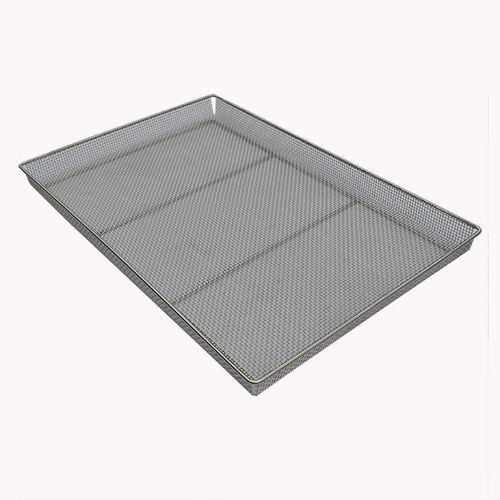
Commercial Stainless Steel Tray: A Strategic Sourcing Guide for Industrial Buyers
Product Introduction
In industrial production, a commercial stainless steel tray is far more than a simple container. It is a critical component that directly impacts hygiene, workflow efficiency, and operational reliability. Designed for continuous use in demanding environments, these trays are engineered to withstand repeated cleaning, heavy loads, and exposure to moisture, chemicals, and temperature fluctuations. For B2B buyers—importers, distributors, and manufacturing engineers—selecting the right tray means balancing durability, cost, and compliance with industry standards. Whether used in food processing, pharmaceutical manufacturing, or industrial drying, the tray must integrate seamlessly into existing equipment and processes. This guide provides a procurement-focused perspective on evaluating commercial stainless steel trays, from material selection to supplier qualification, helping you make informed decisions that reduce downtime and total cost of ownership.
Product Features and Engineering Advantages
Industrial trays are subjected to constant wear. Their design and construction must address load stability, corrosion resistance, and ease of cleaning. Key engineering features include:
- Reinforced frame and cross-bracing: Provides structural integrity under heavy loads and during repeated handling, preventing deformation that could disrupt automated systems.
- Precision mesh or perforation patterns: Ensure optimal airflow and drainage, critical for drying and washing processes. Wire diameter and mesh opening are carefully calculated for specific applications.
- Fully welded construction: Eliminates crevices where bacteria and contaminants can accumulate, meeting strict hygiene standards in food and pharmaceutical production.
- Surface treatment options: Pickling and passivation remove weld scale and enhance corrosion resistance, while electropolishing creates a smooth, non-stick surface for easy release and cleaning.
These features translate into tangible benefits: reduced product loss, longer service life, and lower maintenance costs. For example, a tray with a reinforced frame can withstand the mechanical stress of automated loading systems, minimizing jams and production stoppages. The choice of material and finish also affects cleaning time and chemical consumption, directly impacting operational expenses.
Application Scenarios
Commercial stainless steel trays are versatile and find use across various industries:
- Food Processing: Used for baking, cooling, freezing, and drying. Stainless steel 304 is common for direct food contact due to its corrosion resistance and non-toxicity. Trays must withstand high-pressure washing and sanitizing agents.
- Pharmaceutical: Trays used in sterilization, drying, and storage require strict adherence to GMP standards. 316L stainless steel is often specified for its superior corrosion resistance against harsh chemicals.
- Industrial Manufacturing: Parts washing, degreasing, and heat treatment rely on trays that can endure aggressive chemicals and high temperatures. Robust construction prevents sagging under heavy metal parts.
- Drying Processes: In textile, paper, and chemical industries, mesh trays facilitate uniform airflow for efficient drying. Custom mesh openings are designed based on product size and airflow requirements.
- Storage and Transportation: Stackable trays optimize space utilization in warehouses and during transport. Reinforced corners and bases ensure stability during stacking and movement.
Each application demands specific tray characteristics. For instance, a bakery might require trays that withstand temperatures up to 300°C without warping, while a pharmaceutical company needs trays that can be autoclaved repeatedly without corrosion. Understanding the operating environment is essential for selecting the right specification.
Material Options and Manufacturing Details
The material grade significantly affects performance, longevity, and cost. Common options include:
- 304 Stainless Steel: Offers good corrosion resistance for general food processing and industrial cleaning. It is cost-effective and suitable for most applications where exposure to chlorides is limited.
- 316 Stainless Steel: Contains molybdenum, providing enhanced resistance to chlorides and aggressive chemicals. Ideal for pharmaceutical, chemical, and marine environments. Higher cost but extended service life in harsh conditions.
- 201 Stainless Steel: A lower-cost alternative with lower nickel content. Suitable for dry environments and light-duty applications but less resistant to corrosion. Not recommended for wet or chemical exposure.
- Aluminum: Lightweight and conductive, often used in baking trays. However, it is prone to deformation and corrosion, requiring protective coatings. Not suitable for heavy loads or harsh chemicals.
Manufacturing details such as weld quality, edge finishing, and tolerance control are equally important. High-quality trays feature smooth, burr-free edges to prevent injury and product damage. Welds should be continuous and polished to prevent crevice corrosion. Production tolerances, especially for automated systems, must be tight to ensure proper fit and function.
Specifications and Technical Parameters
When sourcing commercial stainless steel trays, buyers should define the following parameters:
- Dimensions: Length, width, and height, including tolerances. Custom sizes are available to fit specific equipment.
- Material Grade: 304, 316, 201, or aluminum, based on environmental conditions.
- Thickness: Typically 0.5mm to 2.0mm for stainless steel, depending on load requirements.
- Mesh/Perforation: Opening size, wire diameter, and pattern (e.g., square, diamond).
- Load Capacity: Static and dynamic load ratings, often expressed in kg per tray or per layer.
- Surface Treatment: Pickling, passivation, electropolishing, or coating.
- Stackability: Compatibility with existing racks and stacking systems.
It is advisable to request detailed drawings and samples for validation before bulk ordering. Suppliers should provide material certificates and dimensional inspection reports to ensure compliance.
Custom OEM Manufacturing Service
Many industrial applications require tailored solutions. A reliable OEM manufacturer offers:
- Custom Sizing and Design: Engineering support to develop trays that fit exact equipment dimensions and operational needs.
- Material Selection: Guidance on the optimal grade based on cost and performance.
- Prototype Development: Rapid prototyping to test fit and function before mass production.
- Logo Marking and Branding: Permanent marking for brand identification or traceability.
- Special Packaging: Protection during shipping and storage, including custom crating for export.
- Bulk Production: Scalable manufacturing with consistent quality control.
Engaging an OEM partner early in the design phase can lead to cost savings and improved functionality. For custom requirements, please contact our team to discuss your project.
Purchasing Guide for Industrial Buyers
Making informed purchasing decisions requires a systematic approach. Consider the following steps:
- Define the Application: Understand the operating environment, load requirements, and cleaning processes.
- Select Material Grade: Balance corrosion resistance and cost. For food contact, 304 is often sufficient; for harsh chemicals, specify 316.
- Verify Equipment Compatibility: Ensure tray dimensions and stackability match existing racks, ovens, or conveyors.
- Assess Supplier Capability: Evaluate production capacity, quality control systems (e.g., ISO 9001), and export experience. Request factory audits or reference visits.
- Confirm Quality Control: Ask for material certificates, dimensional reports, and surface finish inspections.
- Review Packaging and Logistics: Ensure trays are protected from scratches and deformation during transit. Confirm delivery schedules and Incoterms.
- Evaluate Total Cost of Ownership: Consider longevity, maintenance, and downtime costs, not just unit price.
For bulk orders, it is recommended to place a trial order to verify quality and supplier reliability before committing to large volumes.
Frequently Asked Questions (FAQ)
Q1: What stainless steel grade is recommended for food processing applications?
304 stainless steel is widely used for food contact surfaces due to its good corrosion resistance and cleanability. For applications involving chlorides or aggressive cleaning agents, 316L is preferable. Always ensure the material meets FDA or equivalent food-contact regulations.
Q2: Can the tray size be customized?
Yes, most manufacturers offer custom sizes to fit specific equipment. Provide detailed dimensions and tolerances, and request a drawing for approval before production. Custom tooling may be required for non-standard mesh patterns, which can affect lead time and cost.
Q3: Do you provide OEM manufacturing service?
Yes, we offer full OEM services including custom design, material selection, logo marking, and special packaging. Our engineering team can collaborate with you to develop trays that optimize your production process. Contact us with your specifications for a tailored quote.
Q4: What information should buyers provide before quotation?
To provide an accurate quote, we need: tray dimensions, material grade, mesh/perforation details, surface finish, quantity, and any special requirements (e.g., stacking, logo). A drawing or sample is helpful. Also, specify delivery terms and destination port.
Q5: How do you control product quality?
We implement strict quality control at every stage: incoming material inspection, in-process checks during welding and forming, and final dimensional and surface inspection. We provide material certificates and inspection reports. Our facilities are ISO 9001 certified, ensuring consistent quality.
Q6: What is the typical lead time for bulk orders?
Lead time depends on order quantity and customization. Standard trays may ship within 4-6 weeks, while custom designs may require 8-12 weeks. We will confirm upon order placement and keep you updated on production progress.
Q7: Can trays be stacked for storage?
Yes, many of our trays are designed with stacking features such as reinforced corners or stacking lugs. Specify your stacking requirements so we can design accordingly. Stackability improves space efficiency in warehouses and during transport.

