


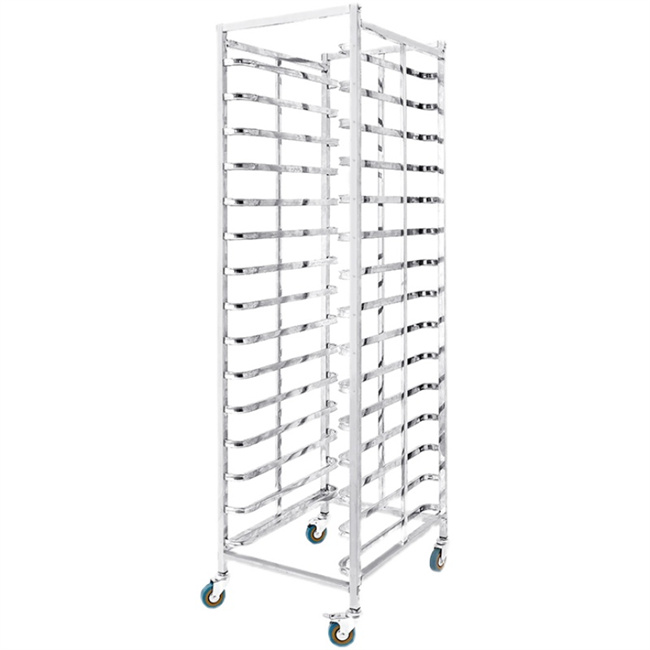
Custom Stainless Steel Baking Trolley: A Comprehensive Procurement Guide for B2B Buyers
Product Introduction
A custom stainless steel baking trolley is a specialized wheeled rack designed to hold multiple baking trays, widely used in commercial bakeries, food processing plants, and industrial manufacturing facilities. Its primary purpose is to facilitate the efficient transport, storage, and cooling of baked goods and other products through various stages of production. By providing a mobile and organized solution, these trolleys address critical challenges such as minimizing product handling damage, optimizing floor space, and ensuring compliance with hygiene standards. Whether you run a high-volume bakery or a pharmaceutical drying operation, a tailored trolley can significantly enhance your workflow.
Product Features
Our custom stainless steel baking trolleys are engineered with robust construction to withstand the rigors of daily industrial use. Key features include:
- Reinforced frame structure: The use of thick-gauge stainless steel tubing and cross-bracing improves load stability during repeated transportation and industrial handling, preventing sway and deformation under heavy loads.
- Corrosion-resistant materials: Constructed from high-grade stainless steel (304, 316, or 201), these trolleys resist rust, stains, and chemical damage, ensuring longevity even in humid or washdown environments.
- Ergonomic design: Smooth-rolling casters (swivel or fixed options) and well-placed handles reduce operator fatigue, while optional brakes enhance safety on inclines.
- Modular and adjustable: Many models feature adjustable shelf heights or removable racks, allowing flexible configuration to accommodate different tray sizes and production needs.
Application Scenarios
Custom stainless steel baking trolleys are indispensable across a multitude of industries:
- Food Processing & Bakery: Transporting dough, bread, pastries, and confectionery through proofing, baking, cooling, and packaging lines. The open design promotes even air circulation for consistent cooling.
- Industrial Manufacturing: Used for drying or curing components, storing parts during assembly, or moving heavy molds. Stainless steel construction withstands oils, solvents, and high temperatures.
- Cleaning & Drying: In pharmaceutical or electronics cleaning rooms, trolleys hold trays of parts during washing and drying cycles. The non-porous surface prevents contamination.
- Storage & Transportation: Ideal for warehouse organization, freezer storage, and inter-departmental transfer. Stackable or nestable options save space when not in use.
For example, a large commercial bakery might use 30-tier trolleys to move hundreds of baguettes from oven to packaging, while a medical device manufacturer relies on custom trolleys with specialized tray inserts for delicate instrument drying.
Material Specifications
Choosing the right stainless steel grade is crucial for performance and cost-efficiency:
- 304 Stainless Steel: The industry standard for food-grade applications. Offers excellent corrosion resistance, easy cleaning, and good formability. Suitable for most bakery and food processing environments.
- 316 Stainless Steel: Superior corrosion resistance, especially against chlorides and harsh chemicals. Ideal for marine, pharmaceutical, and chemical processing applications where exposure to aggressive substances is common.
- 201 Stainless Steel: A cost-effective alternative with moderate corrosion resistance. Best for dry storage or light-duty applications where budget is a primary concern.
- Aluminum: Lightweight and thermally conductive, but less durable and corrosion-resistant than stainless steel. Often used for specialized cooling racks where weight reduction is critical.
Consider the operating environment: high humidity, frequent washdowns, or contact with acidic foods typically necessitate 304 or 316.
Specification Parameters
When specifying a custom trolley, procurement teams should define the following parameters:
- Dimensions: Overall length, width, and height must fit through doorways, around equipment, and within ovens or proofers. Common widths range from 400mm to 800mm.
- Number of Tiers: Typically 10 to 40 tiers, depending on tray size and production volume. Tier spacing (pitch) must accommodate tray height plus clearance for airflow.
- Tray Compatibility: Specify tray dimensions (e.g., 600x400mm, 18x26 inches) and type (perforated, solid, mesh). Trolleys can be designed with side guides or ledges to hold trays securely.
- Load Capacity: Calculate total weight of trays and product. Standard trolleys handle 200-500 kg; heavy-duty models can exceed 1000 kg.
- Tube Thickness & Material: Common tube diameters are 25mm, 32mm, or 38mm with wall thickness of 1.2mm to 2.0mm. Thicker walls increase strength but add weight.
- Surface Finish: Options include polished, brushed, or passivated. A smooth finish (Ra < 0.8 µm) minimizes bacterial adhesion and facilitates cleaning.
- Wheels: Choose casters based on floor type and load: polyurethane (quiet, non-marking), nylon (durable), or stainless steel (high-temperature). Brake options available.
Customization Services
As a leading manufacturer and supplier, we offer comprehensive OEM/ODM services to meet unique requirements:
- Custom Sizes: We produce trolleys in any dimension to fit your exact space and tray configuration.
- Custom Designs: From special tier spacing to integrated drainage systems or bumpers, our engineering team collaborates with you to develop the optimal solution.
- Logo & Branding: Laser-etch or attach your company logo for brand visibility and asset tracking.
- Packaging: Custom crating and labeling for safe, efficient shipping, including export-compliant wooden cases.
- Special Requirements: We accommodate unique needs such as anti-static properties, high-temperature resistance (up to 300°C), or enhanced mobility with shock-absorbing casters.
For custom requirements, please contact our team to discuss your project. We provide rapid prototyping and samples for validation.
Procurement Guide
To ensure you select the right trolley and supplier, consider these guidelines:
- How to choose the size? Map your production flow: measure doorways, oven interiors, and storage areas. Consider future expansion—modular designs allow adding tiers later.
- How to choose the material? Assess environmental conditions: for wet or chemical exposure, choose 304 or 316. For dry storage, 201 may suffice. Always prioritize food safety compliance (e.g., FDA, EU 1935/2004).
- How to confirm specifications? Request detailed drawings and material certificates. Verify load capacity through third-party testing if needed.
- How to judge supplier capability? Evaluate their manufacturing experience, quality control processes (e.g., ISO 9001), and ability to provide references. A factory audit or video tour can confirm production capabilities.
Common pitfalls include underestimating load requirements, ignoring wheel quality, and choosing a supplier without after-sales support. Always request a warranty and spare parts availability.
FAQ
Q1: What is the typical lead time for a custom stainless steel baking trolley?
A: Lead time varies based on complexity and order quantity. Standard custom trolleys ship in 4-6 weeks; complex designs may take 8-10 weeks. We provide a detailed schedule upon order confirmation.
Q2: Can you produce trolleys that fit our existing trays?
A: Absolutely. Provide us with your tray dimensions and we will design the trolley to match precisely, ensuring secure and efficient loading.
Q3: What is the maximum load capacity of your trolleys?
A: Our standard trolleys handle up to 500 kg, but we can engineer heavy-duty models to support over 1000 kg with reinforced frames and heavy-duty casters.
Q4: Do you offer samples for testing?
A: Yes, we provide samples for a fee, which is refundable upon bulk order. This allows you to evaluate quality and fit before committing.
Q5: How do you ensure the trolleys meet food safety standards?
A: We use food-grade stainless steel and smooth finishes that comply with FDA and EU regulations. Each batch undergoes rigorous inspection and can be supplied with material certificates.
Q6: Can trolleys be used in freezers or high-temperature ovens?
A: Yes, we offer models designed for extreme temperatures. For freezers, we use lubricants that remain effective at -40°C; for ovens, we use heat-resistant materials up to 300°C.
Q7: What are the payment terms for international orders?
A: We accept T/T, L/C, and other methods. Typically, 30% deposit with balance against shipping documents. Terms are negotiable for long-term partners.
Q8: Do you provide after-sales support?
A: Yes, we offer a 1-year warranty on manufacturing defects and provide technical support and spare parts to ensure minimal downtime.
For further information or to request a quote, please reach out to our sales team. We are committed to delivering high-quality, customized solutions that optimize your operations.

