


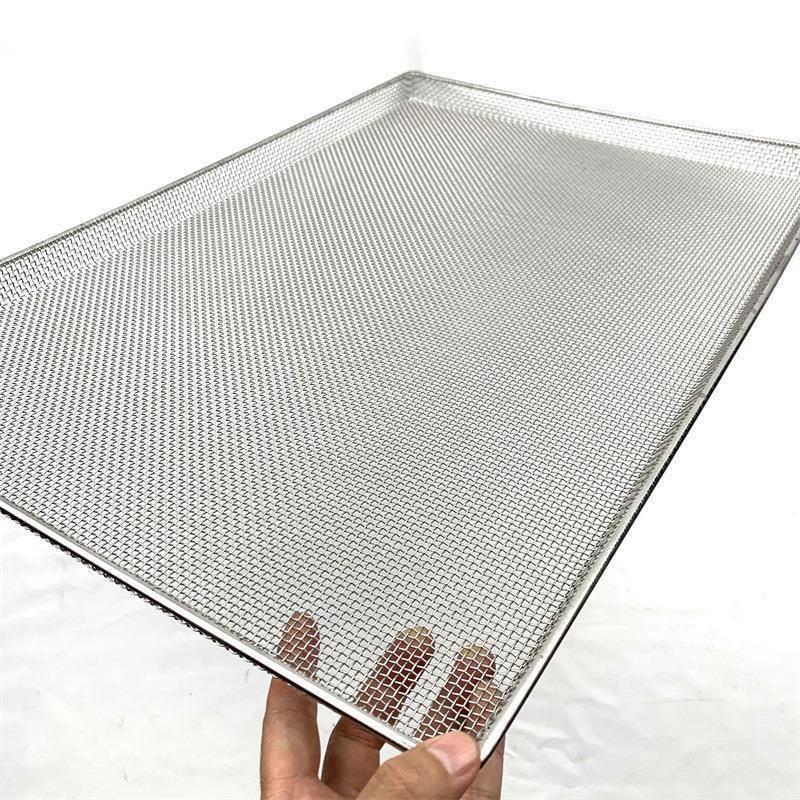
Custom Stainless Steel Tray: A Strategic Sourcing Guide for Industrial Buyers
Product Introduction
In industrial procurement, a custom stainless steel tray is rarely just a piece of metal. It is a critical component that directly affects production efficiency, hygiene standards, and operational safety. These trays are engineered to hold, transport, dry, cool, or store products across food processing, pharmaceutical, and general manufacturing environments. Unlike off-the-shelf solutions, custom trays are designed to integrate seamlessly with existing equipment—whether it is a conveyor system, a racking setup, or a washing line. For buyers, the decision to source custom trays is driven by the need to solve specific production challenges: eliminating product damage, improving airflow during drying, ensuring compliance with food safety regulations, or simply reducing downtime caused by poorly fitting standard trays. As a manufacturer, we understand that every tray we produce becomes part of your production line. That is why our approach focuses on understanding your process first, then engineering a tray that delivers long-term reliability. Whether you are an importer, distributor, or an industrial end-user, the goal is the same: a tray that fits, performs, and lasts.
Product Features and Engineering Advantages
The engineering behind a custom stainless steel tray determines its performance in continuous production environments. Our trays are built with a reinforced frame design that improves load stability during repeated transportation and high-frequency industrial handling. The structural integrity is not left to chance—each tray is formed using precision welding and press techniques that ensure consistent dimensions and squareness, which is critical when trays must stack or fit into automated systems. The mesh or perforated surface is engineered to optimize drainage and airflow, reducing drying times and preventing residue buildup. Key features include:
- High corrosion resistance for washdown and chemical exposure
- Easy-cleaning surface with crevice-free welds
- Stable load capacity verified through structural testing
- Custom manufacturing options to match equipment interfaces
Beyond the basics, we consider how the tray interacts with your process. For example, edge treatments are deburred and polished to protect operators and products. The choice of mesh orientation and wire diameter is matched to the load and airflow requirements. In high-temperature drying applications, we account for thermal expansion to prevent warping. These details are what separate a functional tray from a failure-prone one. For buyers, the engineering advantage translates into fewer replacements, reduced product loss, and smoother production runs.
Application Scenarios
Custom stainless steel trays are deployed across a wide range of industries, each with unique requirements. In food processing, trays are used for washing, blanching, cooling, and freezing. The primary need is hygiene: non-porous surfaces, easy cleaning, and resistance to food acids and cleaning chemicals. Bakeries rely on trays for proofing, baking, and cooling, where consistent airflow and heat resistance are essential. In industrial manufacturing, trays transport small parts through degreasing, coating, and drying lines, demanding robust construction and chemical compatibility. Drying processes in agriculture or chemical production use mesh trays to maximize air circulation and moisture removal. Cleaning processes often involve trays that hold components during ultrasonic or spray cleaning, requiring corrosion resistance and structural strength. For storage and transportation, trays act as returnable containers, so stackability and weight optimization matter. In the pharmaceutical and laboratory sectors, trays must meet strict cleanliness standards and often require documentation for material traceability. Commercial production lines for electronics or cosmetics use trays for handling delicate components, where surface finish and static dissipation may be considerations. In every scenario, the tray is not a commodity but a process enabler. Understanding the application is the first step toward specifying the right tray.
Material Options and Manufacturing Details
Material selection is a critical procurement decision that impacts cost, performance, and compliance. We offer several stainless steel grades, each suited to specific environments. 304 stainless steel provides reliable corrosion resistance for food contact applications and daily industrial cleaning environments. It is the workhorse grade for most food processing and general manufacturing trays. 316 stainless steel offers superior resistance to chlorides and aggressive chemicals, making it suitable for pharmaceutical, marine, and chemical processing applications where 304 may corrode. 201 stainless steel is a cost-effective option for dry environments or light-duty applications where corrosion demands are lower, though buyers should note its reduced resistance compared to 304. Additionally, aluminum trays are available for applications requiring lightweight construction and good thermal conductivity, such as baking, but they are not suitable for highly corrosive environments. Manufacturing details also matter: we control wire diameter, mesh opening, and frame thickness to meet load requirements. Surface treatments such as passivation or electropolishing can further enhance corrosion resistance and cleanability. For buyers, the key is to match material to the working environment—not over-specify and inflate costs, nor under-specify and risk premature failure. Our team can advise on the optimal grade based on your cleaning chemicals, operating temperatures, and load cycles.
Specifications and Technical Parameters
Industrial buyers need precise specifications to ensure compatibility and performance. While every custom tray is made to order, the following parameters represent common industry ranges and can be customized. Size: from small 300mm x 200mm trays to large 1200mm x 800mm formats, or according to equipment dimensions. Thickness: frame material typically 1.0mm to 3.0mm, with mesh wire diameters from 1.0mm to 4.0mm. Capacity: load ratings depend on design, but standard trays are engineered for 20kg to 150kg distributed loads. Weight loading: we verify load capacity through structural analysis and physical testing. Layers: single-layer or multi-tier racking systems can be accommodated. Mesh opening: from 5mm to 50mm, selected based on product size and airflow needs. Wire diameter: as above, affecting strength and openness. Tray compatibility: designed to fit existing racks, conveyors, or shelving. Surface treatment: passivation, electropolishing, or as-rolled finish. Production tolerance: typically ±1mm on critical dimensions, with tighter tolerances available upon request. Buyers should provide drawings or samples to ensure exact fit. For custom requirements, please contact our team to discuss your specifications.
Custom OEM Manufacturing Service
As an OEM stainless steel tray manufacturer, we provide end-to-end custom manufacturing services tailored to your production needs. Our capabilities include custom size fabrication based on your drawings or equipment measurements, custom design support where our engineers collaborate with you to optimize the tray for your process, logo marking for brand identification or inventory control, and special packaging to protect trays during shipping and storage. We assist with material selection to balance performance and cost, and offer prototype development to validate the design before mass production. Our bulk production lines are equipped to handle large volumes with consistent quality, supported by in-house quality control at every stage. For custom requirements, please contact our team to discuss your project. We work closely with importers and distributors to ensure that every tray meets their market's expectations and regulatory requirements.
Purchasing Guide for Industrial Buyers
Effective procurement of custom stainless steel trays requires a structured approach. Start by confirming the working environment: identify cleaning chemicals, operating temperatures, and load conditions. Next, check material requirements: choose the stainless steel grade that matches the corrosion resistance needed, and consider regulatory compliance for food or pharmaceutical contact. Verify equipment compatibility: provide exact dimensions, interface points, and any handling equipment details to avoid costly mismatches. Evaluate supplier production capacity: ask about manufacturing equipment, quality control processes, and previous export experience. When comparing quotes, consider the total cost of ownership, not just unit price. A tray that fails early costs more in downtime and replacement. Before placing a bulk order, request samples or prototypes to test in your actual process. Also, confirm packaging standards for sea freight, lead times, and delivery reliability. A reliable supplier will be transparent about their capabilities and willing to provide references. Use this checklist:
- Confirm working environment and load requirements
- Check material grade and surface finish
- Verify equipment compatibility with drawings
- Evaluate supplier quality control and production capacity
- Review packaging and delivery terms
By following these steps, buyers can mitigate risks and secure trays that deliver long-term value.
FAQ
What stainless steel grade is recommended for food processing applications?
For most food processing applications, 304 stainless steel is the standard choice due to its reliable corrosion resistance and ease of cleaning. However, if your process involves high-chloride cleaning agents or saline environments, 316 stainless steel is recommended for superior corrosion resistance. We can advise based on your specific cleaning chemicals and operating conditions.
Can the tray size be customized?
Yes, all our trays are custom manufactured. We work from your drawings, samples, or equipment dimensions to produce trays that fit precisely. There is no minimum size restriction, and we can accommodate small batches for prototyping as well as large production runs.
Do you provide OEM manufacturing service?
Absolutely. We offer full OEM services including custom design, logo marking, special packaging, and material selection. Our engineering team can collaborate with you to develop trays that meet your market's requirements. For custom requirements, please contact our team to discuss your project.
What information should buyers provide before quotation?
To provide an accurate quotation, we need the tray dimensions (length, width, height), material grade, mesh or perforation specifications, load requirements, surface finish, and quantity. If you have drawings or samples, that is even better. Also, let us know any special packaging or delivery requirements.
How do you control product quality?
We implement strict quality control at every stage: incoming material inspection, in-process checks during cutting, welding, and finishing, and final inspection before packing. We use calibrated measuring tools and maintain records for traceability. For critical projects, we can provide inspection reports and coordinate third-party inspections.
What is the typical lead time for custom trays?
Lead time depends on order quantity and complexity. For new custom designs, prototype development may take 2-3 weeks. Bulk production typically requires 4-6 weeks after sample approval. We will provide a detailed schedule upon order confirmation and keep you updated on progress.
Do you offer packaging suitable for export?
Yes, we offer export-grade packaging including wooden crates, pallets, and moisture barrier materials to protect trays during sea freight. We can also customize packaging to meet your specific handling or branding needs.

