


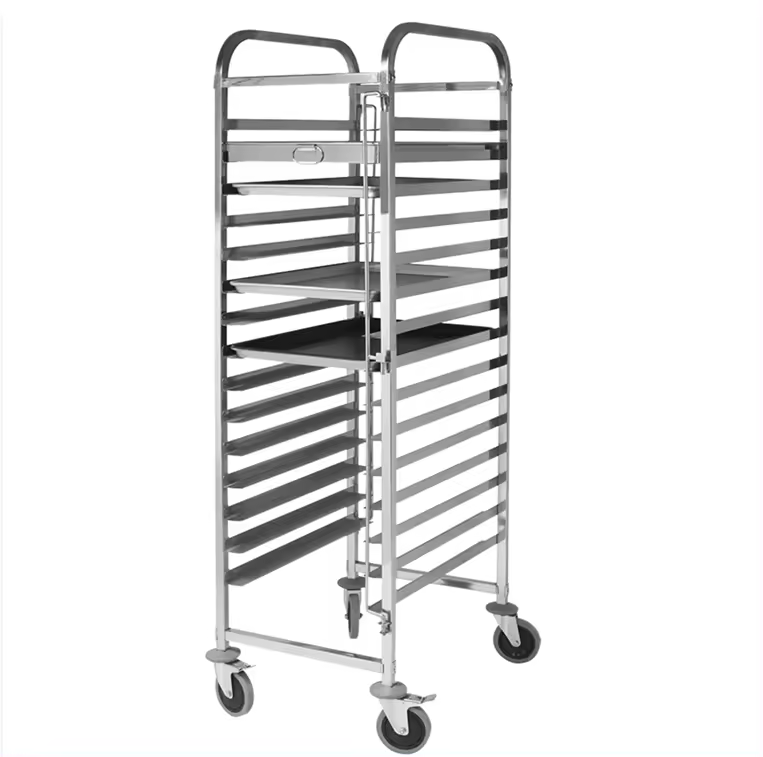
Custom Stainless Steel Trolley OEM Guide: Sourcing, Specifications & Supplier Vetting
Product Introduction: What Is a Custom Stainless Steel Trolley?
A custom stainless steel trolley is a mobile platform designed and fabricated to meet specific operational requirements in industrial, commercial, and hygienic environments. Unlike standard catalog carts, these trolleys are engineered to integrate seamlessly with existing production lines, wash-down protocols, and material handling workflows. They solve critical problems: reducing manual lifting injuries, preventing cross-contamination in food and pharma zones, and optimizing space utilization in tight production areas. Whether you need a multi-tiered shelf trolley for bakery racks or a heavy-duty cart for foundry molds, the OEM process ensures the final product matches your exact dimensions, load capacity, and cleanliness standards.
Product Features: Design, Material, and Performance Advantages
Industrial buyers should look beyond basic appearance. A well-designed stainless steel trolley incorporates features that directly impact total cost of ownership. For example, a reinforced frame structure with gusseted corners improves load stability during repeated transportation over uneven floors. Fully welded construction—rather than spot welds—prevents crevice corrosion and bacterial harborage, which is essential in food processing. Sanitary design includes rounded edges, sloped drain surfaces, and open tubular frames to facilitate cleaning. Performance-wise, trolleys can be equipped with heavy-duty casters (polyurethane, nylon, or stainless steel) with brakes, ergonomic push handles, and modular shelving that adjusts without tools. These features reduce downtime, extend service life, and lower maintenance costs in harsh environments.
Application Scenarios Across Industries
Custom stainless steel trolleys serve diverse sectors, each with unique demands. In food processing, trolleys must withstand high-pressure washdowns and caustic sanitizers; they often feature perforated shelves for drainage and are built from 304 or 316 stainless steel. Bakeries use multi-tier trolleys to hold baking sheets and proofing trays, requiring precise tray spacing and heat resistance. Industrial manufacturing relies on heavy-gauge trolleys for transporting castings, tools, and subassemblies, often with load capacities exceeding 1,000 kg. Cleaning and drying applications benefit from trolleys that hold parts baskets or hoses, with designs that promote airflow and drainage. Storage and transportation in warehouses and logistics centers demand trolleys with high shelving and maneuverability. Pharmaceutical and cleanroom environments require electropolished surfaces and caster wheels that minimize particle generation. Each scenario dictates specific material grades, surface finishes, and structural reinforcements.
Material Selection: 304 vs. 316 vs. 201 Stainless Steel and Aluminum
Choosing the right material is a balance between corrosion resistance, strength, and cost. 304 stainless steel is the industry standard for most food and industrial applications; it offers excellent corrosion resistance to organic acids and mild chemicals, and is easy to fabricate and clean. 316 stainless steel contains molybdenum, providing superior resistance to chlorides and aggressive sanitizers—critical in seafood processing, pharmaceutical manufacturing, and coastal environments. 201 stainless steel is a lower-cost alternative with lower nickel content; it offers moderate corrosion resistance but is more susceptible to rust in humid or acidic conditions, so it's best for dry storage or light-duty applications. Aluminum trolleys are lightweight and resist rust, but they are not suitable for high-temperature or caustic washdown environments and can dent under heavy impact. For hygienic zones, always specify 304 or 316; for budget-driven, dry logistics, 201 or aluminum may suffice.
Specifications and Technical Parameters
B2B buyers must define specifications precisely to avoid costly rework. Key parameters include: Overall dimensions (length × width × height) to fit through doorways, aisles, and into ovens or racks. Load capacity per shelf and total, typically ranging from 100 kg to 1,500 kg. Number of shelves (1 to 6 or more) and adjustable spacing. Material thickness (e.g., 1.2 mm, 1.5 mm, 2.0 mm) for frames, shelves, and tubes; heavier gauges improve durability but add weight. Surface finish—options include brushed, mirror-polished, electropolished, or bead-blasted, each affecting cleanability and appearance. Caster type and size—wheel diameter (100 mm to 200 mm), material (polyurethane, nylon, rubber, stainless), and braking options. Perforation or mesh—hole diameter and pattern for drainage or airflow. Tray compatibility—if the trolley will hold standard baking sheets (e.g., 600×400 mm) or Euro containers, specify the pitch and support rails. Providing a detailed specification sheet to your supplier is the first step toward a successful OEM project.
OEM/ODM Customization Services
A capable manufacturer offers full customization to align with your brand and operational needs. Custom size allows you to maximize space in existing production lines or vehicles. Custom design includes modifications like extra reinforcement, specialized handles, or integrated weighing scales. Logo and branding—laser-etched or embossed—can be applied to frames or shelves for asset tracking and brand visibility. Packaging customization ensures safe transport and easy receiving; options include export wooden crates, foam protection, and barcode labeling. Special requirements such as anti-static casters, temperature-resistant wheels, or RFID tags can be integrated. When evaluating a supplier, ask for their OEM production capability: in-house laser cutting, bending, welding, and polishing ensure consistency and lead-time control. Factories with dedicated engineering teams can provide 3D drawings and prototypes before mass production.
Procurement Guide: How to Choose Size, Material, and Supplier
Purchasing custom stainless steel trolleys involves several critical decisions. First, how to choose the right size: map your workflow—measure door clearances, turning radii, and the dimensions of items to be transported. Consider future needs; a slightly larger trolley may accommodate new product lines. Second, material selection: as outlined earlier, match the grade to your environment. For wet, acidic, or chloride-rich conditions, 316 is worth the premium. For dry storage, 201 or aluminum can reduce costs. Third, how to confirm specifications: request a detailed drawing with tolerances, material certificates (e.g., EN 10204 3.1), and a sample or prototype if possible. Verify load ratings through third-party testing or supplier-provided calculations. Fourth, how to judge supplier capability: look for ISO 9001 certification, ask for references in your industry, and audit their factory if feasible. Check their welding quality (clean, consistent beads), surface finish (no scratches or pits), and caster assembly (smooth rolling, no wobble). A reliable supplier will offer transparent lead times, warranty terms, and after-sales support. For custom requirements, please contact our team to discuss your project.
Frequently Asked Questions (FAQ)
Q1: What is the typical lead time for a custom stainless steel trolley order?
A1: Lead time varies with complexity and order quantity. For a standard custom design with moderate modifications, expect 4–6 weeks after drawing approval. Large orders or those requiring new tooling may take 8–10 weeks. Always confirm production schedule and shipping terms upfront.
Q2: Can you produce trolleys that meet FDA or EU food-contact regulations?
A2: Yes. We use 304 or 316 stainless steel with sanitary finishes (e.g., electropolished) that comply with FDA and EU 1935/2004 regulations. Material certificates and migration test reports can be provided upon request.
Q3: What is the minimum order quantity (MOQ) for OEM trolleys?
A3: MOQ depends on the level of customization. For minor modifications to existing designs, MOQ may be as low as 10–20 units. For fully new designs, MOQ could be 50–100 units to amortize tooling and setup costs. We strive to accommodate small trial orders.
Q4: How do I ensure the trolley's load capacity is sufficient for my application?
A4: Provide us with the maximum load per shelf and total weight. Our engineers will calculate structural requirements, including tube thickness, shelf reinforcement, and caster load ratings. We recommend a safety factor of at least 1.5.
Q5: Can the trolley be designed for high-temperature ovens or freezers?
A5: Absolutely. For high-temperature applications (up to 300°C), we use stainless steel construction with high-temp casters and heat-resistant coatings. For freezers, we use cold-resistant wheels and lubricants. Specify your temperature range when ordering.
Q6: What surface finishes are available for stainless steel trolleys?
A6: Common finishes include brushed (#4), mirror (#8), electropolished, and bead-blasted. Brushed is standard for industrial use; electropolished offers superior corrosion resistance and cleanability for pharmaceutical and food applications.
Q7: Do you provide assembly instructions and spare parts?
A7: Yes, each trolley ships with assembly instructions if needed. We also offer spare casters, shelves, and hardware for long-term maintenance. Our after-sales team is available for technical support.
Q8: How do you handle shipping and export documentation?
A8: We ship worldwide via sea or air freight. Our export team prepares all necessary documents, including commercial invoice, packing list, bill of lading, and certificate of origin. We can also work with your freight forwarder.
Image ALT Text Suggestions
For SEO and accessibility, use these ALT texts: “Custom stainless steel trolley with three shelves in food processing plant”, “Heavy-duty stainless steel trolley with polyurethane casters for industrial manufacturing”, “Sanitary 316 stainless steel trolley with electropolished finish for pharmaceutical use”, “OEM stainless steel bakery trolley holding standard baking sheets”.
SEO Metadata
SEO Title: Custom Stainless Steel Trolley OEM Guide | Sourcing & Specs
Meta Description: Learn how to source custom stainless steel trolleys for industrial use. OEM process, material selection, specs, and supplier vetting for B2B buyers.
SEO Keywords: custom stainless steel trolley, stainless steel trolley OEM, industrial trolley manufacturer, 304 stainless steel cart, 316 stainless steel trolley, food grade trolley, heavy duty trolley supplier, stainless steel trolley customization, B2B trolley sourcing, hygienic trolley design

