


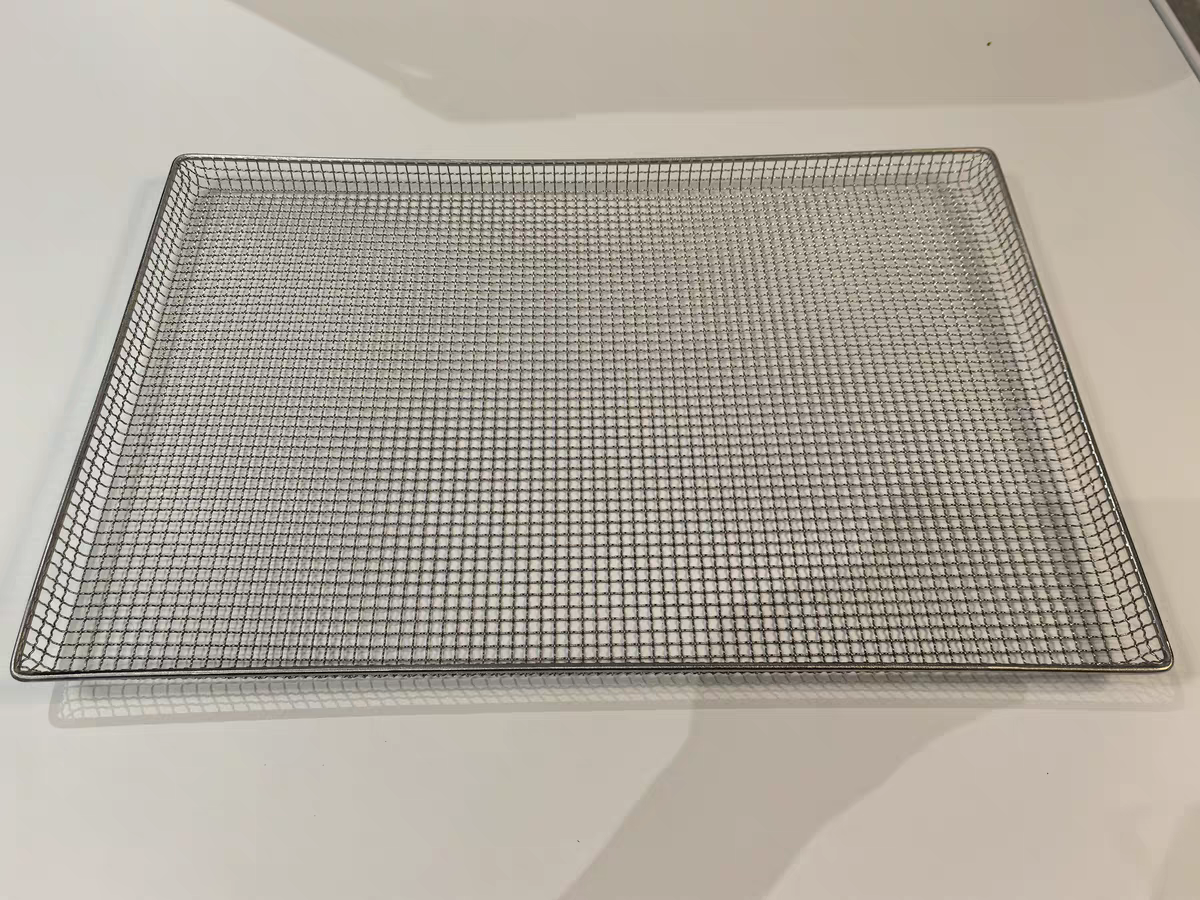
Food Dehydrator Tray Sourcing: A B2B Buyer’s Guide to Industrial-Grade Stainless Steel Trays
Product Introduction
In industrial food processing, the food dehydrator tray is a critical component that directly affects airflow, drying consistency, and equipment uptime. Unlike consumer-grade trays, these are engineered for continuous operation in commercial dehydrators, where load stability, hygiene, and resistance to repeated cleaning are non-negotiable. From fruit and vegetable drying to meat jerky production and pet food manufacturing, the tray must withstand high temperatures, moisture, and frequent handling without warping or corroding.
For B2B buyers—importers, distributors, and OEM manufacturers—the tray is a repeat-purchase item that reflects the reliability of the entire drying line. A poorly specified tray can cause uneven drying, product loss, and premature equipment wear. This article provides a procurement-focused overview of industrial food dehydrator trays, covering engineering features, material selection, application scenarios, customization, and supplier evaluation criteria.
Product Features and Engineering Advantages
Industrial food dehydrator trays are designed for continuous production environments where hygiene, load stability, and long-term reliability are critical. The following features are standard in professional-grade trays:
- Reinforced frame construction – improves load stability during repeated transportation and high-frequency industrial handling, preventing deformation under heavy product loads.
- Corrosion-resistant materials – 304 or 316 stainless steel options provide reliable performance in humid, high-temperature drying chambers and wash-down environments.
- Optimized mesh or perforation pattern – ensures uniform airflow across the tray surface, reducing drying time and energy consumption.
- Easy-clean surface – smooth welds and passivated finishes minimize bacterial harborage and simplify sanitation between batches.
- Stackable and compatible design – trays are engineered to fit specific dehydrator rack systems, with tolerances that prevent jamming or unstable stacking.
Manufacturing processes such as precision laser cutting, robotic welding, and edge deburring contribute to consistent quality across production runs. For buyers, these engineering details translate into lower replacement frequency, reduced downtime, and better compliance with food safety audits.
Application Scenarios
Food dehydrator trays are used across multiple industries, each with distinct requirements:
- Food processing: Drying fruits, vegetables, herbs, and meat products. Trays must be food-safe, corrosion-resistant, and compatible with high-humidity environments.
- Bakery and confectionery: Cooling and drying baked goods, where trays need smooth surfaces to prevent product marking and easy release.
- Pharmaceutical and laboratory: Drying temperature-sensitive materials, requiring 316 stainless steel for chemical resistance and strict cleaning protocols.
- Industrial manufacturing: Drying components after washing, where load capacity and chemical resistance are key.
- Commercial production: Large-scale drying operations for pet food, snacks, and ready-to-eat meals, where tray durability and stackability drive throughput.
In each scenario, the tray is not a passive accessory but an active part of the drying system. Buyers should match tray specifications to the specific process—temperature range, product acidity, cleaning method, and handling equipment—to avoid costly mismatches.
Material Options and Manufacturing Details
Material selection is a primary cost and performance driver. Common options include:
- 304 stainless steel: Provides reliable corrosion resistance for food contact applications and daily industrial cleaning environments. Suitable for most fruit, vegetable, and meat drying operations.
- 316 stainless steel: Offers superior resistance to chlorides and aggressive cleaning chemicals, making it ideal for pharmaceutical, laboratory, and high-salt food applications.
- 201 stainless steel: A cost-effective option for dry environments with limited moisture exposure, though less resistant to corrosion than 304.
- Aluminum: Lightweight and conductive, but requires coating or anodizing for food contact and is not suitable for acidic products or harsh wash-down.
Manufacturing details such as wire diameter, mesh opening, and frame thickness are specified based on load requirements and airflow needs. Surface treatments—passivation, electropolishing, or coating—further enhance corrosion resistance and cleanability. Buyers should request material certificates and confirm compliance with food safety standards such as FDA or EU 1935/2004.
Specifications and Technical Parameters
Industrial trays are typically customized to fit existing dehydrator racks. Key parameters include:
- Size: Custom dimensions to match equipment; common widths range from 400 mm to 1200 mm.
- Thickness: Frame and mesh thickness selected for load capacity, typically 1.0 mm to 3.0 mm.
- Load capacity: Static load ratings from 10 kg to 50 kg per tray, depending on design.
- Mesh opening and wire diameter: Adjusted for airflow and product size, with wire diameters from 0.8 mm to 3.0 mm.
- Surface treatment: Passivation, electropolishing, or food-grade coating.
- Tolerances: Production tolerances within ±1 mm for critical dimensions to ensure equipment compatibility.
Buyers should provide equipment drawings or sample trays for accurate quotation and prototype development.
Custom OEM Manufacturing Service
For buyers requiring tailored solutions, OEM manufacturing covers custom size, design, logo marking, special packaging, and material selection. Prototype development is available to validate fit and performance before bulk production. Production capacity typically ranges from 5,000 to 20,000 trays per month, depending on complexity. For custom requirements, please contact our team with your specifications and target volumes.
Purchasing Guide for Industrial Buyers
Effective sourcing requires a structured approach. Consider the following checklist:
- Confirm working environment: Temperature, humidity, cleaning chemicals, and load conditions.
- Check material requirements: Food safety compliance, corrosion resistance, and cost targets.
- Verify equipment compatibility: Tray dimensions, stacking method, and handling interface.
- Evaluate supplier production capacity: Monthly output, lead times, and quality control processes.
- Assess export experience: Documentation, packaging standards, and delivery reliability.
Request pre-production samples and third-party inspection reports for bulk orders. A supplier with in-house laser cutting, welding, and surface treatment is better positioned to control quality and lead times.
FAQ
Q1: What stainless steel grade is recommended for food processing applications?
A: 304 stainless steel is the standard for most food drying applications due to its corrosion resistance and food-safe properties. For high-salt or pharmaceutical applications, 316 stainless steel is recommended.
Q2: Can the tray size be customized?
A: Yes, trays are custom-manufactured to match your dehydrator rack dimensions. Provide drawings or samples for accurate production.
Q3: Do you provide OEM manufacturing service?
A: We offer OEM services including custom design, logo marking, and special packaging. Contact our team with your requirements.
Q4: What information should buyers provide before quotation?
A: Tray dimensions, material grade, load requirements, surface treatment, quantity, and delivery timeline. Equipment drawings help ensure compatibility.
Q5: How do you control product quality?
A: We implement incoming material inspection, in-process checks, and final dimensional and surface inspections. Third-party inspection can be arranged upon request.
Q6: What is the typical lead time for bulk orders?
A: Lead times vary by order size and customization. Standard production is 25–35 days after sample approval, depending on material availability.
Q7: Can trays be used in high-temperature dehydrators?
A: Yes, stainless steel trays are suitable for temperatures up to 250°C, depending on material grade and design.

