


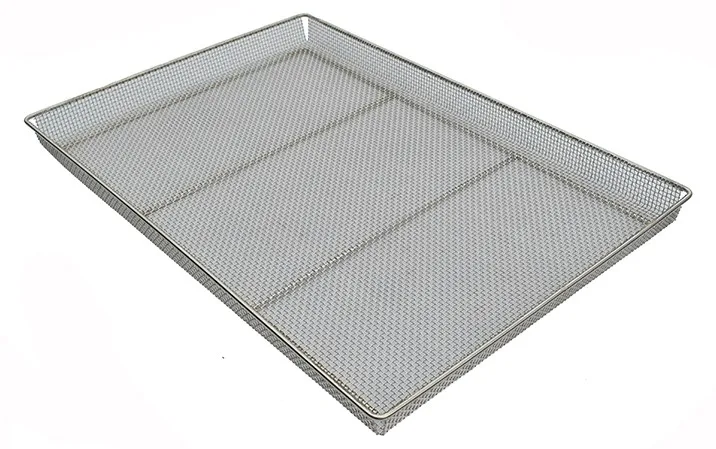
Food Drying Tray for Industrial Processing: A Buyer's Guide to Stainless Steel Mesh Trays
Product Introduction
In industrial food processing, the food drying tray is not a peripheral accessory—it is a critical component that directly affects product quality, throughput, and operational hygiene. These trays are engineered to hold, transport, and support food products during drying, cooling, freezing, or storage processes. Unlike consumer-grade trays, industrial food drying trays must withstand continuous production cycles, frequent cleaning, and rigorous hygiene standards. The design typically incorporates a stainless steel mesh or perforated surface that allows optimal airflow, moisture evacuation, and uniform heat distribution. For procurement professionals, selecting the right tray means balancing load capacity, corrosion resistance, cleanability, and compatibility with existing drying equipment. A poorly chosen tray can lead to product contamination, reduced drying efficiency, or premature failure, resulting in costly downtime. Therefore, understanding the engineering and manufacturing aspects of food drying trays is essential for making informed purchasing decisions. This guide provides a comprehensive overview for importers, distributors, and industrial buyers seeking reliable stainless steel mesh tray solutions.
Product Features and Engineering Advantages
Industrial food drying trays are designed with features that address the harsh realities of continuous production environments. The reinforced frame design is a key differentiator: it improves load stability during repeated transportation and high-frequency industrial handling. Unlike flimsy trays that deform under load, these trays maintain their shape, ensuring consistent performance and reducing the risk of product spillage. The mesh surface is typically constructed from high-quality stainless steel wire, woven or welded to exact specifications. This construction provides excellent open area for airflow, which is critical for efficient drying and cooling. The electropolished or passivated surface enhances corrosion resistance and facilitates cleaning, minimizing the risk of bacterial growth. Additionally, the trays are often stackable or compatible with automated racking systems, optimizing space utilization in drying chambers. From an engineering standpoint, the trays are manufactured using precision welding and forming techniques to ensure dimensional accuracy and structural integrity. This attention to detail translates into longer service life and reduced maintenance costs. For buyers, these features mean fewer replacements, lower downtime, and consistent product quality—key factors for maintaining competitive advantage in the food processing industry.
Key product features include:
- High corrosion resistance for food contact and washdown environments
- Easy cleaning surface to meet hygiene regulations
- Stable load capacity for heavy or stacked products
- Custom manufacturing options to fit specific equipment
Application Scenarios
Food drying trays are versatile and find use across multiple industries. In food processing, they are essential for drying fruits, vegetables, meat, and seafood. The open mesh design allows hot air to circulate evenly, reducing drying time and ensuring consistent moisture content. In bakery operations, these trays are used for cooling bread, pastries, and confectionery items, where rapid and uniform cooling is necessary to maintain texture and shelf life. Industrial manufacturing settings employ these trays for parts washing, drying, and coating processes, benefiting from the corrosion resistance and durability of stainless steel. In pharmaceutical and laboratory environments, stainless steel mesh trays are used for drying glassware, instruments, and samples, where cleanliness and chemical resistance are paramount. Commercial production facilities, such as large-scale kitchens and catering operations, rely on these trays for storage and transportation of ingredients and finished products. Each application demands specific characteristics: for example, food contact requires FDA-compliant materials, while pharmaceutical applications may require stricter sanitation and documentation. By understanding the operating environment, buyers can specify the appropriate tray design and material to ensure optimal performance and compliance.
Material Options and Manufacturing Details
Material selection is a critical decision for industrial food drying trays. The most common grades are 304 stainless steel, 316 stainless steel, and 201 stainless steel, each offering different levels of corrosion resistance and cost. 304 stainless steel provides reliable corrosion resistance for food contact applications and daily industrial cleaning environments. It is suitable for most food processing and bakery applications where exposure to mild acids and cleaning agents is expected. 316 stainless steel offers superior corrosion resistance, particularly against chlorides and harsh chemicals, making it ideal for pharmaceutical, laboratory, and seafood processing environments. 201 stainless steel is a more economical option with lower nickel content, suitable for dry environments or applications with minimal corrosion risk. Aluminum trays are lightweight and offer good thermal conductivity, but they are less corrosion-resistant and may not be suitable for acidic foods or frequent washing. Manufacturing details also matter: trays can be produced with different mesh openings, wire diameters, and frame constructions. Welded mesh provides greater strength, while woven mesh offers flexibility. Surface treatments such as electropolishing or passivation can further enhance corrosion resistance and cleanability. Buyers should consider the specific demands of their process—temperature, humidity, chemical exposure, and load—when selecting materials and manufacturing specifications.
Specifications and Technical Parameters
For procurement professionals, a clear understanding of specifications is essential to ensure compatibility and performance. While exact parameters vary by manufacturer and application, typical industry ranges include:
- Size: Custom sizes available to fit drying chambers, racks, and automated systems. Common dimensions range from 400x600 mm to 1000x1200 mm.
- Thickness: Frame thickness typically 1.0–2.0 mm; mesh wire diameter 1.0–3.0 mm.
- Capacity: Load capacity depends on design and material, typically 20–100 kg per tray.
- Layers: Single or multi-layer configurations available, with stackable designs for space efficiency.
- Mesh opening: 2–20 mm, selected based on product size and airflow requirements.
- Surface treatment: Electropolished, passivated, or pickled to enhance corrosion resistance.
- Production tolerance: Typically ±1–2 mm for dimensions, ensuring fit and interchangeability.
Buyers should verify these parameters against their equipment specifications and production requirements. Additionally, consider compatibility with existing racks, trolleys, and automated handling systems. For custom sizes and configurations, manufacturers can provide tailored solutions based on detailed drawings or samples.
Custom OEM Manufacturing Service
Many industrial buyers require customized trays to meet specific production needs. A capable OEM stainless steel tray manufacturer can provide a range of customization services, including custom size, design, logo marking, special packaging, material selection, prototype development, and bulk production. Custom sizing ensures a perfect fit for existing drying equipment, eliminating wasted space and improving efficiency. Design modifications, such as reinforced edges or specialized mesh patterns, can address unique load or airflow requirements. Logo marking and special packaging help distributors and importers build their brand and meet local market needs. Material selection is critical: manufacturers should offer guidance on the best grade for the application, considering factors like corrosion resistance, cost, and regulatory compliance. Prototype development allows buyers to test trays in their actual production environment before committing to bulk orders, reducing risk. For custom requirements, please contact our team to discuss your specifications and receive a tailored quotation. A reliable OEM partner will work closely with you throughout the process, from design to delivery, ensuring that the final product meets your expectations.
Purchasing Guide for Industrial Buyers
Making informed purchasing decisions requires a systematic approach. Start by clearly defining your application requirements: what products will be dried, at what temperature, and with what chemical exposure? This will guide material selection—for example, 304 stainless steel for general food processing, 316 for harsh environments. Next, confirm equipment compatibility: measure your existing racks and drying chambers to determine the maximum tray size and loading pattern. Verify specifications such as mesh opening and wire diameter to ensure adequate airflow and load support. When evaluating suppliers, consider their production capacity, quality control processes, and export experience. Request samples to test performance and durability. For bulk orders, discuss packaging and delivery reliability to avoid production disruptions. A checklist for procurement includes:
- Confirm working environment (temperature, humidity, chemicals)
- Check material requirements (stainless steel grade, food contact compliance)
- Verify equipment compatibility (size, loading method)
- Evaluate supplier production capacity and quality control
- Review packaging and delivery terms
Additionally, ask for certifications (e.g., ISO, FDA) and references from similar industries. A supplier with a proven track record in your sector is more likely to meet your expectations. Finally, negotiate clear terms for warranty, after-sales support, and spare parts availability to ensure long-term operational reliability.
FAQ
Q1: What stainless steel grade is recommended for food processing applications?
A: For most food processing applications, 304 stainless steel offers a good balance of corrosion resistance and cost. It is suitable for contact with food and resistance to common cleaning agents. For environments with high chloride exposure or strict hygiene requirements, such as seafood or pharmaceutical processing, 316 stainless steel is recommended due to its superior corrosion resistance.
Q2: Can the tray size be customized?
A: Yes, most manufacturers offer custom sizing to fit specific equipment dimensions. Provide detailed drawings or measurements of your drying chamber, racks, and handling systems, and the manufacturer can produce trays that maximize capacity and compatibility. Custom sizes can also help optimize airflow and loading efficiency.
Q3: Do you provide OEM manufacturing service?
A: Yes, OEM services are available, including custom design, logo marking, and special packaging. This allows distributors and importers to offer branded products. Manufacturers with OEM experience can assist with design modifications and material selection to meet your market's requirements. Contact the manufacturer with your specifications for a tailored proposal.
Q4: What information should buyers provide before quotation?
A: Buyers should provide the intended application, required dimensions (length, width, height), material grade preference, load capacity, mesh specifications (opening and wire diameter), surface treatment, and any special requirements such as logo or packaging. Clear drawings or samples help ensure accurate quoting and reduce the risk of errors.
Q5: How do you control product quality?
A: Quality control involves incoming material inspection, in-process checks during welding and forming, and final inspection for dimensions, surface finish, and load testing. Reputable manufacturers follow ISO 9001 standards and can provide material certificates and test reports. Buyers should request quality documentation and consider factory audits for large orders.
Q6: What is the typical lead time for custom trays?
A: Lead time varies based on order quantity and customization complexity. For standard sizes, it may be 2–4 weeks; for custom designs requiring prototypes, it can be 4–8 weeks. Buyers should confirm lead times and plan inventory accordingly to avoid production delays.
Q7: How should trays be maintained to ensure longevity?
A: Regular cleaning with mild detergents and thorough drying is recommended. Avoid abrasive cleaners that can scratch the surface. Inspect trays periodically for signs of corrosion or damage, and replace any compromised trays to maintain hygiene standards. Proper handling and storage also extend service life.

