


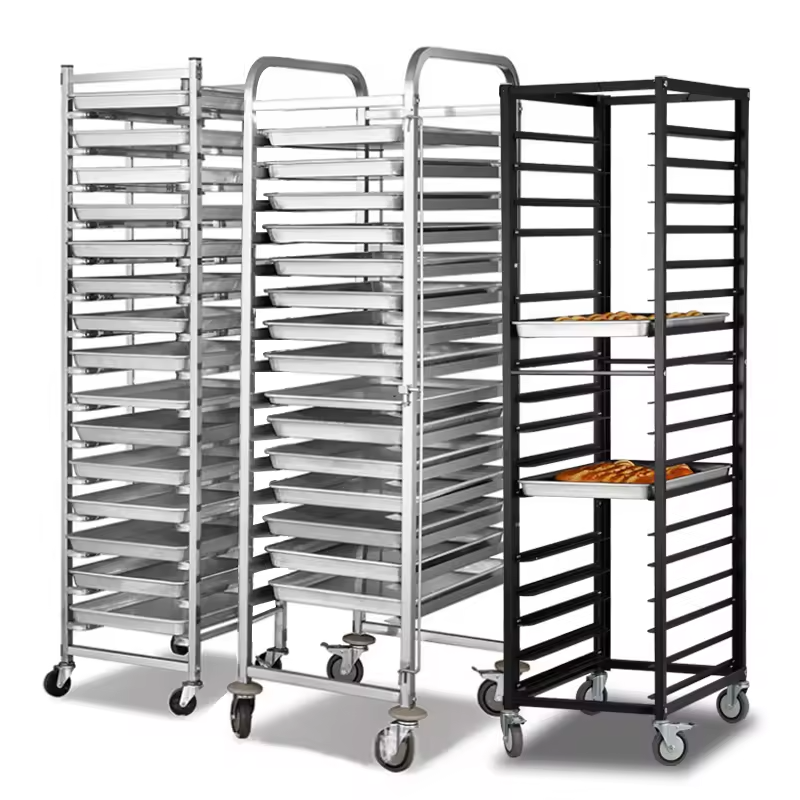
Food Processing Equipment Trolley: The Complete B2B Buyer’s Guide to Stainless Steel Handling Carts
What Is a Food Processing Equipment Trolley and Why It Matters in Industrial Procurement
In any commercial food manufacturing facility, the movement of raw ingredients, work-in-progress, and finished products between processing stations is a constant, high-frequency operation. A food processing equipment trolley is a specialized wheeled cart designed to transport, hold, or stage items such as baking trays, meat luggers, ingredient bins, and packaged goods. Unlike general-purpose warehouse carts, these trolleys must withstand rigorous sanitation protocols, heavy loads, and corrosive cleaning agents. For B2B buyers, selecting the wrong trolley can lead to product contamination, worker injury, and costly downtime. This article provides a procurement-focused perspective on specifications, materials, and supplier evaluation, helping you make an informed purchasing decision.
Product Overview: Solving Material Handling Challenges in Food Plants
A food processing equipment trolley addresses several pain points: manual carrying of heavy trays (reducing ergonomic risk), cross-contamination between zones (by dedicating carts to specific areas), and inefficient workflow (by enabling batch movement). Typical configurations include tray rack trolleys, bin carts, and multi-shelf utility carts. The core purpose is to optimize internal logistics while maintaining hygiene standards such as HACCP and FDA requirements. Without proper trolleys, plants often resort to makeshift solutions that fail under daily washdowns, leading to rust, bacterial harborage, and premature replacement.
Key Features That Define Industrial-Grade Trolleys
When evaluating a food processing equipment trolley, look beyond the price tag. The following design elements determine long-term performance:
- Reinforced frame structure: Improves load stability during repeated transportation and industrial handling. Gusseted corners and cross-bracing are essential for heavy loads.
- Sanitary wheel design: Casters must be non-marking, chemical-resistant, and easy to clean. Look for sealed bearings and bolt-on rather than threaded stems to prevent debris accumulation.
- Corrosion-resistant materials: 304 stainless steel is standard; 316 for highly acidic or salty environments. Aluminum offers lightweight mobility but lower durability.
- Modular shelving or tray slides: Adjustable or fixed guides that accommodate standard tray sizes (e.g., 18” x 26” bakery trays, 600 x 400 mm EU crates).
- Drainage and cleanability: Open tubular frames or perforated surfaces prevent water pooling. Removable parts simplify deep cleaning.
Application Scenarios Across Food and Industrial Sectors
The versatility of a well-designed trolley extends beyond one department. Here is how different industries deploy them:
- Food processing: Transporting meat cuts, poultry, seafood, and vegetables between prep, cooking, and packing lines. Trolleys with solid sides contain liquids and prevent cross-drip.
- Bakery: Moving racks of bread, pastries, and dough through proofers, ovens, and cooling areas. Tray trolleys with heat-resistant casters are common.
- Industrial manufacturing: Not limited to food—pharmaceutical and chemical plants use stainless carts for ingredient dispensing and waste collection.
- Cleaning and sanitation: Dedicated carts for cleaning tools, hoses, and chemicals, often with hooks and leak-proof shelves.
- Drying and cooling: Perforated or mesh trolleys allow airflow around products, speeding up drying or cooling processes.
- Storage and transportation: Temporary storage of WIP or finished goods; ideal for narrow aisles with maneuverable casters.
In each scenario, the trolley must match the load, environment, and cleaning regime. For example, a raw meat area requires 316 stainless steel and fully welded construction to eliminate crevices where bacteria can hide.
Material Selection: 201 vs 304 vs 316 Stainless Steel vs Aluminum
Material choice directly impacts lifespan, hygiene, and cost. Here is a procurement-focused comparison:
- 201 stainless steel: Lower nickel content, lower cost, but reduced corrosion resistance. Suitable for dry areas or light-duty use, but not recommended for wet, acidic, or salty environments.
- 304 stainless steel: The industry standard for food contact. Excellent corrosion resistance, easy to clean, and withstands most sanitizers. Ideal for general food processing.
- 316 stainless steel: Superior resistance to chlorides and acids. Required for meat plants, seafood processors, and facilities using harsh chemicals. Higher cost but longer service life.
- Aluminum: Lightweight and rust-proof (naturally oxidized), but softer and less durable under heavy loads. Often used for mobile racks where weight reduction is critical, but not for high-temperature or abrasive environments.
For B2B buyers, the rule of thumb: if the trolley will be washed daily with caustic or acidic cleaners, specify 304 or 316. For dry storage, 201 or aluminum may suffice, but always verify with your sanitation team.
Specifications and Technical Parameters Buyers Must Confirm
When requesting quotes from a manufacturer or supplier, provide the following details to avoid costly mismatches:
- Dimensions: Overall length, width, height; shelf spacing; tray slide pitch.
- Thickness: Tube wall thickness (e.g., 1.2 mm, 1.5 mm, 2.0 mm) and sheet gauge (e.g., 18 gauge, 16 gauge). Thicker is not always better—too heavy reduces maneuverability.
- Capacity: Load per shelf and total load (e.g., 100 kg/shelf, 500 kg total).
- Number of shelves/levels: 2, 3, 4, or custom.
- Load capacity per tray slide: Often 20–50 kg depending on design.
- Hole diameter and mesh size: For perforated shelves, specify hole size to prevent small items falling through (e.g., 6 mm, 10 mm).
- Tray compatibility: Standard sizes such as 600x400 mm, 18x26 inches, or custom.
- Surface treatment: Polished, brushed, or electropolished. Electropolishing improves cleanability and corrosion resistance.
- Caster type: Swivel, rigid, with brakes, wheel diameter, and material (e.g., polyurethane, nylon, rubber).
Always request a dimensional drawing and material certificate (Mill Test Report) before placing a bulk order.
Customization and OEM/ODM Services from a Reliable Factory
Every food plant has unique workflows. A one-size-fits-all trolley often leads to compromises. That is why working with a manufacturer that offers OEM and ODM capabilities is advantageous. Typical customization options include:
- Custom size: Tailored to your aisle widths, door openings, and tray dimensions.
- Custom design: Special shelves, hooks, drain valves, or bumpers.
- Logo and branding: Laser-etched or plate-mounted logos for identification and theft deterrence.
- Packing: Export-grade wooden crates or custom foam protection for ocean freight.
- Special requirements: Static-dissipative casters for explosive environments, high-temperature wheels for oven areas, or RFID tags for asset tracking.
When evaluating a supplier’s customization ability, ask for previous custom projects, engineering support, and lead times. A factory with in-house bending, welding, and polishing capabilities can respond faster and maintain quality control.
Procurement Guide: How to Choose the Right Trolley and Supplier
B2B buyers should follow a structured approach to avoid pitfalls:
- How to choose size? Measure your trays, doorways, and turning radius. Allow at least 50 mm clearance on each side. Consider future tray sizes if you plan to expand.
- How to choose material? Match to cleaning chemicals and environment. 304 for most food areas; 316 for salty or acidic; 201 only for dry storage.
- How to confirm specifications? Request a detailed CAD drawing, material certificate, and load test report. Sample orders before mass production are recommended.
- How to judge supplier capability? Look for ISO 9001 certification, food-grade material traceability, in-house testing, and references from similar food manufacturers. A factory tour (virtual or physical) reveals welding quality and surface finish.
Also consider total cost of ownership: a cheaper trolley that rusts in six months costs more than a durable one that lasts five years. For custom requirements, please contact our team to discuss your specific application and receive a tailored quote.
Frequently Asked Questions (FAQ)
1. What is the difference between a food processing equipment trolley and a standard warehouse cart?
Food processing trolleys are designed for hygiene, corrosion resistance, and frequent washdowns. They typically use stainless steel, have smooth welds, and avoid crevices where bacteria can grow. Standard warehouse carts may have painted surfaces and open joints that are not food-safe.
2. Can I use a 201 stainless steel trolley in a wet environment?
We do not recommend it. 201 has lower corrosion resistance and may rust when exposed to water, acids, or salty products. For wet or washdown areas, specify 304 or 316 stainless steel.
3. What caster type is best for food plants?
Polyurethane or nylon wheels with sealed precision bearings are ideal. They resist water, chemicals, and debris. Avoid cast iron or rubber wheels that can mark floors or degrade. Brakes are recommended for safety on inclines.
4. How do I determine the load capacity I need?
Calculate the maximum weight of products plus trays and any dynamic forces during movement. Add a safety factor of 1.5 to 2. For example, if you transport 200 kg of meat, choose a trolley rated for at least 300–400 kg.
5. Can you produce trolleys with custom tray slide spacing?
Yes. As a manufacturer with OEM capabilities, we can adjust slide pitch, shelf height, and overall dimensions to match your exact trays and workflow. Provide drawings or samples for precise replication.
6. What surface finish is easiest to clean?
Electropolished or mirror-polished surfaces are the easiest to clean and most resistant to bacterial adhesion. However, they cost more. For most applications, a 180-grit brushed finish is acceptable and provides good cleanability.
7. How long does production usually take for a custom order?
Lead times vary by complexity and quantity. Typically, 15–30 days for samples and 30–45 days for mass production after drawing approval. Urgent orders can sometimes be expedited—please inquire.
8. Do you provide certificates for material and testing?
Yes. We supply Mill Test Reports for stainless steel, load test reports, and compliance certificates (e.g., FDA, LFGB) upon request. This documentation is essential for your quality audit.
Image ALT Text Suggestions for SEO
If you include product images, use descriptive ALT text to improve accessibility and search visibility:
- ALT: "Stainless steel food processing equipment trolley with four shelves and swivel casters"
- ALT: "304 stainless steel bakery tray trolley with 18x26 inch tray slides"
- ALT: "Custom food grade trolley with 316 stainless steel frame and perforated shelves"
SEO Title: Food Processing Equipment Trolley | Stainless Steel Carts Manufacturer
Meta Description: Industrial food processing equipment trolley for bakeries, meat plants & factories. Custom 304/316 stainless steel carts. OEM factory direct. Get a quote today.
SEO Keywords: food processing equipment trolley, stainless steel trolley, food grade cart, bakery trolley, meat plant trolley, custom food trolley, industrial handling cart, 304 stainless steel trolley, 316 stainless steel cart, OEM food trolley

