


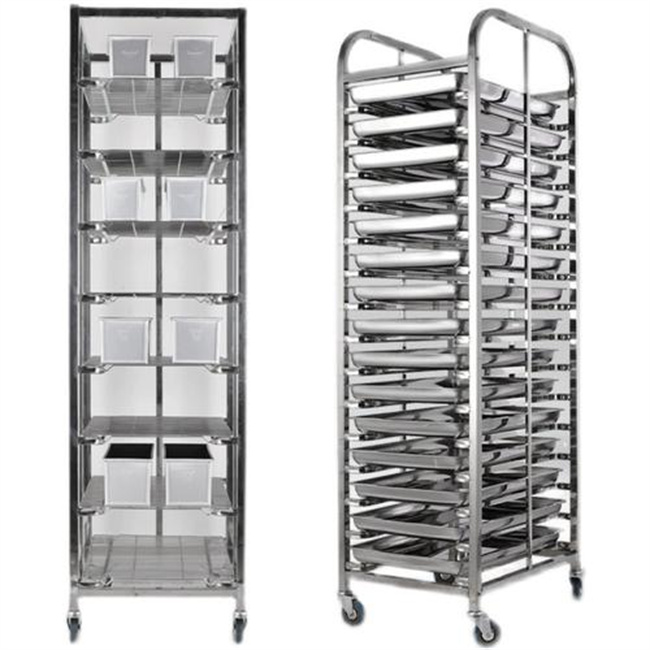
Food Service Tray Trolley: A Comprehensive Guide for B2B Buyers in Foodservice, Hospitality, and Delivery
Product Introduction: What Is a Food Service Tray Trolley and Why It Matters
A food service tray trolley, also known as a tray cart or tray rack, is a mobile storage and transport unit designed to hold trays of food, dishes, or supplies. Its primary purpose is to facilitate the efficient movement of multiple trays between kitchen, service, and storage areas. In commercial settings, it solves critical problems such as reducing manual handling, minimizing breakage, and maintaining food temperature and hygiene. For B2B buyers, investing in the right trolley means improved workflow, reduced labor costs, and enhanced compliance with food safety standards. Whether in a bustling hotel kitchen or a high-volume catering operation, these trolleys are indispensable.
Product Features: Structural Design, Material Advantages, and Performance Characteristics
Our food service tray trolleys are engineered for industrial durability and hygiene. The reinforced frame structure, typically constructed from stainless steel, ensures load stability during repeated transportation and industrial handling. Key features include:
- Welded construction: Eliminates weak points, enhancing structural integrity under heavy loads.
- Adjustable tray slides: Allow for flexible configuration to accommodate various tray sizes and pitches, optimizing vertical space.
- Corrosion-resistant materials: Essential for humid environments and frequent cleaning.
- Ergonomic handles: Improve maneuverability and reduce operator strain.
- Heavy-duty casters: Provide smooth mobility over uneven surfaces, with options for locking brakes.
These features are not just conveniences; they are engineered to withstand the rigors of daily commercial use, ensuring a long service life and low maintenance costs.
Application Scenarios: Versatility Across Industries
Food service tray trolleys are utilized in a wide array of industries, each with unique requirements:
- Food Processing: Transporting ingredients, finished products, or trays of prepared meals between processing lines and packaging areas. Stainless steel construction prevents contamination and facilitates sanitation.
- Bakery: Moving baked goods on sheet pans from ovens to cooling racks and packaging stations. Trolleys with heat-resistant casters and adequate ventilation are critical.
- Industrial Manufacturing: In electronics or pharmaceutical cleanrooms, tray trolleys transport components or products while minimizing particulate generation. ESD-safe or cleanroom-compatible options are available.
- Cleaning and Drying: Used in dishwashing areas to hold and transport wet dishes, with designs that promote air circulation for rapid drying.
- Storage: Maximizing space in walk-in refrigerators or dry storage by organizing trays vertically.
- Transportation: In catering and food delivery, trolleys secure trays during transit, maintaining food integrity and temperature.
Each application demands specific features, and understanding these nuances is key to selecting the right trolley.
Material Selection: Choosing Between 304, 316, 201 Stainless Steel, and Aluminum
Material choice significantly impacts durability, hygiene, and cost. Here's a breakdown:
- 304 Stainless Steel: The industry standard for food contact. Offers excellent corrosion resistance, easy cleaning, and durability. Suitable for most foodservice environments.
- 316 Stainless Steel: Superior corrosion resistance, especially against chlorides and acids. Ideal for marine environments, high-acid food processing, or harsh chemical cleaning.
- 201 Stainless Steel: A lower-cost alternative with reduced nickel content. Offers moderate corrosion resistance but may be prone to rust in humid or acidic conditions. Suitable for dry or less demanding environments.
- Aluminum: Lightweight and corrosion-resistant, but softer and less durable than stainless steel. Often used for non-food contact components or where weight is a critical factor.
For food service tray trolleys, 304 stainless steel is typically recommended for frames and tray slides. Specify 316 stainless steel for extreme conditions. Avoid 201 if the trolley will be frequently washed or exposed to moisture. Aluminum can be used for casters or handles to reduce weight.
Specifications to Consider: A Buyer's Checklist
When specifying a tray trolley, procurement teams should evaluate these parameters:
- Dimensions: Overall length, width, and height must fit through doorways, aisles, and into storage areas. Consider tray size to determine required slide spacing.
- Thickness: Frame tube thickness (e.g., 1.2mm, 1.5mm) affects load capacity and durability. Thicker walls resist bending under heavy loads.
- Capacity: Number of trays and maximum weight per tray. Calculate total load, including the trolley's weight, to ensure casters and frame can handle it.
- Number of Layers: Determines vertical storage capacity. Adjustable slides allow for reconfiguration.
- Load Capacity: Static and dynamic load ratings. Dynamic rating is critical for safe movement.
- Hole Diameter and Mesh Size: For ventilated or draining designs, specify hole diameter to balance airflow and small-item retention.
- Tray Compatibility: Ensure slide spacing matches standard tray sizes (e.g., 18" x 26", GN 1/1, etc.). Custom sizes available.
- Surface Treatment: Polished, brushed, or passivated surfaces improve corrosion resistance and ease cleaning. Specify #4 finish for food areas.
Providing detailed specifications to your supplier ensures you receive a product that integrates seamlessly into your operations.
Customization Services: Tailoring Trolleys to Your Needs
As a manufacturer with extensive OEM/ODM experience, we offer comprehensive customization:
- Custom Size: Modify dimensions to fit unique spaces or accommodate non-standard trays.
- Custom Design: Adjust frame configuration, number of shelves, or add features like bumpers or drainage systems.
- Logo: Brand your trolleys with laser-etched or plate-mounted logos for corporate identity.
- Packing: Custom packaging for safe transport and easy identification.
- Special Requirements: ESD-safe, cleanroom-compatible, or high-temperature variants.
For custom requirements, please contact our team to discuss your project. Our engineers work closely with clients to develop specifications that meet exact operational needs.
Procurement Guide: How to Select the Right Trolley and Supplier
Choosing a food service tray trolley involves both technical and commercial considerations. Here are key questions to address:
- How to choose the size? Measure your largest tray, doorways, and storage areas. Select a trolley that accommodates trays with minimal overhang and fits through all access points. Consider future needs—modular designs allow expansion.
- How to choose the material? For most foodservice, 304 stainless steel is optimal. For highly corrosive environments, choose 316. Avoid 201 if frequent washing is expected. Aluminum may be suitable for light-duty or non-food contact parts.
- How to confirm specifications? Request detailed drawings and material certificates. Verify load ratings, dimensions, and surface finish. Ask for samples or visit the factory if possible.
- How to judge supplier capability? Evaluate manufacturing experience, production capacity, quality control processes, and certifications (e.g., ISO, NSF). Request references from similar clients. A supplier with in-house design and prototyping services can better handle custom projects.
We recommend ordering a sample or pilot batch to test performance before committing to large volumes. Our team provides full technical support and documentation to ensure a smooth procurement process.
Frequently Asked Questions (FAQ)
Q1: What is the typical lead time for a custom food service tray trolley?
A1: Lead time varies based on complexity and order quantity. Standard models ship in 2-4 weeks. Custom designs may require 4-8 weeks for production, plus shipping. We provide a detailed schedule upon order confirmation.
Q2: Can your trolleys be used in freezers or high-temperature ovens?
A2: Yes, we offer models designed for extreme temperatures. For freezers, we use low-temperature casters and materials that resist brittleness. For ovens, we use high-temperature stainless steel and heat-resistant casters. Specify your temperature range when ordering.
Q3: Are replacement parts available?
A3: Absolutely. We stock common replacement parts such as casters, slides, and handles. For custom components, we maintain production records to ensure future availability.
Q4: What is the maximum load capacity of your standard trolleys?
A4: Our standard models handle up to 500 lbs (227 kg) evenly distributed. Heavy-duty models can support up to 1000 lbs (454 kg). Always refer to the dynamic load rating for safe transport.
Q5: Do you provide NSF-certified trolleys?
A5: Yes, many of our models are NSF-certified for foodservice use. Certification ensures compliance with strict hygiene and safety standards. Request NSF documentation when ordering.
Q6: How do I clean and maintain a stainless steel tray trolley?
A6: Clean with warm soapy water and a soft cloth. Avoid abrasive cleaners or steel wool, which can scratch the surface. For disinfection, use approved food-safe sanitizers. Regularly inspect casters and slides for debris and lubricate as needed.
Q7: Can I mix and match features from different models?
A7: Yes, our modular design allows for customization. You can specify different casters, slide counts, and accessories. Our team will help you configure a trolley that meets your exact requirements.
Q8: What is the warranty on your tray trolleys?
A8: We offer a 1-year warranty against manufacturing defects. Extended warranties are available for critical applications. Contact us for details.
Image ALT Text Suggestions
For SEO and accessibility, use descriptive ALT text for images. Examples:
- "Stainless steel food service tray trolley with adjustable slides in a commercial kitchen"
- "Heavy-duty tray cart with locking casters for hotel banquet service"
- "Custom food service tray trolley with logo for bakery transport"
- "304 stainless steel tray trolley loaded with sheet pans in a food processing plant"
SEO Meta Information
SEO Title: Food Service Tray Trolley | Commercial Tray Cart Manufacturer
Meta Description: Durable food service tray trolleys for commercial kitchens, hotels, and delivery. Custom sizes, stainless steel options, and OEM services. Get a quote today!
SEO Keywords: food service tray trolley, commercial tray cart, stainless steel tray trolley, tray trolley manufacturer, custom tray trolley, hotel tray trolley, food delivery trolley, bakery tray cart, industrial tray trolley, tray trolley supplier

