


How a Professional Bakery Trolley Manufacturer Ensures Quality and Delivery for B2B Buyers
Product Introduction: The Backbone of Bakery Logistics
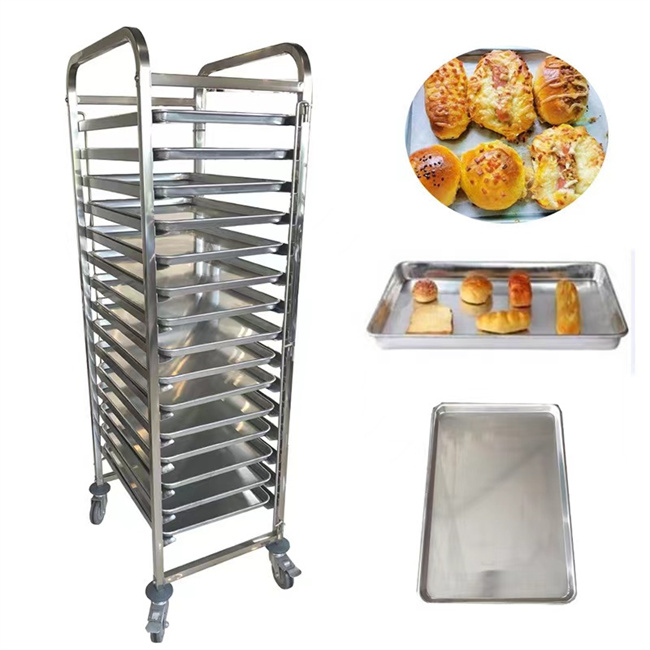
When you step into a high-volume commercial bakery, you'll see them everywhere: bakery trolleys laden with dough, freshly baked bread, or trays of pastries, moving seamlessly from proofing rooms to ovens and cooling racks. These seemingly simple wheeled frames are the backbone of bakery logistics, and their failure can halt production. A professional bakery trolley manufacturer understands that these are not mere accessories but critical industrial assets. They are designed to solve specific problems: reducing manual handling injuries, optimising space utilisation in crowded production areas, and ensuring hygienic transport of food products. For B2B buyers, selecting the right trolley means investing in operational efficiency and workplace safety.
Product Features: Engineered for Industrial Demands
What distinguishes a professional-grade bakery trolley from a standard utility cart? The answer lies in the engineering details. A professional manufacturer focuses on structural integrity and material performance to withstand the rigours of daily use in a commercial environment.
- Reinforced Frame Structure: The frame is typically constructed from heavy-gauge stainless steel tubing, often with cross-bracing or gusseted corners. This design improves load stability during repeated transportation and industrial handling, preventing sway and potential tip-overs even when fully loaded.
- Precision Welding and Finishing: Welds are ground smooth to eliminate crevices where bacteria and dirt can accumulate, meeting stringent food safety standards. The surface is often passivated or electropolished to enhance corrosion resistance and ease of cleaning.
- High-Quality Casters: The mobility system is crucial. Professional trolleys feature heavy-duty casters with precision bearings, available in materials like polyurethane or nylon. These casters are selected for their load-bearing capacity, rolling resistance, and resistance to common bakery chemicals and temperature extremes.
- Modular Design: Many manufacturers offer modular systems where shelves, tray supports, and handles can be adjusted or replaced. This extends the trolley's lifespan and allows bakeries to adapt to changing production needs without purchasing entirely new units.
Application Scenarios: Beyond the Bakery
While the name suggests a primary use in bakeries, professional bakery trolleys are versatile tools employed across various industries. Their design makes them suitable for any environment requiring hygienic, efficient transport of goods.
- Food Processing: In meat, dairy, and prepared food plants, stainless steel trolleys transport ingredients and finished products between processing zones. Their corrosion resistance is vital when exposed to frequent washdowns and cleaning agents.
- Bakery and Confectionery: This is the core application. Trolleys hold baking trays, dough troughs, and cooling racks. Specific designs, like bakery rack trolleys, are tailored to fit standard 18" x 26" or 600mm x 400mm baking trays.
- Industrial Manufacturing: Beyond food, these trolleys are used in electronics, pharmaceuticals, and automotive plants to move components or tools. The stainless steel construction ensures they don't introduce contaminants.
- Cleaning and Drying: In commercial kitchens and centralised cleaning areas, trolleys transport dirty dishes to washers and clean items to storage. Their open design allows for effective air drying.
- Storage and Transportation: They serve as mobile storage units, improving workflow by keeping items organised and readily accessible. In distribution centres, they aid in order picking and staging.
Material Matters: Choosing the Right Stainless Steel
The choice of material is critical for longevity, hygiene, and cost. A professional manufacturer will guide you through the options:
- 304 Stainless Steel: The industry standard for food-grade applications. It offers excellent corrosion resistance, durability, and ease of cleaning. It is suitable for most bakery and food processing environments.
- 316 Stainless Steel: Contains molybdenum, providing superior resistance to chlorides and acids. This is the go-to choice for harsh environments, such as seafood processing or facilities using aggressive sanitisers. The higher cost is justified by extended service life in corrosive conditions.
- 201 Stainless Steel: A lower-cost alternative with lower nickel content. It offers moderate corrosion resistance and is suitable for dry storage or less demanding applications where cost is a primary driver. However, it may be prone to rust in wet or humid conditions.
- Aluminum: Lightweight and corrosion-resistant, but less robust than stainless steel. It is often used for specialized trays or where weight reduction is crucial, but it may not withstand heavy impacts or high heat as well as steel.
Specifications and Customisation: Tailoring to Your Needs
B2B buyers require precise specifications. A reputable manufacturer provides detailed technical data and offers extensive customisation.
Key Specifications to Confirm:
- Dimensions: Overall length, width, and height, as well as shelf spacing. Ensure compatibility with your existing trays, racks, and doorways.
- Load Capacity: The maximum uniform load the trolley can support, typically ranging from 150 kg to 500 kg or more. This must account for the weight of the goods plus the trays themselves.
- Number of Shelves/Layers: Common configurations include 10, 15, or 20 tray slots. Custom numbers are available.
- Tube Thickness: Affects strength and durability. For heavy-duty use, a wall thickness of 1.2mm to 2.0mm is typical.
- Tray Compatibility: Specify the size of your trays (e.g., 600x400mm, 18"x26") to ensure the trolley's supports are spaced correctly.
- Surface Treatment: Options include polished, brushed, or electropolished finishes. Each impacts cleanability and appearance.
- Caster Details: Wheel diameter, material, brake type (swivel, rigid, with brake), and mounting style.
Customisation and OEM/ODM Services:
Leading manufacturers offer full OEM and ODM capabilities. This includes:
- Custom Size and Design: Modifying dimensions, shelf configurations, or adding features like handles or hooks.
- Logo and Branding: Laser-etching or attaching branded plates to your trolleys.
- Special Packing: Custom crating or palletising for safe and efficient shipping.
- Special Requirements: E.g., static-dissipative casters for electronics manufacturing, or reinforced frames for extreme loads.
For custom requirements, please contact our team to discuss your specific application.
Procurement Guide: How to Select the Right Supplier
Choosing a supplier is as important as choosing the product. Here are key factors to evaluate:
- Material Certification: Request mill test certificates to verify the grade and quality of stainless steel.
- Production Capability: Assess the factory's manufacturing processes, quality control systems (e.g., ISO 9001), and capacity to handle your order volume.
- Experience and Expertise: A manufacturer with years of experience in the bakery industry will understand your pain points and offer practical solutions.
- Sample Evaluation: Always request a sample or visit the factory to inspect workmanship, weld quality, and finish.
- Delivery Track Record: Ask for references and lead times. A professional manufacturer will have a robust production schedule and logistics network to ensure on-time delivery, even for large orders.
- After-Sales Support: Clarify warranty terms, availability of spare parts (especially casters), and technical support.
Frequently Asked Questions (FAQ)
1. What is the typical lead time for a custom bakery trolley order?
Lead times vary based on complexity and order volume. For standard models, it's often 4-6 weeks. Custom orders may take 8-12 weeks. A professional manufacturer will provide a detailed production schedule upon order confirmation.
2. Can I mix different shelf types in one trolley?
Yes, many manufacturers offer modular designs that allow you to combine tray slides, flat shelves, or hooks in a single frame. This flexibility is ideal for operations with varied products.
3. How do I determine the correct load capacity for my needs?
Calculate the maximum weight of the goods you intend to transport, add the weight of the trays or containers, and then add a safety margin of at least 20-30%. This ensures the trolley operates well within its limits, extending its lifespan.
4. Are stainless steel trolleys suitable for freezer environments?
Yes, but you must specify low-temperature casters and ensure the stainless steel grade is suitable. 304 is generally fine, but 316 may be needed if there's exposure to salt or other corrosives. Also, consider that stainless steel can become brittle at extremely low temperatures.
5. What is the difference between 304 and 316 stainless steel for bakery trolleys?
316 contains molybdenum, which provides better resistance to chlorides and acids. If your cleaning agents contain chlorine or your environment is highly corrosive, 316 is worth the investment. For most bakeries, 304 offers an excellent balance of cost and performance.
6. Can I get replacement parts, such as casters or shelves?
Reputable manufacturers stock spare parts and can supply them quickly. Always confirm part availability before purchase, as this affects long-term maintenance costs.
7. Do you offer custom branding on the trolleys?
Yes, we offer laser etching, metal tags, or powder-coated panels with your logo. This is a popular option for large bakery chains and equipment rental companies.
8. How are the trolleys packed for international shipping?
They are typically partially disassembled to save space, wrapped in protective film, and packed in sturdy wooden crates or on pallets. We ensure all packaging meets international shipping standards to prevent damage during transit.
Image ALT Text Suggestions:
- "Professional bakery trolley manufacturer - stainless steel bakery rack trolley with 20 trays"
- "Heavy-duty bakery trolley with reinforced frame and swivel casters in a commercial bakery"
- "Custom stainless steel bakery trolley with logo etching for B2B bakery equipment supplier"
SEO Title: Professional Bakery Trolley Manufacturer | Quality & Delivery
Meta Description: Discover how a professional bakery trolley manufacturer ensures quality and delivery for B2B buyers. Learn about materials, specs, customisation, and supplier selection.
SEO Keywords: bakery trolley manufacturer, stainless steel bakery trolley, commercial bakery rack, bakery equipment supplier, custom bakery trolley, OEM bakery trolley, industrial bakery trolley, bakery trolley specifications, professional bakery trolley, bakery trolley procurement

