


How to Choose a Bakery Trolley: A B2B Procurement Guide for Industrial Buyers
Product Introduction: What Is a Bakery Trolley and Why It Matters in Industrial Baking
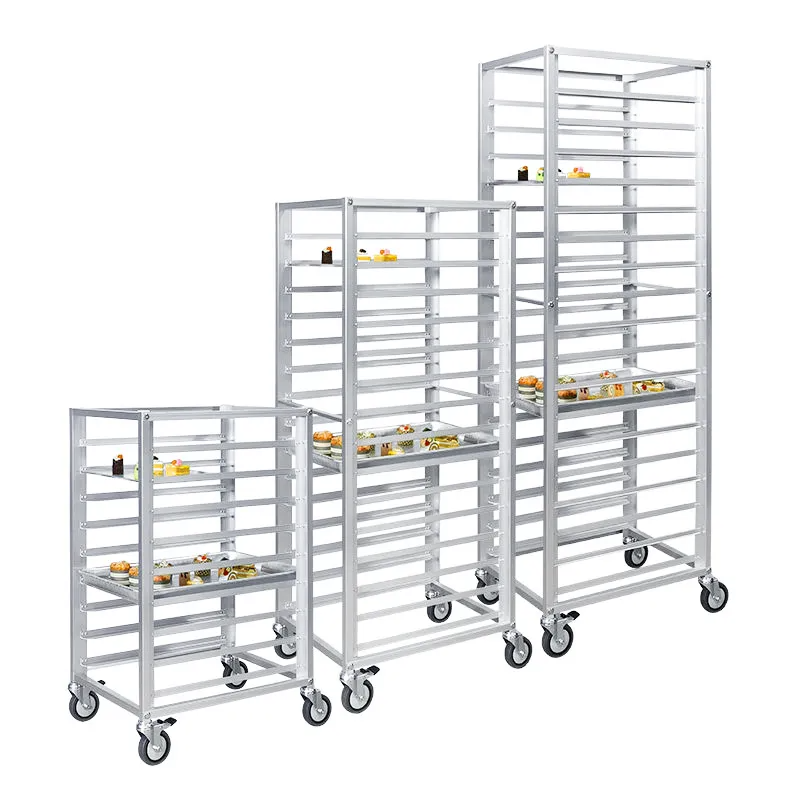
When you need to move dough, baked goods, or trays through a busy production floor, a bakery trolley—also known as a bakery rack or pan rack—is an essential piece of equipment. It is a wheeled frame designed to hold multiple trays or pans, enabling efficient transportation, storage, cooling, and proofing in commercial bakeries and food processing plants. Unlike consumer-grade carts, industrial bakery trolleys are engineered for continuous use, heavy loads, and harsh cleaning environments. The right trolley reduces labor, prevents product damage, and integrates seamlessly with existing oven and freezer systems.
Product Features: Structural Design, Material Advantages, and Performance
Industrial bakery trolleys are built with a focus on durability and hygiene. The frame is typically constructed from reinforced stainless steel or aluminum, with welded joints that withstand repeated loading and high-pressure washing. Key features include:
- Reinforced frame structure – Improves load stability during repeated transportation and industrial handling, reducing sway and deformation.
- Corrosion-resistant materials – Essential for humid proofing rooms and wash-down areas.
- High-temperature tolerance – Allows trolleys to move from freezer to oven without warping.
- Ergonomic handles and casters – Heavy-duty swivel casters with brakes ensure safe maneuvering in tight spaces.
These design choices directly address the pain points of industrial bakeries: minimizing downtime, protecting product integrity, and complying with food safety regulations.
Application Scenarios: Where Bakery Trolleys Deliver Value Across Industries
Bakery trolleys are not limited to bread production. Their versatility makes them valuable across multiple sectors:
- Food processing: Moving ingredients, finished packs, and trays between processing stations.
- Bakery: Proofing, baking, cooling, and transporting bread, pastries, and cakes.
- Industrial manufacturing: Holding components or tools during assembly and finishing.
- Cleaning: Transporting dirty dishes, parts, or utensils to wash areas.
- Drying: Supporting racks in drying ovens or UV curing lines.
- Storage: Maximizing vertical space in freezers, warehouses, and cold rooms.
- Transportation: Safe movement between production zones, loading docks, and delivery vehicles.
Each application imposes specific requirements on tier count, dimensions, material grade, and load capacity, which we will break down in the following sections.
Material Selection: 304 vs. 316 vs. 201 Stainless Steel and Aluminum
Material choice is the single most important factor affecting trolley lifespan, hygiene, and cost. Here is a practical comparison for B2B buyers:
- 304 stainless steel: The industry standard for food contact. Excellent corrosion resistance, easy to clean, withstands most sanitizers. Suitable for most bakeries and food processing.
- 316 stainless steel: Superior resistance to chlorides and acids. Recommended for coastal facilities, meat processing, and harsh chemical cleaning environments.
- 201 stainless steel: Lower cost, but reduced corrosion resistance. Best for dry storage or light-duty applications where budget is the primary constraint.
- Aluminum: Lightweight and rust-resistant, but softer and prone to denting. Ideal for mobile racks that need frequent lifting or where weight is a concern.
For most bakery applications, 304 stainless steel offers the best balance of durability, hygiene, and cost. However, if your facility uses aggressive cleaning agents or operates in a humid, salty environment, upgrading to 316 is a wise investment.
Specifications: Key Parameters Buyers Must Confirm
When specifying a bakery trolley, you must define the following technical parameters to ensure compatibility with your existing equipment and processes:
- Dimensions: Overall length, width, and height. Must match oven openings, proofing cabinets, and freezer doors.
- Tier count: Typically 6 to 30 tiers. More tiers increase capacity but reduce clearance per tray.
- Load capacity: Static and dynamic load ratings. Dynamic load is critical for safe movement over uneven floors.
- Tube thickness: Wall thickness of frame tubes (e.g., 1.2 mm, 1.5 mm, 2.0 mm) directly affects rigidity and lifespan.
- Baking tray compatibility: Standard sizes like 600×400 mm, 18×26 inches, or custom. Confirm tray support spacing and lip clearance.
- Surface finish: Polished, brushed, or electrophoretic coating. Polished surfaces are easier to clean; brushed hides scratches.
- Caster type: Wheel diameter, material (polyurethane, nylon, rubber), and braking options. Larger wheels roll better over drains and thresholds.
Always request a detailed specification sheet with tolerances. A trolley that is 5 mm too wide may not fit your oven, causing costly rework.
Customization Services: OEM/ODM Capabilities for Unique Requirements
Every bakery has unique workflows. A reliable manufacturer should offer full OEM/ODM services to tailor trolleys to your needs:
- Custom size and tier spacing – to fit specific ovens, proofers, or conveyor systems.
- Custom design – including reinforced bases, side panels, or special caster configurations.
- Logo and branding – laser-etched or printed on the frame for inventory control.
- Packing and labeling – export-ready crates and barcode labels for warehouse integration.
- Special requirements – such as anti-static wheels, high-temperature casters, or foldable designs for space-saving.
For custom requirements, please contact our team to discuss your specifications. We provide rapid prototyping and production capability to meet your deadlines.
Procurement Guide: How to Choose the Right Bakery Trolley for Your Facility
As a B2B buyer, you need a systematic approach. Follow these steps:
- How to choose dimensions: Measure your oven, proofer, freezer, and transport paths. Add clearance for casters and corners. Consider future equipment changes.
- How to choose material: Assess your cleaning chemicals, humidity, and temperature range. 304 stainless is sufficient for most; 316 for aggressive environments.
- How to confirm specifications: Request CAD drawings and samples. Verify load capacity with a test report. Check tray fit with your actual trays.
- How to judge supplier capability: Look for ISO certification, factory audit reports, and references from similar industries. A supplier with in-house welding and polishing ensures quality control.
Also consider the total cost of ownership: a cheaper 201 stainless trolley may need replacement in 2 years, while a 304 trolley lasts 10+. Production capability and after-sales support are equally important.
Frequently Asked Questions (FAQ)
Q1: What is the typical load capacity of a bakery trolley?
A1: Standard models range from 200 kg to 500 kg dynamic load. Heavy-duty models can reach 800 kg. Always confirm dynamic load, as it includes the weight of the trolley itself plus trays and product.
Q2: Can I use my existing baking trays with a new trolley?
A2: Yes, if the tray support spacing matches your tray dimensions. Common sizes are 600×400 mm and 18×26 inches. Provide your tray drawing to the manufacturer for verification.
Q3: What is the difference between 304 and 316 stainless steel for bakery trolleys?
A3: 316 contains molybdenum, which provides better resistance to chlorides and acids. It is recommended for coastal areas or facilities using chlorine-based sanitizers. 304 is suitable for most inland bakeries.
Q4: How many tiers should I choose?
A4: It depends on your oven height and production volume. More tiers increase capacity but reduce vertical clearance. Typical bakeries use 10 to 20 tiers. Ensure the trolley fits your proofing cabinet and oven.
Q5: Are casters interchangeable?
A5: Most manufacturers use standard caster mounting plates, allowing you to replace casters easily. However, for high-temperature or wash-down areas, specify casters with appropriate bearings and materials.
Q6: Can I get a custom logo on the trolley?
A6: Yes, many suppliers offer laser etching or printing. This is useful for inventory tracking and branding. Discuss placement and size with your supplier.
Q7: What surface finish is best for hygiene?
A7: Polished or mirrored finishes are easiest to clean and resist bacterial adhesion. Brushed finishes hide scratches but may require more thorough cleaning. Electropolishing further improves corrosion resistance.
Q8: How do I verify a supplier's production capability?
A8: Request a factory video tour, check for ISO 9001 certification, and ask for references from existing customers in your region. A supplier with in-house tube bending, welding, and polishing lines ensures consistent quality.
Image ALT Text Suggestions
For product images, use descriptive ALT text such as: "304 stainless steel bakery trolley with 15 tiers and heavy-duty casters" or "custom bakery rack with reinforced frame for industrial oven."
SEO Metadata
SEO Title: How to Choose a Bakery Trolley: B2B Buyer's Guide
Meta Description: Expert guide on choosing bakery trolleys for industrial use. Compare tiers, sizes, 304 vs 316 stainless steel, load capacity, and supplier selection.
SEO Keywords: bakery trolley, bakery rack, stainless steel trolley, industrial bakery cart, bakery pan rack, how to choose bakery trolley, 304 stainless steel trolley, custom bakery trolley, bakery trolley manufacturer, bakery trolley supplier

