


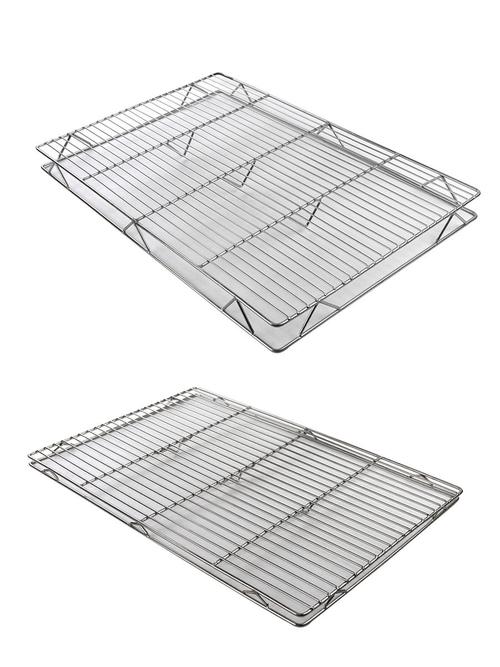
How to Choose a Meat Drying Rack for Industrial Food Processing: A Buyer's Guide
Product Introduction
In industrial food processing, a meat drying rack is not merely a storage accessory but a vital component of the production line. Designed to hold meat products during drying, cooling, or transportation, these racks must withstand continuous operation, rigorous cleaning, and strict hygiene standards. For procurement professionals, understanding the engineering behind these racks is essential to ensure compliance, reduce downtime, and maintain product integrity. This article offers a comprehensive overview from a manufacturer's perspective, focusing on the technical and commercial factors that matter most to B2B buyers.
Product Features and Engineering Advantages
Industrial meat drying racks are engineered for durability and performance. Key features include:
- Reinforced frame construction – ensures load stability during high-frequency handling and prevents deformation under heavy loads.
- Corrosion-resistant materials – such as 304 or 316 stainless steel, extending service life in wet and salty environments.
- Open mesh design – promotes uniform airflow, critical for consistent drying and cooling.
- Easy-to-clean surfaces – minimize bacterial growth and simplify sanitation procedures.
- Customizable configurations – adjustable shelves, stackable designs, and compatibility with existing equipment.
These engineering advantages translate into operational benefits: reduced maintenance costs, improved product quality, and enhanced compliance with food safety regulations.
Application Scenarios
Meat drying racks are indispensable across various sectors:
- Food Processing: For drying cured meats, sausages, and jerky, ensuring even airflow and hygienic handling.
- Bakery: Cooling racks for baked goods, though meat-specific racks are tailored for protein products.
- Pharmaceutical: Drying of raw materials or intermediates in controlled environments.
- Laboratory: Sample drying and storage where contamination must be avoided.
- Commercial Production: Large-scale drying operations requiring robust, stackable racks.
Each scenario demands specific features: for example, pharmaceutical applications may require electropolished surfaces, while meat processing prioritizes corrosion resistance and easy cleaning.
Material Options and Manufacturing Details
Material selection is critical for performance and cost. Common options include:
- 304 stainless steel: Provides reliable corrosion resistance for food contact applications and daily industrial cleaning environments. Suitable for most meat processing.
- 316 stainless steel: Superior corrosion resistance, ideal for highly saline or acidic environments, such as marinades or brines.
- 201 stainless steel: Cost-effective for dry environments but less resistant to corrosion; not recommended for wet processing.
- Aluminum: Lightweight and affordable but prone to oxidation; suitable for dry storage only.
Manufacturing details such as weld quality, surface finish (e.g., polished or electropolished), and tolerance control directly impact durability and hygiene. Buyers should verify that manufacturers follow strict quality control processes, including material certificates and dimensional inspections.
Specifications and Technical Parameters
When specifying a meat drying rack, consider these parameters:
- Size: Customizable to fit existing racks, ovens, or transport systems.
- Thickness: Typically 0.8mm to 2.0mm for stainless steel, depending on load requirements.
- Load capacity: Ranges from 50kg to 200kg per shelf, based on design.
- Layers: 1 to 10 or more, stackable for space efficiency.
- Mesh opening: 5mm to 50mm, affecting airflow and product support.
- Wire diameter: 1.5mm to 5mm, influencing strength and cleanability.
- Surface treatment: Polished, electropolished, or passivated for enhanced corrosion resistance.
- Production tolerance: ±1mm for critical dimensions to ensure compatibility.
Detailed specifications should be confirmed with the supplier based on the specific application and production environment.
Custom OEM Manufacturing Service
For unique requirements, OEM manufacturing is often necessary. A capable manufacturer offers:
- Custom size and design: Tailored to your equipment and workflow.
- Logo marking: For branding or inventory control.
- Special packaging: For safe export and storage.
- Material selection: Advice on the optimal grade for your conditions.
- Prototype development: To test fit and function before bulk production.
- Bulk production: With consistent quality and timely delivery.
For custom requirements, please contact our team to discuss your project.
Purchasing Guide for Industrial Buyers
To make an informed decision, consider the following:
- Confirm working environment: Will the rack be exposed to moisture, salt, chemicals, or high temperatures? This determines material choice.
- Check material requirements: Ensure the grade meets food safety and corrosion resistance needs.
- Verify equipment compatibility: Provide dimensions of existing racks, trolleys, or oven slots.
- Evaluate supplier production capacity: Can they handle your volume and lead times?
- Assess quality control: Ask for material certificates, inspection reports, and samples.
- Review export experience: Suppliers familiar with your region's regulations and logistics are preferable.
- Packaging and delivery: Confirm packaging suitable for long-distance shipping and reliability of delivery schedules.
Thorough due diligence prevents costly mistakes and ensures a smooth supply chain.
Frequently Asked Questions (FAQ)
Q1: What stainless steel grade is recommended for food processing applications?
A1: 304 stainless steel is widely used for food contact due to its good corrosion resistance and cleanability. For environments with high salt or acidity, 316 is recommended for superior protection.
Q2: Can the tray size be customized?
A2: Yes, most manufacturers offer custom sizes to fit specific equipment or production needs. Provide detailed dimensions and load requirements for an accurate quote.
Q3: Do you provide OEM manufacturing service?
A3: Absolutely. We offer full OEM services including custom design, logo marking, and special packaging to meet your branding and operational requirements.
Q4: What information should buyers provide before quotation?
A4: Buyers should provide intended use, dimensions, material grade, load capacity, quantity, and any special requirements such as surface finish or certifications.
Q5: How do you control product quality?
A5: We implement strict quality control at every stage, from incoming material inspection to dimensional checks and surface finish verification, ensuring compliance with specifications.
Q6: What is the typical lead time for bulk orders?
A6: Lead time varies based on order volume and customization. Typically, it ranges from 4 to 8 weeks after order confirmation. We provide detailed schedules upon request.
Q7: Can these racks be used in automated systems?
A7: Yes, we design racks to be compatible with automated handling systems, including robotic arms and conveyor interfaces, ensuring seamless integration.

