


How to Choose a Reliable 304 Stainless Steel Trolley Supplier for Food Equipment
Product Introduction: What Is a 304 Stainless Steel Trolley and Why It Matters in Food Equipment
When you are tasked with equipping a food processing plant, commercial bakery, or industrial kitchen, one of the most overlooked yet critical purchases is the 304 stainless steel trolley. These wheeled platforms are not just about moving goods—they are an integral part of workflows that demand sanitation, durability, and efficiency. As a procurement officer or operations manager, you need a 304 stainless steel trolley supplier who understands that a trolley is a piece of industrial equipment, not a generic cart. The right trolley solves problems like cross-contamination, load instability during transport, and premature corrosion from frequent washdowns. In food environments, equipment must withstand daily exposure to moisture, cleaning chemicals, and temperature fluctuations. A poorly constructed trolley can lead to product loss, safety hazards, and costly downtime. Therefore, selecting a supplier with proven manufacturing expertise in food-grade stainless steel is not a minor detail—it is a strategic decision that affects your bottom line.
Product Features: Structural Design, Material Advantages, and Performance Characteristics
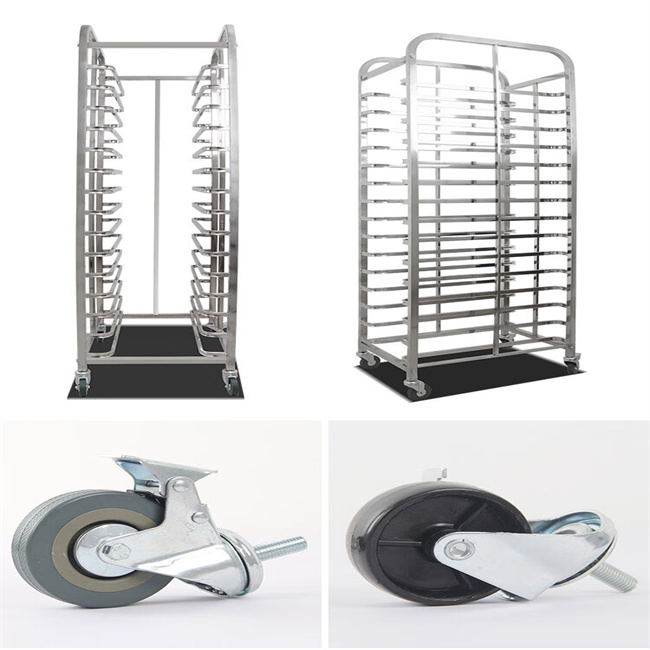
A well-engineered 304 stainless steel trolley is built with features that directly address industrial challenges. Reinforced frame structure is not just a marketing term—it improves load stability during repeated transportation and industrial handling, especially when moving heavy bins or trays over uneven floors. The 304 stainless steel construction offers excellent corrosion resistance, making it suitable for wet and humid environments. Unlike lower-grade materials, 304 contains 18% chromium and 8% nickel, providing a stable austenitic structure that resists oxidation and pitting. This is crucial in food processing where trolleys are frequently washed with caustic cleaners. The welded joints are typically ground smooth to eliminate crevices where bacteria can harbor, meeting hygiene standards such as FDA or EU 1935/2004. Heavy-duty casters with options for brakes and swivel locks enhance maneuverability and safety. The load capacity is determined by the frame design, caster quality, and shelf thickness—a typical industrial trolley may hold between 200 kg and 500 kg. Surface finish options include brushed, polished, or mirror finishes, with polished surfaces being easier to clean and more resistant to residue buildup. These features are not arbitrary; they are responses to real-world demands like high-pressure cleaning, frequent impact, and continuous operation.
Application Scenarios: Where 304 Stainless Steel Trolleys Excel
The versatility of 304 stainless steel trolleys makes them indispensable across multiple industries. In food processing, they transport raw ingredients, finished products, and waste, often moving between refrigerated zones and processing lines. Bakery operations use trolleys to hold dough trays, baked goods, and cooling racks, requiring heat resistance and easy sanitation. In industrial manufacturing, these trolleys move components, tools, and assemblies, where chemical resistance and load stability are paramount. Cleaning applications involve trolleys carrying cleaning supplies and equipment; here, corrosion resistance from detergents is critical. Drying processes in food dehydration or pharmaceutical drying often require trolleys that can withstand high temperatures and airflow. Storage solutions include shelving trolleys that maximize space utilization in warehouses and cold rooms. Transportation between buildings or across loading docks demands rugged casters and frame integrity. Each scenario imposes unique stresses: a trolley in a meat plant faces blood and fat, while one in a dairy encounters lactic acid. A supplier with experience across these sectors can recommend the right configuration, such as additional shelves, side rails, or drainage holes, to match your specific workflow.
Material Selection: 304 vs. 316 vs. 201 Stainless Steel and Aluminum
Choosing the correct material is a balancing act between cost, corrosion resistance, and mechanical properties. 304 stainless steel is the industry standard for food equipment due to its excellent corrosion resistance, formability, and weldability. It performs well in most food environments but may pit in chloride-rich conditions, such as seafood processing or coastal areas. 316 stainless steel adds molybdenum, which significantly improves resistance to chlorides and acids. It is ideal for high-salt or chemical exposure but comes at a higher cost. 201 stainless steel is a lower-cost alternative with manganese replacing some nickel; it offers lower corrosion resistance and is generally not recommended for aggressive food environments. Aluminum is lightweight and corrosion-resistant but softer and less durable under heavy loads; it may be suitable for light-duty drying racks but not for heavy industrial transport. When specifying, consider the cleaning agents used, the pH of products, and the required lifespan. A reputable supplier will provide material certificates and explain trade-offs, helping you avoid over-specifying or under-specifying. For example, a trolley used in a dry bakery might be fine with 304, while a seafood processor should insist on 316 for longevity.
Specifications: Key Parameters Buyers Must Confirm
To ensure you receive a trolley that fits your operation, you must define specifications clearly. Dimensions (length, width, height) should match your aisles, doorways, and storage racks. Thickness of shelves and frame tubes affects load capacity and durability; typical shelf thickness ranges from 0.8 mm to 1.5 mm for industrial use. Capacity is rated in kilograms or pounds and must account for dynamic loads during movement. Number of shelves (layers) determines storage volume; three to five shelves are common. Load capacity per shelf should be specified, as it depends on shelf support and material. Hole diameter and mesh size matter if the trolley will hold small items or require drainage; for example, 5 mm holes allow water to pass while retaining most food pieces. Tray compatibility is critical in bakeries—ensure the trolley accepts standard 18" x 26" or 600 mm x 400 mm trays. Surface treatment such as electropolishing can enhance cleanability. Caster type (wheel diameter, material, brake) affects mobility and floor protection. A detailed specification sheet from your supplier should list all these parameters. If not, request one. Vague specifications often lead to costly returns or unsafe equipment.
Customization Services: OEM and ODM Capabilities
Every production environment is unique, so standard trolleys may not suffice. A capable manufacturer offers OEM (original equipment manufacturer) and ODM (original design manufacturer) services. This includes custom sizes to fit specific spaces, custom designs such as additional shelves, drawers, or hooks, and logo placement for branding. Packing can be customized for export, with protection against moisture and impact. Special requirements like anti-static casters, explosion-proof motors for automated trolleys, or high-temperature wheels can be accommodated. When evaluating a supplier's customization capability, ask for examples of past projects and lead times. A factory with in-house engineering and prototyping can often turn around custom designs in weeks, not months. However, be wary of suppliers who outsource everything—they may lack control over quality and timelines. For custom requirements, please contact our team to discuss your specific needs. We can provide drawings, samples, and production schedules to ensure your trolleys integrate seamlessly into your operations.
Procurement Guide: How to Select the Right Supplier
Choosing a supplier goes beyond price. Start by assessing their production capability: do they have their own factory, or are they a trading company? A direct manufacturer typically offers better quality control and pricing. Request an audit report or schedule a video tour. Check their quality management system—ISO 9001 is a good baseline, but also look for industry-specific certifications like NSF or FDA compliance. Evaluate their material sourcing: do they use reputable steel mills? Ask for mill certificates. Welding and finishing are critical: poor welds can crack under load, and rough finishes harbor bacteria. Request samples or visit their facility to inspect workmanship. Lead times and communication are also telling. A supplier who responds promptly to inquiries and provides clear timelines is more reliable. After-sales support, including spare parts and technical assistance, should be part of the package. Finally, consider total cost of ownership—a cheaper trolley that fails in six months is more expensive than a durable one. Use a weighted scoring system to compare suppliers on quality, price, lead time, and service. This disciplined approach reduces risk and ensures you partner with a supplier who supports your long-term success.
FAQ: Common Questions from B2B Buyers
1. What is the difference between 304 and 316 stainless steel for trolleys?
304 offers good corrosion resistance for most food environments, while 316 contains molybdenum for superior resistance to chlorides and acids, making it suitable for seafood, dairy, or chemical exposure. 316 is more expensive but extends lifespan in harsh conditions.
2. How do I choose the right size trolley for my facility?
Measure your aisles, doorways, and storage areas. Consider the largest items you need to transport and the turning radius required. Standard sizes exist, but custom sizes are often necessary for tight spaces. Provide your layout to the supplier for recommendations.
3. What load capacity should I look for?
Calculate the maximum weight you plan to carry, including the trolley itself, and add a safety margin of 20-30%. Check the capacity per shelf and ensure the casters are rated for the total load. Overloading can cause premature failure.
4. How can I verify a supplier's quality without visiting?
Request material certificates, welding inspection reports, and photos of past projects. Ask for references from similar industries. A reputable supplier will also provide samples or allow a third-party inspection.
5. What customization options are typically available?
Common customizations include size, number of shelves, shelf type (solid, perforated, mesh), caster type, logo, and packaging. More complex modifications like integrated weighing scales or RFID tracking can be discussed.
6. What is the typical lead time for a custom order?
Lead times vary by complexity and order volume. For standard customizations, 4-6 weeks is common; complex designs may take 8-12 weeks. Always confirm production schedules and shipping terms upfront.
7. How do I maintain stainless steel trolleys to prevent corrosion?
Regular cleaning with mild detergent and water, followed by drying, is usually sufficient. Avoid chloride-based cleaners. For stubborn stains, use a stainless steel cleaner. Periodic passivation can restore the protective oxide layer.
8. Can I use a 304 trolley in a freezer environment?
Yes, 304 stainless steel performs well at low temperatures, but ensure the casters and any lubricants are rated for freezer conditions. Also, consider condensation and ice buildup; opting for sealed casters and slightly larger wheels can help.
9. What is the minimum order quantity (MOQ) for custom trolleys?
MOQs vary by supplier. Some factories accept small trial orders, while others require larger volumes to justify setup costs. Discuss your needs; a good supplier will work with you to find a feasible starting point.
10. How do I ensure my trolleys comply with food safety regulations?
Look for suppliers who follow FDA or EU regulations for food contact materials. Trolleys should have smooth, cleanable surfaces, non-toxic materials, and no crevices. Certifications like NSF are a strong indicator of compliance.
Image ALT Text Suggestions
For product images, use descriptive ALT text such as: "304 stainless steel trolley with three shelves and heavy-duty casters for food processing" or "Custom 304 stainless steel bakery trolley with tray racks and logo engraving."
SEO Meta Information
SEO Title: 304 Stainless Steel Trolley Supplier for Food Equipment | Custom
Meta Description: Source 304 stainless steel trolleys from a reliable manufacturer. Custom sizes, food-grade materials, and industrial durability. Get a quote for your food processing needs.
SEO Keywords: 304 stainless steel trolley supplier, food equipment trolley, stainless steel cart manufacturer, custom stainless steel trolley, industrial food trolley, 304 vs 316 stainless steel, food-grade trolley, stainless steel trolley for bakery, heavy-duty stainless steel trolley, OEM stainless steel trolley

