


How to Choose the Right Bakery Tray Cart Manufacturer for Industrial B2B Procurement
Product Introduction: What Is a Bakery Tray Cart and Why It Matters
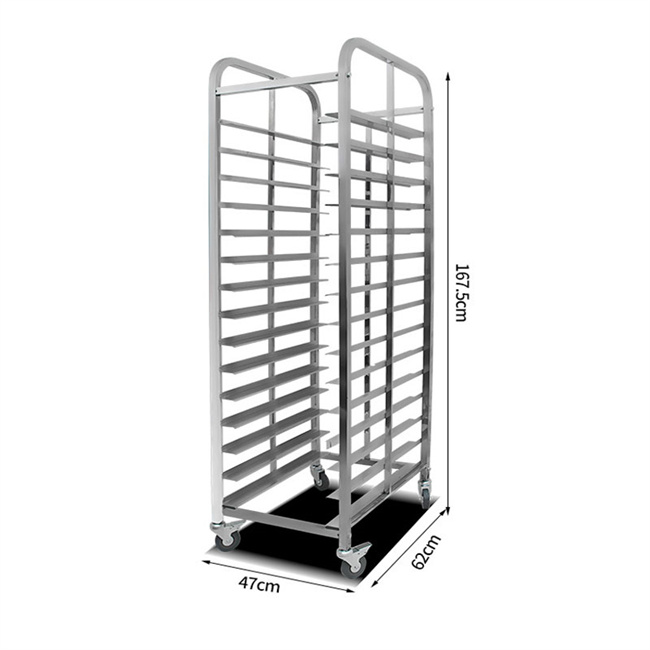
When sourcing a bakery tray cart manufacturer, industrial buyers need to look beyond basic product descriptions. A bakery tray cart—also known as a bakery rack, pan rack, or tray trolley—is a mobile storage and transport solution designed to hold multiple baking trays, sheet pans, or product containers. Its primary purpose is to streamline workflow in high-volume baking and food processing environments, reducing manual handling and preventing product damage during cooling, proofing, freezing, and transportation. In B2B procurement, the cart must withstand continuous heavy loads, frequent washdowns, and harsh thermal conditions. The right manufacturer will provide engineering support to match cart specifications with your existing tray dimensions and production line layout.
Product Features: Structural Design, Materials, and Performance
A well-engineered bakery tray cart incorporates several industrial-grade features that distinguish it from consumer-grade shelving. The frame is typically constructed from reinforced tubular steel or stainless steel, with cross-bracing that improves load stability during repeated transportation and industrial handling. Key design elements include:
- Welded or bolted frame construction: Welded joints offer superior rigidity, while bolted designs allow for on-site assembly and easier replacement of damaged components.
- Adjustable tray slides or fixed angles: Adjustable slides accommodate different tray heights, while fixed-angle slides speed up loading and unloading in high-throughput lines.
- Caster and wheel options: Heavy-duty swivel casters with brakes, or high-temperature wheels for oven applications, ensure safe movement on uneven floors.
- Surface treatment: Electropolished or passivated stainless steel surfaces resist corrosion and simplify cleaning, meeting HACCP and FDA requirements.
These features are not merely conveniences; they directly impact operational efficiency. For instance, a cart with a load capacity of 500 kg and reinforced corner gussets reduces the risk of rack deformation during forklift handling. Manufacturers with in-house laser cutting and robotic welding can hold tight tolerances, ensuring that tray slides are consistently spaced to prevent pan jamming.
Application Scenarios: Where Bakery Tray Carts Are Used
Bakery tray carts are employed across multiple industries, each with specific requirements:
- Food Processing: Transporting raw ingredients, work-in-progress, or finished goods between processing zones. Carts must be easy to sanitize and resistant to acidic or alkaline cleaning agents.
- Bakery and Confectionery: Cooling bread, pastries, and cakes after baking; proofing dough; and freezing par-baked items. Carts must withstand temperature swings from -40°C to 250°C depending on the process.
- Industrial Manufacturing: Moving components or small parts in powder coating, drying, or assembly lines. Stainless steel or aluminum carts prevent contamination.
- Cleaning and Drying: Holding trays in industrial dishwashers or drying ovens. Open-wire or perforated tray slides promote airflow and drainage.
- Storage and Transportation: Temporary storage in cold rooms or shipping via trucks. Carts with stacking capability or nesting design save space.
In each scenario, the cart’s design must align with the process. For example, a bakery using a spiral cooler requires carts with high-temperature nylon wheels that won’t degrade at 120°C, while a meat processing plant needs fully welded 304 stainless steel to prevent bacterial harborage.
Material Selection: 304, 316, 201 Stainless Steel vs. Aluminum
The choice of material directly affects cost, durability, and compliance. Here’s a practical comparison for procurement:
- 304 Stainless Steel: The industry standard for food contact. Excellent corrosion resistance, withstands most cleaning chemicals, and performs well in wet environments. Ideal for bakery, dairy, and general food processing.
- 316 Stainless Steel: Contains molybdenum, offering superior resistance to chlorides and acids. Recommended for meat processing, seafood, and pharmaceutical applications where aggressive sanitizers are used. Higher cost but longer service life.
- 201 Stainless Steel: Lower nickel content, reduced corrosion resistance. Suitable for dry storage or light-duty applications where cost is a primary driver. Not recommended for frequent washdowns or acidic environments.
- Aluminum: Lightweight, good thermal conductivity, and rust-resistant (naturally forms oxide layer). Often used for oven racks or carts where weight reduction is critical. However, aluminum can dent under heavy impact and may react with alkaline cleaners.
When specifying material, consider the operating environment, cleaning regime, and load requirements. A reputable manufacturer will provide material certificates and offer advice on thickness (e.g., 1.2mm to 2.0mm wall thickness for tubes) to balance strength and weight.
Specifications and Technical Parameters
B2B buyers should request detailed specifications to ensure compatibility with existing trays and processes. Key parameters include:
- Overall dimensions: Length, width, and height. Common sizes include 18” x 26”, 18” x 30”, and 26” x 26” tray footprints. Height ranges from 1.2m to 2.0m.
- Tray slide spacing: Typically 1.5” to 3” (38mm to 76mm) between slides. Confirm the number of slides (e.g., 10, 15, 20) and whether they are fixed or adjustable.
- Load capacity: Static and dynamic load ratings. A cart with 500 kg capacity should have a safety factor of at least 2:1.
- Tube thickness: 1.5mm to 3.0mm for frame; 1.0mm to 1.5mm for tray slides.
- Surface finish: Polished (Ra < 0.8µm), brushed, or passivated. Specify if electropolishing is required for pharmaceutical or dairy use.
- Wheel type: Polyurethane, nylon, or phenolic; swivel or rigid; with or without brakes. Temperature rating of wheels must match application.
- Compatibility: Tray size, pan type (e.g., bun pans, sheet pans), and whether the cart will be used with automated loading systems.
Always request a dimensional drawing and load test report from the manufacturer. A supplier that cannot provide these may lack engineering depth.
Customization Services: OEM/ODM Capabilities
Industrial buyers often require custom solutions. A capable bakery tray cart manufacturer should offer:
- Custom sizes: To fit unique tray dimensions or space constraints.
- Custom designs: Modifications such as extra shelves, removable dividers, or integrated drainage channels.
- Logo and branding: Laser-etched or stenciled company logos on frame or side panels.
- Special packaging: Export-worthy crating or palletized packaging for sea freight.
- Special requirements: Anti-static wheels, high-temperature coatings, or compliance with specific industry standards (e.g., NSF, CE).
When evaluating customization capabilities, ask for previous custom projects and lead times. A factory with in-house R&D and rapid prototyping can reduce development cycles and ensure design intent is met.
Procurement Guide: How to Choose the Right Supplier
Selecting a supplier goes beyond price. Consider these factors:
- Size selection: Match cart dimensions to your tray size and production flow. Consider future expansion—oversizing may waste space, undersizing limits capacity.
- Material choice: Base on corrosion resistance, cleaning chemicals, and budget. For wet, acidic environments, 304 or 316 is essential; for dry storage, 201 or aluminum may suffice.
- Specification confirmation: Request a sample or detailed drawings. Verify tube thickness, weld quality, and caster brand. A supplier that uses known caster brands (e.g., Blickle, Tente) demonstrates commitment to quality.
- Supplier capability assessment: Audit the factory’s production capacity, quality control (e.g., ISO 9001), and lead times. Check if they have in-house laser cutting, bending, welding, and polishing—outsourcing these steps can lead to inconsistency.
- After-sales support: Spare parts availability, warranty terms, and technical support for assembly or troubleshooting.
For custom requirements, please contact our team to discuss your project. We provide OEM and ODM services with full engineering support.
Frequently Asked Questions (FAQ)
Q1: What is the typical lead time for a custom bakery tray cart order?
A1: Lead time varies by complexity and quantity. For standard models, 15–25 days after deposit. For custom designs, 25–45 days including prototyping and approval. Always confirm with the manufacturer.
Q2: Can I mix tray slide spacing within one cart?
A2: Yes, many manufacturers offer adjustable or mixed spacing to accommodate different tray heights. Specify your tray profile to ensure proper fit.
Q3: How do I verify the load capacity of a cart?
A3: Request a load test report or witness a static load test. A safety factor of 2:1 is standard; for critical applications, 3:1 is recommended.
Q4: Are stainless steel carts suitable for freezer environments?
A4: Yes, but specify low-temperature wheels and ensure welds are suitable for thermal cycling. 304 stainless steel performs well down to -40°C.
Q5: What surface finish is best for food safety?
A5: A smooth, polished finish (Ra < 0.8µm) minimizes bacterial attachment. Electropolishing further enhances corrosion resistance and cleanability.
Q6: Can you provide custom logo and packaging?
A6: Yes, we offer laser etching for logos and custom export packaging. Provide artwork and packaging requirements for a quote.
Q7: How do I choose between 304 and 316 stainless steel?
A7: Choose 316 if your cleaning chemicals contain chlorides or if the environment is highly corrosive (e.g., seafood processing). Otherwise, 304 is cost-effective for most bakery and food applications.
Q8: Do you offer samples for evaluation?
A8: Yes, samples are available for a fee, which is refundable upon a bulk order. Contact our team to discuss sample requirements.
Image ALT Text Suggestions
For product images, use descriptive ALT text such as: "Stainless steel bakery tray cart with 20 slides and swivel casters for industrial baking" or "Custom bakery rack cart with reinforced frame and adjustable tray slides".
SEO Meta Information
SEO Title: Bakery Tray Cart Manufacturer | Industrial B2B Supplier
Meta Description: Choose the right bakery tray cart manufacturer. Compare materials, specs, custom options. Trusted B2B supplier for food processing and industrial baking.
SEO Keywords: bakery tray cart manufacturer, bakery rack supplier, stainless steel bakery cart, industrial tray trolley, custom bakery rack, food processing cart, OEM bakery cart, tray cart procurement, bakery pan rack, commercial bakery cart

