





How to Choose the Right Bread Trays for Bakery Trolley: Sizes, Types, and Buying Tips
Why the Right Bread Trays for Bakery Trolley Matter
In high-volume bread production, the bakery trolley trays you choose impact product quality, workflow efficiency, and operational costs. A well-matched tray ensures even heat distribution, proper air circulation, and safe handling. Poorly selected trays can lead to deformed loaves, wasted energy, and frequent replacements. For commercial bakeries and industrial plants, investing in durable, correctly sized bread baking trays is a strategic decision.
Standard Sizes: 600×400 mm vs. 400×600 mm and Beyond
The most common tray sizes for bakery trolleys are 600×400 mm and 400×600 mm (the latter simply rotated). These dimensions fit standard bakery racks and ovens. However, many suppliers offer custom sizes to match specific oven chambers or trolley designs. For example, 800×600 mm trays increase capacity but require wider trolleys. When selecting, measure your trolley shelves and oven interior to ensure a snug fit. The 600×400 mm size is versatile for most bread types, while 400×600 mm suits longer loaves like baguettes. For small artisan batches, consider 300×400 mm trays. Always confirm the tray's outer dimensions and flatness to avoid sticking in racks.
Tray Types: Flat, Perforated, Baguette, and Corrugated
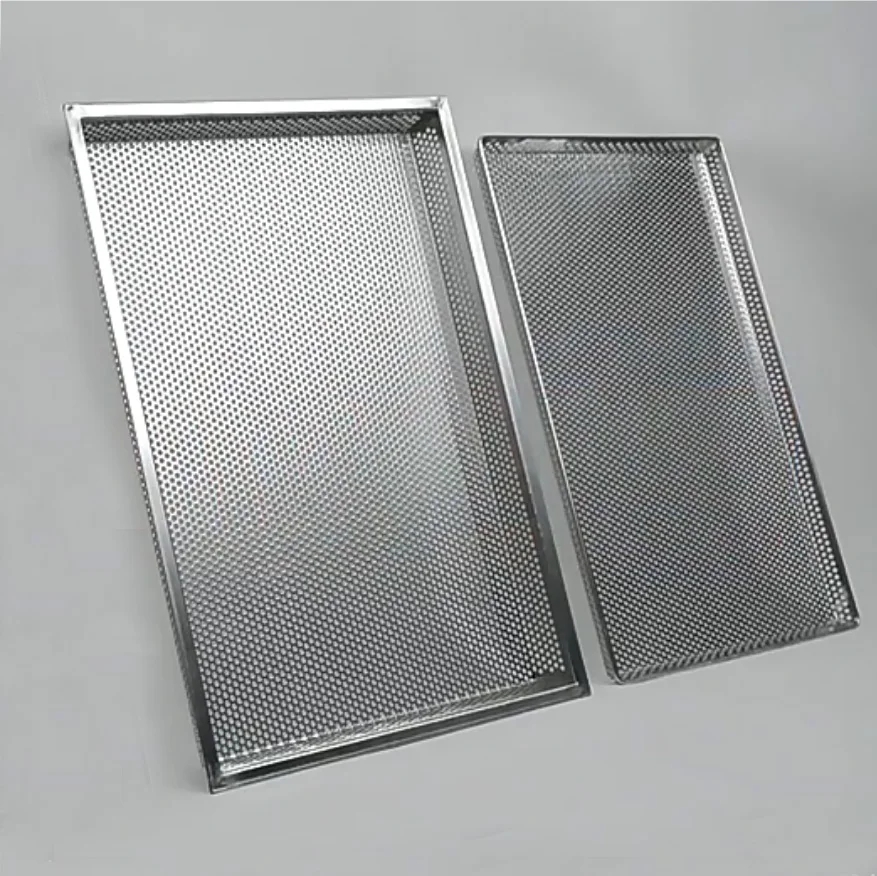
Choosing the right tray type affects baking performance and product finish. Flat trays are ideal for rolls, buns, and flatbreads, providing even support. Perforated trays (with holes) enhance air circulation, reducing baking time and promoting crisp crusts – perfect for pizza and certain artisan breads. Baguette trays feature corrugations that shape and support long loaves, preventing sagging. Corrugated (wave) trays are suitable for cookies and pastries, giving structural strength while allowing airflow. For multi-purpose use, a flat tray with optional perforated inserts offers flexibility. In heavy production, many bakeries prefer perforated trays for their lighter weight and faster baking.
Shelf Spacing and Loading Capacity
The shelf spacing on your bakery trolley determines how many trays you can load. Standard spacing is 70-80 mm, which fits most bread heights. For taller items like sourdough loaves, increase spacing to 100 mm. The tray material and thickness affect load capacity: commercial oven tray with 1.0 mm stainless steel can hold up to 20 kg, while thinner 0.5 mm trays are suitable for lighter items. Always check the trolley's maximum load and distribute weight evenly. When loading, leave space between trays for air circulation; overcrowding can lead to uneven baking. Consider using numbered tray positions to streamline rotation.
Edge Strength and Material Durability
Edge strength is vital to prevent warping and bending during handling. Reinforced edges (e.g., rolled or wire-reinforced) extend tray lifespan. Bakery rack trays are often made from aluminum or stainless steel. Aluminum trays are lightweight and heat quickly but can dent easily. Stainless steel trays (grade 201 or 304) resist corrosion and withstand heavy use. For acidic doughs, opt for 304 stainless steel. The tray's surface finish also matters: a smooth finish releases bread easily, while a brushed finish hides scratches. Insist on trays with sturdy edges and reinforce corners for durability in daily operation.
Cleaning and Hygiene in Daily Use
Excellent hygiene is non-negotiable in commercial baking. Choose trays that are easy to clean – smooth, without crevices. Perforated trays require thorough brushing to remove dough residue. Stainless steel trays are dishwasher-safe and resist staining. Aluminum trays should not be cleaned with strong alkalis. Implement a rotation schedule: wash trays after each shift, but avoid harsh abrasives that wear the surface. For gluten-free products, dedicate separate trays to prevent cross-contamination. Regular inspection for damage ensures safety and product quality.
Rotation and Workflow Efficiency
Efficient rotation of bread baking trays minimizes downtime. Standardize tray types to reduce changeover time. Use color-coded trays for different products to avoid mix-ups. Adopt a first-in, first-out system to ensure even usage. In large operations, invest in wheeled trolleys with locking brakes for safe transport. Consider purchasing spare trays to allow uninterrupted baking while others cool. By optimizing rotation, you can increase output by up to 20% without extra ovens.
Selection Table: Comparing Tray Types and Sizes
Here's a quick reference for common tray options:
Flat 600×400 mm – best for rolls and buns; high capacity; easy cleaning.
Perforated 600×400 mm – excellent air flow; crisp crust; faster bake; for pizza and artisan bread.
Baguette 400×600 mm – corrugations support loaves; even shape; for baguettes and subs.
Corrugated 600×400 mm – sturdy; good for cookies; prevents distortion.
For heavy loads, choose 1.2 mm thick 304 stainless steel; for energy efficiency, 0.8 mm aluminum. Always request samples to test in your oven.
Inquiry Parameters for Quotations
When requesting quotes, specify these parameters to get accurate pricing:
1. Material (aluminum, 201/304/316 stainless steel).
2. Dimensions (length × width × edge height).
3. Thickness (mm).
4. Hole pattern (for perforated trays) – hole diameter, distance, arrangement.
5. Surface finish (smooth, brushed, coated).
6. Load capacity requirement.
7. Quantity and packaging.
Clear specifications ensure conformity and avoid costly errors.
Frequently Asked Questions
Q: Can I use standard 600×400 mm trays on any trolley?
A: Not always. Trolley shelf dimensions and support rails vary. Always measure your trolley's usable width and depth, and consider the tray's outer size including edges. Many manufacturers offer custom sizes.
Q: What is the best material for high-temperature ovens?
A: Both aluminum and stainless steel handle typical baking temperatures (200-300°C). Aluminum heats faster and is lighter, but stainless steel is more durable. For very high heat, choose 304 stainless steel.
Q: How often should I replace bakery trays?
A: Depends on usage intensity and care. With proper handling and cleaning, quality stainless steel trays can last 5-10 years. Aluminum trays may warp sooner. Inspect regularly and replace bent or heavily scratched trays to maintain product quality.
Q: Are perforated trays worth the extra cost?
A: They can reduce baking time by up to 15% due to better air circulation, leading to energy savings and increased output. They also produce better crust color. For many bakeries, the long-term benefits outweigh the initial cost.
Get the Right Trays for Your Bakery Trolley
Choosing the correct bread trays for bakery trolley is a balance of size, type, material, and durability. At [Your Company], we offer a wide range of bakery trolley trays in standard and custom dimensions, with expert guidance to optimize your baking process. Request a quote today and upgrade your bakery efficiency.