





How to Choose the Right Food Drying Mesh Racks for Efficient Dehydration
Understanding Food Drying Mesh Racks
Food drying mesh racks are essential tools for commercial and industrial dehydration processes. They provide a hygienic, durable surface that promotes uniform airflow around food items, ensuring even drying. Unlike solid trays, mesh racks allow air to circulate from all sides, speeding up moisture removal and improving efficiency. Whether you are drying apple slices, jerky, fish fillets, herbs, or pet treats, choosing the right rack design directly impacts product quality and throughput.
Comparing Drying Tray Types
There are four primary types of drying surfaces: mesh drying trays, perforated drying trays, wire mesh racks, and solid trays. Each serves a specific purpose.
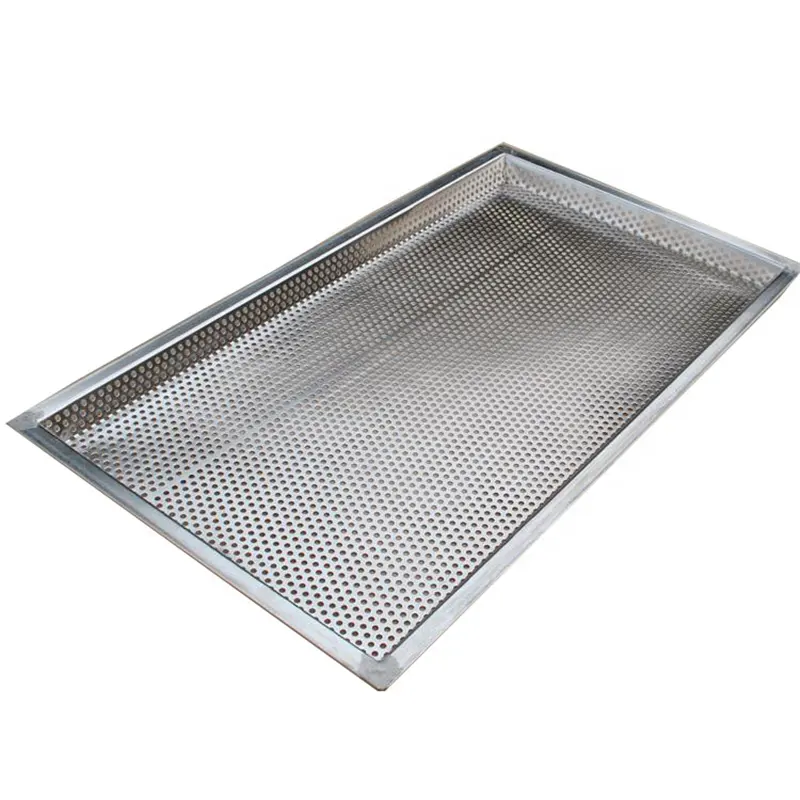
Mesh drying trays are made from woven stainless steel mesh, offering the highest open area (up to 40-60%). They are ideal for small items like herbs, diced vegetables, and shrimp because they prevent fall-through while allowing maximum airflow. Perforated drying trays feature regularly spaced round holes punched into a solid sheet, with open areas typically ranging from 10% to 30%. They provide a good balance between airflow and support, making them suitable for larger pieces like fruit slices or meat strips. Wire mesh racks are constructed from welded or woven wire with larger openings, providing high airflow and strength, but they require larger food pieces to avoid falling through. Solid trays have no openings, used primarily for liquids, purees, or very small particles, but they lack airflow from below.
Critical Factors: Mesh Size, Open Area, and Airflow
Mesh size and open area directly influence drying efficiency. The mesh opening determines what can be placed on the tray. For example, a 1mm opening is perfect for fine herbs, while a 10mm opening is better for large vegetable chunks. Open area refers to the percentage of the tray surface that is open space; higher open area allows more air to pass through, reducing drying time but potentially weakening the tray. Airflow is vital: without adequate air circulation, moisture becomes trapped, leading to uneven drying and potential spoilage. For high-moisture foods like fruits, a tray with high airflow (large open area) is recommended. For sticky items, a non-stick or perforated tray might be easier to handle.
Load Capacity and Structural Integrity
The ability to hold food without sagging is crucial, especially for heavy items like meat slabs. Load capacity depends on the wire diameter, frame thickness, and support structure. For heavy loads, a wire mesh rack with a thicker frame (e.g., 2mm) and cross supports is preferable. Mesh trays with thin wires may bend under heavy loads. The frame also plays a role: a reinforced border adds rigidity and prevents warping in high-temperature environments. Welds should be smooth and continuous to avoid weak points where breakage can occur. High-quality racks use TIG welding to ensure clean, durable joints.
Material Selection: SUS 304 vs. SUS 316
Stainless steel is the standard for food dehydration because it resists corrosion, is easy to clean, and does not react with acidic foods. SUS 304 is the most common grade, offering excellent corrosion resistance for most food applications. SUS 316 contains molybdenum, providing superior protection against chlorides and harsh chemicals, making it ideal for seafood drying where salt is present. Both grades are food-safe, but 316 is more expensive. For cost-sensitive operations, 304 is often sufficient. When ordering, specify the grade and request material certificates to ensure compliance with food safety standards.
Customization and Sizing Options
Most manufacturers offer custom sizes to fit your existing dehydrators, ovens, or drying rooms. Common standard dimensions include 400×300mm, 600×400mm, and 800×600mm. You can also specify length, width, and edge height. Material thickness ranges from 0.5mm to 2.0mm; thinner sheets are light and economical but less sturdy, while thicker options handle heavier loads. For perforated trays, hole diameters can vary from 1mm to 10mm, with custom spacing and patterns. You can choose between 201, 304, or 316 stainless steel, or even aluminum alloys like 1060, 3003, or 5052 for lightweight and rapid heating. Customization ensures perfect compatibility with your equipment and drying needs.
Cleaning and Maintenance
Proper cleaning extends the life of your trays and prevents contamination. Mesh trays are easier to clean because food residues can be washed through the openings. Perforated trays may require brushing to dislodge stuck particles. Always use non-abrasive cleaners and soft brushes to avoid scratching the surface. For wire mesh racks, ensure there are no crevices where bacteria can hide. Most stainless steel trays are dishwasher-safe, but for industrial use, a high-pressure washer is effective. Regular inspection for weld cracks or corrosion is recommended, especially in high-humidity environments.
Application Comparison Table
| Application | Mesh Drying Tray | Perforated Drying Tray | Wire Mesh Rack | Solid Tray |
|---|---|---|---|---|
| Herbs (fine) | Excellent (small holes) | Good (1-2mm holes) | Poor (large gaps) | Good (spread thin) |
| Fruit slices | Good | Excellent (3-5mm) | Good (large pieces) | Poor (traps moisture) |
| Meat jerky | Good (requires support) | Excellent (4-6mm) | Excellent (strong) | Poor |
| Seafood (shrimp) | Excellent (1-2mm) | Good | Poor (fall through) | Poor |
| Pet food (kibble) | Good | Excellent | Good (for large) | Poor |
| Industrial powders | Poor | Poor | Poor | Excellent |
Inquiry Parameters Checklist
- Type: Mesh, perforated, wire mesh, solid
- Dimensions (L×W×H) in mm
- Material grade (SUS 304 or 316, or aluminum)
- Sheet thickness (0.5-2.0 mm)
- Opening size (mesh hole diameter or wire spacing)
- Open area percentage (if known)
- Frame type (flat, rolled, reinforced)
- Edge height (for retaining liquids)
- Load capacity requirement (kg per tray)
- Operating temperature range
- FDA or other certifications needed
- Quantity and delivery timeline
Frequently Asked Questions
What is the difference between a mesh drying tray and a perforated drying tray?
Mesh trays use woven wire with small openings, offering higher airflow but less surface support. Perforated trays have a solid sheet with punched holes, providing more support and strength, but with lower open area.
Can I use aluminum trays for food drying?
Yes, aluminum is lightweight and conducts heat well, but it may react with acidic foods. For most applications, stainless steel is preferable for durability and food safety.
How do I clean mesh racks effectively?
Soak in warm soapy water, then rinse with a high-pressure spray. For stubborn residues, use a soft brush. Avoid harsh chemicals that can damage the coating or material.
What open area percentage is best for drying fruits?
Aim for 30-40% open area to balance airflow and support. Too high may cause weak spots; too low reduces efficiency.
Do you offer custom sizes?
Yes, we manufacture custom sizes to match your equipment. Provide your exact dimensions and we can design the appropriate tray for you.
What is the maximum temperature these racks can withstand?
Stainless steel racks can operate up to 600°F (315°C) without deformation, but always check the specific material spec.
Contact Information
Need a reliable supplier for your food drying operations? Request a quote today. Our team will help you select the right mesh trays, perforated trays, or wire racks based on your product and volume. Contact us at [email protected] or call +1-800-123-4567. We offer competitive pricing, quick turnaround, and OEM support for custom designs. Let’s optimize your drying process together.