


How to Clean Stainless Steel Bakery Trolley: A B2B Procurement Guide for Industrial Buyers
Product Introduction: Stainless Steel Bakery Trolley
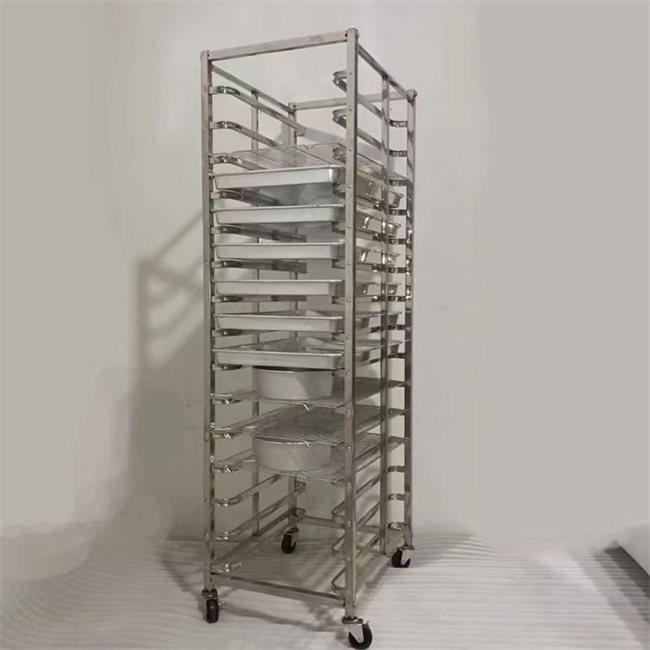
A stainless steel bakery trolley, also known as a bakery rack trolley or bakery pan trolley, is an indispensable material handling solution in commercial bakeries, food processing plants, and industrial kitchens. Designed to transport bakery pans, trays, and products through various stages of production—from proofing and baking to cooling and packaging—these trolleys ensure efficient workflow and maintain product integrity. The primary problem they solve is the safe, organized movement of heavy or bulky items while adhering to strict hygiene standards. For B2B buyers, selecting the right trolley involves understanding construction, material grades, and how to clean stainless steel bakery trolley to maximize lifespan and compliance.
Product Features: Design and Material Advantages
Industrial bakery trolleys are engineered for durability and performance. Key features include:
- Reinforced frame structure: Typically made from 304 stainless steel, the frame is welded for strength, with cross braces that improve load stability during repeated transportation. This design prevents racking and ensures smooth movement even under heavy loads.
- Corrosion-resistant materials: Stainless steel grades such as 304 and 316 offer excellent resistance to moisture, detergents, and food acids, making them ideal for wash-down environments.
- Ergonomic handles and casters: Swivel casters with brakes allow easy maneuverability in tight spaces, reducing operator fatigue.
- Modular design: Many trolleys feature adjustable tray slides or removable shelves to accommodate different pan sizes and configurations.
These features directly address industrial needs: the reinforced frame withstands frequent loading and unloading, while the non-porous surface simplifies cleaning and prevents bacterial growth.
Application Scenarios Across Industries
Stainless steel bakery trolleys are versatile assets in multiple sectors:
- Food processing: Transporting ingredients, finished goods, and work-in-progress between processing stations.
- Bakery: Moving dough troughs, proofing trays, and baked goods through ovens, coolers, and packaging lines.
- Industrial manufacturing: Used as mobile storage for components, tools, or assemblies in cleanroom environments.
- Cleaning and drying: Trolleys with perforated shelves or mesh panels facilitate air circulation for drying after washing.
- Storage and transportation: Stackable or nesting trolleys optimize space in warehouses and during shipping.
In each scenario, the ability to clean stainless steel bakery trolley effectively ensures compliance with HACCP and FDA regulations, minimizing downtime and contamination risks.
Material Selection: 304, 316, 201 Stainless Steel vs. Aluminum
The choice of material impacts cost, durability, and cleaning regimen. Here's a comparison:
- 304 stainless steel: The industry standard for food contact. Offers good corrosion resistance, easy cleaning, and strength. Suitable for most bakery environments.
- 316 stainless steel: Contains molybdenum, providing superior resistance to chlorides and acids. Recommended for highly corrosive environments or frequent chemical cleaning.
- 201 stainless steel: Lower cost alternative with reduced nickel content. Less resistant to corrosion; may be suitable for dry or less demanding applications.
- Aluminum: Lightweight and conductive, but prone to oxidation and requires protective coatings. Generally not preferred for wet or acidic environments.
For B2B buyers, specifying 304 or 316 stainless steel ensures longevity and compliance. Our factory can advise on the optimal grade based on your cleaning chemicals and production conditions.
Specifications: Key Parameters for Procurement
When sourcing bakery trolleys, consider these specifications:
- Dimensions: Common sizes include 18"x26", 26"x38", or custom to fit your pan sizes. Overall height and width must match your oven and proofer openings.
- Thickness: Frame tubing typically 1.2mm to 2.0mm; shelf material 0.8mm to 1.5mm.
- Capacity: Number of shelves (10, 15, 20, etc.) and load capacity per shelf (e.g., 50-100 kg).
- Load capacity: Overall trolley load rating, often 300-500 kg.
- Mesh or perforation: Hole size and pattern affect airflow and cleaning ease. Common mesh: 1/2" or 1" openings.
- Tray compatibility: Ensure slides accept standard bakery pan sizes (e.g., 18"x26", 16"x24").
- Surface finish: Polished or brushed finishes reduce residue buildup. Passivation may be offered for enhanced corrosion resistance.
Our manufacturing capabilities allow us to produce trolleys to your exact specifications, ensuring seamless integration into your operations.
Customization Services: OEM/ODM Capabilities
As a manufacturer with extensive OEM experience, we offer:
- Custom size and design: Tailored dimensions, shelf configurations, and load ratings.
- Logo and branding: Laser-etched or plate-mounted logos for brand visibility.
- Packing: Custom packaging for safe export, including knock-down designs to save freight.
- Special requirements: Additional features like brakes, handles, or anti-microbial coatings.
For custom requirements, please contact our team to discuss your project. We provide engineering support and rapid prototyping.
Procurement Guide: How to Choose the Right Trolley
B2B buyers should evaluate:
- Size selection: Match trolley dimensions to your existing pans, ovens, and storage spaces. Consider future needs.
- Material choice: Based on cleaning agents and environment. 304 is standard; 316 for harsh conditions.
- Specification confirmation: Request detailed drawings and material certificates. Verify load capacities.
- Supplier capability assessment: Check factory certifications (ISO, NSF), production capacity, and quality control processes. Request samples or audits.
Our factory maintains rigorous QC and offers full traceability. We support buyers with technical documentation and after-sales service.
How to Clean Stainless Steel Bakery Trolley: Daily Procedures
Proper cleaning extends trolley life and ensures food safety. Follow these steps:
- Pre-rinse: Remove loose debris with warm water (below 140°F to avoid staining).
- Apply detergent: Use alkaline or non-chlorinated cleaners. Avoid abrasive pads or chlorides which can pit stainless steel.
- Scrub: Use soft brushes or microfiber cloths. For mesh areas, use a brush to reach crevices.
- Rinse thoroughly: Remove all detergent residue with clean water.
- Sanitize: Apply food-safe sanitizer if required.
- Dry: Air dry or wipe with a clean cloth to prevent water spots.
For deep cleaning, disassemble removable parts and soak. Always follow chemical manufacturer instructions. Our trolleys are designed with smooth welds and minimal crevices to facilitate cleaning.
Image ALT Text Suggestions
For SEO and accessibility, use descriptive ALT text such as:
- "Stainless steel bakery trolley with 20 shelves in a commercial bakery"
- "Close-up of reinforced frame and swivel casters on bakery rack trolley"
- "Worker cleaning stainless steel bakery trolley with detergent and brush"
FAQ: Common Questions from B2B Buyers
Q: What is the best way to clean stainless steel bakery trolley?
A: Use warm water, non-chlorinated detergent, and a soft brush. Rinse and dry immediately to prevent water spots. Avoid abrasive cleaners.
Q: Can I use a pressure washer on the trolley?
A: Yes, but keep pressure below 1000 psi and avoid direct spray on bearings and casters. Dry thoroughly afterward.
Q: How often should I clean the trolley?
A: Daily after use, or more frequently in high-risk environments. Deep clean weekly or as per your HACCP plan.
Q: What causes rust spots on stainless steel?
A: Rust spots often come from external contaminants (e.g., steel wool) or chlorides. Clean with a passivation solution and rinse well.
Q: Do you offer custom sizes for bakery trolleys?
A: Yes, we specialize in custom designs. Provide your specifications and we'll engineer a solution.
Q: What is the lead time for a bulk order?
A: Typically 4-6 weeks, depending on customization and order volume.
Q: Are your trolleys NSF certified?
A: We can produce to NSF standards upon request. Certifications vary by model.
SEO Metadata
SEO Title: How to Clean Stainless Steel Bakery Trolley | B2B Guide
Meta Description: Expert guide on cleaning stainless steel bakery trolleys for B2B buyers. Learn daily procedures, material selection, and procurement tips from a leading manufacturer.
SEO Keywords: stainless steel bakery trolley, bakery rack trolley, how to clean stainless steel trolley, industrial bakery trolley, 304 stainless steel trolley, bakery pan trolley, stainless steel cleaning, B2B bakery equipment, custom bakery trolley, trolley manufacturer

