


How to Source Metal Mesh Trays for Industrial Food Processing: A B2B Buyer's Guide
Product Introduction
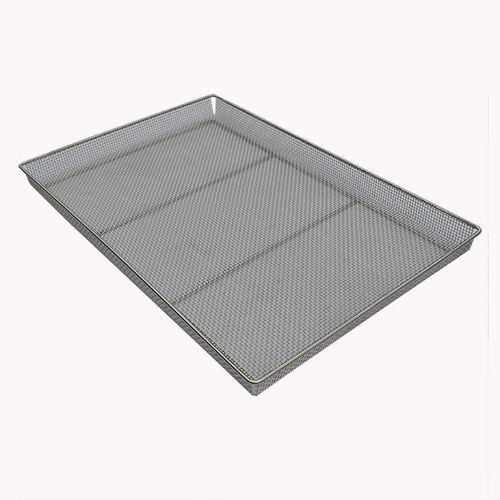
An industrial metal mesh tray is a load-bearing structure made from woven wire mesh, typically framed with solid stainless steel or reinforced edges. It is designed for continuous production environments where hygiene, load stability, and long-term operation reliability are critical. Unlike solid sheet trays, mesh trays allow air, steam, or water to pass directly through the product, which makes them essential in drying, cooling, baking, and washing processes. For B2B buyers, the decision to purchase a stainless steel mesh tray is rarely about the tray alone—it is about the impact on line efficiency, product uniformity, and maintenance costs. In food processing plants, for example, a poorly specified tray can cause uneven drying, trap debris, or deform under heat. A properly engineered tray becomes part of the production system, reducing downtime and protecting product quality. This is why procurement teams from food processing companies, pharmaceutical manufacturers, and industrial engineering firms treat mesh tray sourcing as a technical purchasing decision, not a commodity buy.
Product Features and Engineering Advantages
The performance of a metal mesh tray comes from its construction details. The mesh itself is defined by wire diameter, mesh opening, and weave pattern. The frame is equally important: a reinforced frame design improves load stability during repeated transportation and high-frequency industrial handling. When a tray is used in a conveyorized bakery line, for example, the frame must resist twisting and bending under vibration and thermal cycling. Manufacturing methods also matter. Spot-welded frames are common for light-duty trays, while fully welded or riveted frames are preferred for heavier loads and high-temperature applications. A well-engineered mesh tray offers several practical benefits:
- High corrosion resistance – suitable for washdown and humid environments
- Easy cleaning surface – open mesh reduces residue build-up and supports CIP processes
- Stable load capacity – reinforced edges prevent sagging under distributed loads
- Custom manufacturing options – sizes, mesh openings, and frame profiles can be tailored to existing equipment
- Thermal compatibility – performs in ovens, freezers, and drying tunnels when the correct grade is selected
These features are not marketing claims; they are the result of material selection, tooling precision, and production control. For industrial buyers, the difference between a standard tray and a properly engineered tray often shows up in reduced product loss, fewer line stoppages, and lower replacement frequency.
Application Scenarios
Mesh trays are used across industries where airflow, drainage, or sanitation is critical. In food processing, they carry meat, seafood, vegetables, and fruit through washing, blanching, freezing, and drying stages. The open structure allows water and air to move freely, which speeds up processing and improves uniformity. In bakery production, mesh trays are used for proofing, baking, and cooling. The mesh pattern supports delicate dough while allowing heat to circulate evenly, reducing scorching and sticking. In industrial manufacturing, mesh trays are used for parts washing, coating, and heat treatment. They resist chemicals and high temperatures while allowing drainage of fluids. In drying processes, such as dehydration of herbs, pet food, or chemicals, the mesh design increases surface contact with hot air, shortening drying cycles. In cleaning and sanitation, trays are used in tunnel washers and ultrasonic cleaning lines, where open mesh prevents water pooling and improves cleaning agent contact. For storage and transportation, stackable mesh trays help organize components and allow air circulation during shipping and warehouse storage. In pharmaceutical and laboratory settings, mesh trays are used for sterilizing, drying, and organizing glassware or small components. In commercial production, such as large-scale catering and central kitchens, mesh trays support high-volume cooking and cooling. In each case, the tray is selected because it solves a specific production problem: uneven drying, poor drainage, slow cleaning, or unstable loading.
Material Options and Manufacturing Details
Material selection is one of the first decisions in specifying a metal mesh tray. The most common grades are 304 stainless steel, 316 stainless steel, and 201 stainless steel, along with aluminum for lightweight applications. 304 stainless steel provides reliable corrosion resistance for food contact applications and daily industrial cleaning environments. It is suitable for most bakery, food processing, and general drying applications where chlorides are not present. 316 stainless steel offers higher resistance to chlorides and aggressive chemicals, making it the preferred choice for seafood processing, pharmaceutical production, and facilities that use salt-based cleaning agents. The cost is higher, but the service life in corrosive environments justifies the investment. 201 stainless steel is a lower-cost option with lower corrosion resistance. It is sometimes used for dry storage or light-duty applications, but it is not recommended for wet or chemical-heavy environments. Aluminum mesh trays are lightweight and offer good thermal conductivity, but they are softer and less corrosion-resistant than stainless steel. They are often used in baking where weight reduction matters. Manufacturing details include wire diameter, mesh count, frame thickness, and surface treatment. Common surface treatments include pickling and passivation for stainless steel, which removes contaminants and improves corrosion resistance. For food-grade applications, trays should be free of crevices and sharp edges that can harbor bacteria.
Specifications and Technical Parameters
Industrial buyers should define specifications based on the production environment and equipment interface. Key parameters include:
- Size – length, width, and height, often matched to existing racks, ovens, or conveyor systems
- Thickness – wire diameter and frame thickness, typically ranging from 1.0 mm to 5.0 mm depending on load
- Capacity – load-bearing capacity per tray, often expressed in kilograms per square meter
- Weight loading – static and dynamic load limits for manual or automated handling
- Layers – single-layer or stackable designs for space efficiency
- Mesh opening – aperture size, commonly from 2 mm to 50 mm, depending on product size and airflow needs
- Wire diameter – affects strength, openness, and weight
- Tray compatibility – fit with existing trolleys, racks, and conveyor systems
- Surface treatment – passivation, polishing, or coating as required
- Production tolerance – dimensional tolerances, typically ±1 mm to ±3 mm depending on size
Available sizes can be customized according to equipment dimensions and production requirements. When specifications are not yet fixed, buyers should provide drawings, samples, or equipment details so the manufacturer can propose a suitable configuration.
Custom OEM Manufacturing Service
For industrial buyers, standard trays rarely fit every application. A reliable OEM stainless steel tray manufacturer should offer custom size, custom design, logo marking, special packaging, material selection, prototype development, and bulk production. Custom size ensures the tray fits existing racks and conveyor systems without modification. Custom design may include reinforced corners, edge protectors, or stacking features. Logo marking helps distributors and end users with brand identification. Special packaging protects trays during export and reduces damage claims. Material selection should be based on the working environment, not just cost. Prototype development allows buyers to test fit and performance before committing to bulk orders. Bulk production should follow documented quality control procedures. For custom requirements, please contact our team.
Purchasing Guide for Industrial Buyers
Buying mesh trays for industrial use requires more than comparing prices. Procurement teams should follow a structured evaluation process. First, confirm the working environment: temperature range, humidity, chemical exposure, and cleaning method. Second, check material requirements: food contact, corrosion resistance, and regulatory compliance. Third, verify equipment compatibility: dimensions, load capacity, and handling method. Fourth, evaluate supplier production capacity: tooling, welding quality, surface treatment, and lead time. Fifth, review quality control: incoming material inspection, in-process checks, and final inspection reports. Sixth, confirm packaging and delivery reliability: export packaging, labeling, and shipping schedule. A practical purchasing checklist includes:
- Confirm working environment – temperature, moisture, and chemicals
- Check material requirements – 304, 316, or other grades
- Verify equipment compatibility – racks, ovens, and conveyors
- Evaluate supplier production capacity – tooling, welding, and finishing
- Review quality control – inspection reports and sample approval
- Confirm packaging and delivery – export packing and lead time
For distributors and importers, it is also important to assess the manufacturer’s export experience, communication responsiveness, and ability to handle repeat orders. A supplier that understands industrial procurement will provide clear quotations, realistic lead times, and consistent product quality.
FAQ
Q1: What stainless steel grade is recommended for food processing applications?
For most food processing applications, 304 stainless steel is suitable because it offers good corrosion resistance and is approved for food contact. If the environment includes chlorides, salt, or aggressive cleaning agents, 316 stainless steel is recommended. The final choice depends on the specific product, cleaning chemicals, and operating temperature.
Q2: Can the tray size be customized?
Yes. Most industrial mesh tray manufacturers offer custom sizes based on drawings, samples, or equipment dimensions. Custom sizes help ensure compatibility with existing racks, ovens, and conveyor systems. Buyers should provide detailed measurements and load requirements before production.
Q3: Do you provide OEM manufacturing service?
Yes. OEM service typically includes custom size, design, logo marking, packaging, and material selection. Some manufacturers also support prototype development before bulk production. Buyers should confirm tooling costs, minimum order quantities, and production lead times.
Q4: What information should buyers provide before quotation?
Buyers should provide tray dimensions, material grade, wire diameter, mesh opening, load capacity, surface treatment, quantity, and any special requirements such as logo or packaging. If available, drawings or samples help the manufacturer quote accurately and avoid misunderstandings.
Q5: How do you control product quality?
Quality control usually includes incoming material inspection, in-process checks during welding and forming, and final inspection before packing. Some manufacturers provide inspection reports and sample approval. Buyers should ask about tolerances, surface finish, and load testing procedures.
Q6: What is the typical lead time for bulk orders?
Lead time depends on order quantity, customization, and production capacity. Standard trays may ship in 15–25 days, while custom orders with new tooling can take 30–45 days. Buyers should confirm the schedule before placing orders and allow buffer time for shipping.
Q7: How should mesh trays be packaged for export?
Export packaging should protect trays from deformation, moisture, and handling damage. Common methods include palletizing, shrink wrapping, and edge protection. Buyers should specify labeling and packing requirements to match their warehouse or distribution needs.
Q8: Can mesh trays be used in high-temperature ovens?
Yes, stainless steel mesh trays can be used in high-temperature ovens if the correct grade and construction are selected. 304 and 316 stainless steel perform well at elevated temperatures. Buyers should confirm the maximum operating temperature and load conditions with the manufacturer.

