


Industrial Bakery Trolley: A Comprehensive Guide for B2B Procurement
Product Introduction: What Is an Industrial Bakery Trolley?
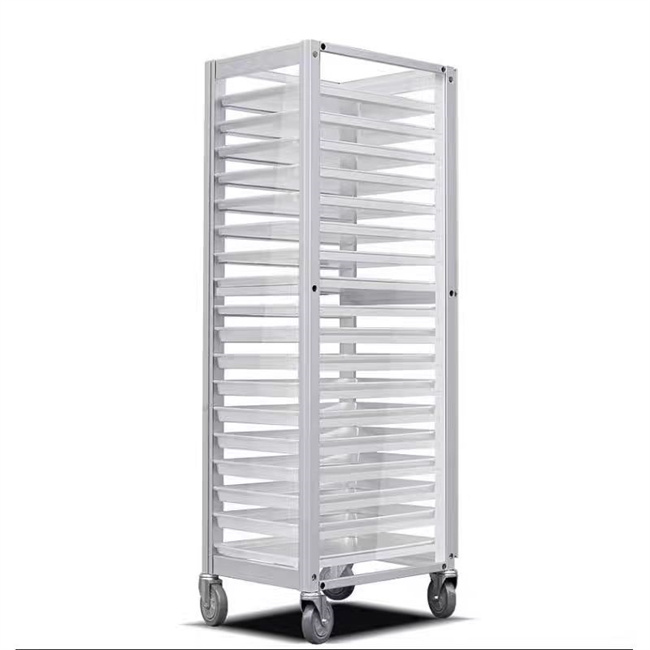
An industrial bakery trolley, also known as a bakery rack or pan truck, is a wheeled frame designed to hold multiple baking pans, trays, or screens. It is engineered to transport products through various stages of production—from proofing and baking to cooling, freezing, and storage. In large-scale operations, these trolleys are essential for moving heavy loads efficiently while maintaining product integrity. They solve critical problems: minimizing manual handling, reducing product damage, and ensuring smooth workflow between departments. Whether you run a commercial bakery, food processing plant, or central kitchen, investing in the right trolley directly impacts productivity and hygiene standards.
Product Features: Structural Design and Performance Advantages
Industrial bakery trolleys are built with robust construction to withstand continuous use. Key features include:
- Reinforced frame structure: Typically made from stainless steel or aluminum, the frame is welded or bolted for maximum stability. Cross-bracing and gussets enhance rigidity, preventing deformation under heavy loads.
- High load capacity: Depending on the design, trolleys can hold from 100 kg to over 500 kg. Heavy-duty casters with brakes ensure safe movement and parking on uneven floors.
- Hygienic design: Smooth surfaces, crevice-free joints, and open structures facilitate cleaning and prevent bacterial growth—critical in food environments.
- Modular and adjustable: Many models feature adjustable tray slides or removable shelves to accommodate different pan sizes and configurations.
- Temperature resistance: Suitable for use in ovens, freezers, and proofers, with materials that withstand extreme temperatures without warping.
These features are not merely conveniences; they are engineered to meet the rigorous demands of industrial handling, ensuring longevity and operational efficiency.
Application Scenarios: Where Industrial Bakery Trolleys Excel
Industrial bakery trolleys are versatile and find applications across various industries:
- Food Processing: Transporting raw ingredients, intermediate products, and finished goods through processing lines. Trolleys are often used in meat, dairy, and ready-meal production.
- Bakery and Confectionery: Moving dough, baked goods, and pastries between proofers, ovens, and cooling racks. They are essential for high-volume bakeries producing bread, cakes, and cookies.
- Industrial Manufacturing: In non-food sectors, similar trolleys are used for parts handling, but in food-related manufacturing, they must meet hygiene standards.
- Cleaning and Drying: Trolleys can be loaded with items for washing or drying, with designs that allow water drainage and air circulation.
- Storage and Transportation: Space-efficient storage of trays and products, and easy movement between storage areas and production floors.
For example, a large-scale bakery might use trolleys to move 20 sheet pans of croissants from the proofing room to the oven, then to a blast freezer, all without touching the product. This reduces labor and contamination risks.
Material Specifications: Choosing the Right Steel or Aluminum
The material of construction significantly affects durability, cost, and suitability for specific environments:
- 304 Stainless Steel: The industry standard for food contact. Excellent corrosion resistance, easy to clean, and withstands high temperatures. Ideal for most bakery applications.
- 316 Stainless Steel: Superior corrosion resistance, especially against chlorides and acids. Recommended for harsh environments or where frequent chemical cleaning is required.
- 201 Stainless Steel: A cost-effective alternative with lower nickel content. Offers moderate corrosion resistance but may be suitable for dry environments or light-duty use.
- Aluminum: Lightweight and rust-resistant, but softer than steel. Often used for trolleys that need to be frequently lifted or moved, but may not withstand heavy loads as well as steel.
Selection depends on your specific needs: for high-humidity or acidic environments, 304 or 316 is preferred; for dry storage, 201 or aluminum may suffice.
Specification Parameters: Key Considerations for Procurement
When specifying an industrial bakery trolley, consider these parameters:
- Dimensions: Overall length, width, and height must fit your ovens, proofers, and storage areas. Standard sizes accommodate 18" x 26" sheet pans, but custom sizes are available.
- Thickness: Material thickness (e.g., 1.0 mm to 2.0 mm) affects load capacity and durability. Heavier gauges are better for high-load applications.
- Capacity: Number of trays or shelves, typically 10 to 40. Load capacity per tray and total load should be clearly stated.
- Number of Layers: Determines throughput; more layers mean more products per trip but can affect maneuverability.
- Load Capacity: Static and dynamic load ratings. Ensure casters and frame can handle the maximum load.
- Hole Size and Mesh: For baskets or mesh trolleys, aperture size affects airflow and product containment.
- Tray Compatibility: Spacing and type of slides (e.g., angle, flat, or wire) must match your existing pans.
- Surface Treatment: Polished, brushed, or coated surfaces impact cleanability and appearance.
Always request detailed spec sheets and, if possible, samples to verify quality.
Customization Services: Tailoring to Your Needs
As a manufacturer with extensive OEM/ODM experience, we offer customization to meet specific requirements:
- Custom Size: Modify dimensions to fit your unique equipment or space constraints.
- Custom Design: Adjust frame structure, caster types, and handle positions for ergonomic use.
- Logo and Branding: Add your company logo via laser etching or plates for brand recognition.
- Packing: Custom packaging for safe shipping, including knock-down designs to save freight costs.
- Special Requirements: Additional features like brakes, anti-microbial coatings, or RFID tags.
Our engineering team works closely with clients to develop solutions that enhance efficiency. For custom requirements, please contact our team to discuss your project.
Procurement Guide: How to Select the Right Trolley and Supplier
B2B buyers should consider the following:
- How to choose the size? Measure your oven, proofer, and storage areas. Consider the largest pan you use and future expansion. Standard sizes are cost-effective, but custom may be necessary for optimized workflow.
- How to choose the material? Assess your environment: humidity, temperature, cleaning chemicals. 304 stainless is a safe bet for most bakeries; 316 for caustic environments; 201 for dry storage.
- How to confirm specifications? Request a detailed drawing and spec sheet. Check load ratings, material certificates, and weld quality. Ask for a sample if possible.
- How to judge supplier capability? Evaluate their production capacity, quality control processes, and experience with similar clients. Look for certifications like ISO 9001, and ask for references.
A reliable supplier will provide transparent information and support throughout the procurement process.
Image ALT Text Suggestions
For SEO, use descriptive ALT text like: "Stainless steel industrial bakery trolley with 20 trays in a commercial bakery" or "Heavy-duty bakery rack with casters for transporting sheet pans."
Frequently Asked Questions (FAQ)
1. What is the typical load capacity of an industrial bakery trolley?
Load capacity varies by design, but most industrial trolleys handle between 100 kg and 500 kg. Heavy-duty models can support up to 800 kg. Always check the dynamic and static load ratings.
2. Can these trolleys be used in freezers and ovens?
Yes, if made from appropriate materials. Stainless steel trolleys can withstand temperatures from -40°C to 300°C. Ensure casters are rated for extreme temperatures.
3. Are replacement parts available?
Reputable suppliers offer replacement casters, shelves, and other components. Specify this in your contract to ensure long-term support.
4. How do I clean and maintain a bakery trolley?
Use warm soapy water or food-safe sanitizers. Avoid abrasive cleaners that can scratch surfaces. Regular inspection of welds and casters is recommended.
5. What is the lead time for custom orders?
Lead times vary based on complexity and order volume. Typically, 4-8 weeks for custom designs. Discuss timelines with your supplier.
6. Do you provide samples?
Yes, we can provide samples for evaluation, though costs may apply. Contact our team for details.
7. How do I ensure the trolley fits my existing pans?
Provide pan dimensions and spacing requirements. We can customize slides to match your pans exactly.
8. What certifications should I look for?
ISO 9001, NSF, and CE are common. Food-safe material certificates are also important.
SEO Meta Information
SEO Title: Industrial Bakery Trolley | Heavy-Duty & Custom Solutions
Meta Description: Discover industrial bakery trolleys for large-scale production. Stainless steel, custom sizes, high load capacity. Ideal for bakeries, food processing. Get a quote!
SEO Keywords: industrial bakery trolley, bakery rack, stainless steel trolley, bakery pan truck, commercial bakery equipment, food processing trolley, custom bakery trolley, OEM bakery trolley, heavy-duty bakery trolley, bakery trolley manufacturer

