


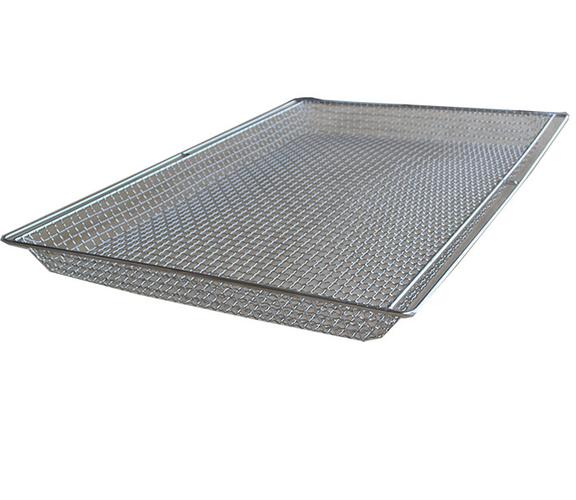
Industrial Beef Jerky Drying Tray: Sourcing Guide for B2B Buyers
Product Introduction
In the commercial production of beef jerky, the drying tray is not a peripheral accessory—it is a critical process component that directly affects airflow, dehydration uniformity, product yield, and food safety compliance. A beef jerky drying tray is typically a stainless steel mesh or perforated tray designed to hold meat strips during forced-air drying, smoking, or dehydration cycles. Unlike consumer-grade racks, industrial trays must withstand continuous operation, repeated washdowns, and high humidity environments without warping or corroding.
From a manufacturing perspective, these trays solve several production problems: they provide stable load support for meat pieces during handling and transport, ensure consistent airflow across the product surface for even moisture removal, and maintain hygienic conditions that meet food safety standards. For importers and distributors serving meat processing plants, offering a reliable beef jerky drying tray is a value-added proposition that addresses a recurring consumable need in high-volume jerky operations.
Purchasing decisions in this category are rarely based on price alone. Industrial buyers evaluate tray life cycle, compatibility with existing smokehouse or dehydrator racks, cleanability, and the supplier's ability to deliver consistent specifications across repeat orders. This guide outlines the key engineering, material, and sourcing considerations for B2B procurement.
Product Features and Engineering Advantages
The engineering of a beef jerky drying tray centers on three priorities: structural rigidity, airflow optimization, and sanitation. A reinforced frame design—typically a welded or crimped stainless steel border—improves load stability during repeated transportation and high-frequency industrial handling. Without this reinforcement, mesh trays tend to deform at the edges, causing product spillage and equipment jams.
The mesh or perforation pattern is equally important. Wire diameter and opening size are selected to balance air permeability with product support. For jerky, common configurations use a 2–4 mm wire diameter with mesh openings ranging from 6 × 6 mm to 20 × 20 mm, depending on strip size and airflow requirements. The tray surface must be free of sharp edges or catch points that could tear meat or harbor bacteria.
Manufacturing processes also influence performance. Laser-cut or precision-stamped perforations produce cleaner edges than punched holes, reducing the risk of wire breakage and product contamination. Fully welded frames, followed by passivation, enhance corrosion resistance at weld zones—an area where inferior trays often fail first.
Key product features for industrial buyers to verify include:
- High corrosion resistance for humid drying and washdown environments
- Easy-cleaning surface with smooth welds and no dead corners
- Stable load capacity under repeated handling and stacking
- Custom manufacturing options for non-standard rack dimensions
- Stackable or nestable design to optimize storage and transport
These features translate into fewer replacement cycles, lower downtime, and reduced risk of product contamination—factors that directly affect the total cost of ownership for food processors.
Application Scenarios
Beef jerky drying trays are used across multiple stages of meat processing and adjacent industries. Understanding these scenarios helps buyers specify the right tray for each application.
Food processing and meat dehydration: This is the primary application. Trays hold marinated beef strips during low-temperature drying cycles, often lasting 4–8 hours. The tray must allow uniform airflow to prevent case hardening and ensure consistent moisture content. Stainless steel construction is essential for food contact and daily sanitation.
Bakery and snack production: Similar mesh trays are used for drying fruits, vegetables, and snack products. Buyers sourcing for multi-product facilities should consider trays that can handle different piece sizes and cleaning regimes.
Industrial manufacturing and parts drying: Beyond food, mesh trays are used for drying components after washing or coating. While material grades may differ, the structural requirements—load stability and corrosion resistance—remain similar.
Pharmaceutical and laboratory environments: In these settings, trays must meet stricter cleanliness standards. Electropolished surfaces and 316-grade stainless steel are often specified to prevent contamination and withstand aggressive cleaning agents.
Storage and transportation: Trays are also used to move product between processing areas. Stackable designs and reinforced frames reduce product damage during internal logistics.
Each application imposes different demands on the tray. A supplier with experience across these sectors can recommend the appropriate mesh configuration, frame design, and material grade.
Material Options and Manufacturing Details
Material selection is a primary cost and performance driver. The most common grades for beef jerky drying trays are 304 and 316 stainless steel, with 201 stainless steel and aluminum used in less demanding applications.
304 stainless steel provides reliable corrosion resistance for food contact applications and daily industrial cleaning environments. It is suitable for most jerky drying operations and offers a good balance between cost and durability. For facilities using chlorinated cleaners or operating in high-humidity coastal areas, 316 stainless steel is preferred.
316 stainless steel contains molybdenum, which improves resistance to pitting and chloride attack. It is commonly specified for pharmaceutical, laboratory, and harsh washdown environments. The higher material cost is offset by longer service life in corrosive conditions.
201 stainless steel is a lower-cost alternative with reduced corrosion resistance. It may be suitable for dry storage or light-duty applications but is generally not recommended for continuous food processing with frequent washing.
Aluminum trays are lightweight and cost-effective but offer limited corrosion resistance and are not ideal for acidic or high-humidity environments. They are sometimes used for dry goods handling or where weight is a primary concern.
Manufacturing details also matter. Surface treatments such as passivation or electropolishing improve cleanability and corrosion resistance. Production tolerances—particularly flatness and mesh alignment—affect how trays fit into existing racks and how evenly product is loaded. Buyers should confirm these details during supplier evaluation.
Specifications and Technical Parameters
Industrial buyers should specify trays based on equipment dimensions, product size, and process conditions. While custom sizes are common, the following industry ranges provide a starting point for inquiry.
- Size: Custom dimensions to fit existing drying racks, smokehouses, or conveyor systems. Common footprints range from 400 × 600 mm to 800 × 1000 mm.
- Thickness: Frame and mesh thickness typically 1.0–3.0 mm, depending on load requirements.
- Load capacity: Static load ratings generally 10–50 kg per tray, depending on design and support.
- Layers: Single-layer trays are standard; multi-tier racks can be customized.
- Mesh opening: 6 × 6 mm to 20 × 20 mm for jerky; smaller openings for fine products.
- Wire diameter: 1.5–4.0 mm, balancing airflow and strength.
- Surface treatment: Passivation, electropolishing, or pickling as required.
- Production tolerance: Flatness within ±1–2 mm; mesh alignment within ±1 mm.
These parameters should be confirmed against the actual drying equipment. For custom requirements, buyers should provide drawings, photos, or sample trays for accurate quotation.
Custom OEM Manufacturing Service
For importers and distributors, a supplier's OEM capability is often the deciding factor. A manufacturer experienced in custom stainless steel tray production can support custom size and design, logo marking, special packaging, material selection, prototype development, and bulk production.
Prototype development is particularly valuable for buyers entering a new market or adapting to a client's existing rack system. A supplier should be able to produce sample trays for fit and performance testing before committing to a production run. This reduces risk and shortens the approval cycle.
Packaging also deserves attention. Trays are prone to scratching and deformation during shipping. Export-grade packaging—typically with edge protection, interleaving, and reinforced cartons or pallets—helps ensure product arrives in usable condition. Buyers should confirm packaging standards as part of the purchase agreement.
For custom requirements, please contact our team to discuss drawings, quantities, and delivery timelines.
Purchasing Guide for Industrial Buyers
Effective sourcing of beef jerky drying trays requires a structured approach. The following checklist helps buyers avoid common pitfalls.
- Confirm working environment: Identify humidity, cleaning chemicals, and temperature ranges to select the right material grade.
- Check material requirements: Verify food-contact compliance and corrosion resistance needs with the end user.
- Verify equipment compatibility: Obtain rack dimensions, loading patterns, and handling methods.
- Evaluate supplier production capacity: Confirm the supplier can handle repeat orders and scale with demand.
- Review quality control: Ask about inspection procedures, weld quality checks, and flatness verification.
- Assess export experience: Experienced suppliers understand packaging, documentation, and delivery requirements for international buyers.
- Confirm delivery reliability: Request production lead times and shipping schedules for initial and repeat orders.
When comparing quotations, buyers should evaluate total cost of ownership rather than unit price alone. A lower-priced tray that fails prematurely or causes product loss can be significantly more expensive over time. Suppliers that provide clear specifications, samples, and consistent quality are better long-term partners.
常见问题
What stainless steel grade is recommended for food processing applications?
304 stainless steel is the standard choice for most food processing applications, including beef jerky drying. It offers good corrosion resistance and cleanability at a reasonable cost. For facilities using aggressive cleaning chemicals or operating in high-humidity environments, 316 stainless steel is recommended for improved durability.
Can the tray size be customized?
Yes. Most industrial tray manufacturers offer custom sizes to fit existing drying racks, smokehouses, or conveyor systems. Buyers should provide accurate dimensions, drawings, or sample trays to ensure proper fit and performance. Custom sizes typically require a minimum order quantity.
Do you provide OEM manufacturing service?
OEM service is available for qualified buyers. This includes custom design, logo marking, special packaging, and material selection. Prototype development is also supported to verify fit and performance before bulk production. Contact the supplier with your requirements for a detailed proposal.
What information should buyers provide before quotation?
Buyers should provide tray dimensions, material grade, mesh or perforation specifications, load requirements, surface treatment needs, and estimated order quantity. Photos or drawings of existing trays are helpful. Application details—such as cleaning methods and operating temperature—also assist in recommending the right specification.
How do you control product quality?
Quality control typically includes incoming material inspection, in-process checks for weld strength and mesh alignment, and final inspection for flatness, surface finish, and dimensional accuracy. Suppliers with export experience should provide inspection reports and support third-party inspection if required.
What is the typical lead time for bulk orders?
Lead times vary based on order quantity, customization level, and production schedule. Standard trays may ship in 2–4 weeks, while custom designs or large orders may require 4–8 weeks. Buyers should confirm lead times during quotation and plan inventory accordingly.
How should trays be packaged for export?
Export packaging should protect trays from scratching, deformation, and moisture. Common methods include edge protection, interleaving, and reinforced cartons or pallets. Buyers should specify packaging requirements in the purchase order and request photos before shipment.

