


Industrial Stainless Steel Tray Sourcing: A Buyer's Guide to Specification, Material, and OEM Manufacturing
Product Introduction
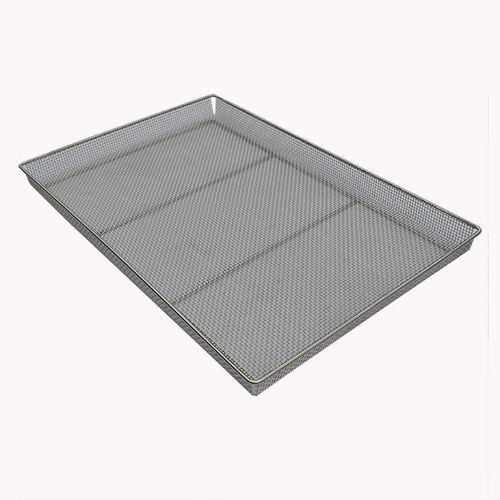
An industrial stainless steel tray is a load-bearing component engineered for continuous production environments where hygiene, load stability, and long-term operational reliability are critical. Unlike consumer-grade trays, these units are specified by engineers and procurement teams to integrate with existing equipment lines, withstand repeated cleaning cycles, and maintain dimensional accuracy across thousands of production hours. In food processing plants, pharmaceutical facilities, and heavy manufacturing operations, a failed tray can halt an entire line. That is why buyers evaluate trays as capital equipment components rather than commodity items. The industrial stainless steel tray solves specific production problems: it provides a stable platform for drying, cooling, baking, transporting, and storing goods while resisting corrosion from washdown chemicals and high-temperature processes. For importers, distributors, and OEM equipment builders, sourcing the right tray means balancing material cost against lifecycle performance and ensuring compatibility with the machinery it serves.
Product Features and Engineering Advantages
The engineering value of an industrial stainless steel tray lies in details that are often invisible in a product photo but determine performance in the field. Reinforced frame construction improves load stability during repeated transportation and high-frequency industrial handling, preventing deformation that would otherwise cause jams in automated conveyor systems. Full-welded or riveted joints are specified based on the cleaning regime: welded joints eliminate crevices where bacteria can accumulate in food-grade applications, while riveted designs offer cost efficiency for dry-process environments. Surface treatment matters as well. Pickling and passivation remove welding scale and restore the chromium oxide layer, which is essential for corrosion resistance in wet or chemical-exposed settings. Deburred edges and consistent mesh tension reduce product damage and improve airflow in drying applications. These features combine to reduce downtime, extend service life, and lower total cost of ownership.
- High corrosion resistance for washdown and chemical environments
- Easy-cleaning surface with crevice-free weld options
- Stable load capacity under repeated handling
- Custom manufacturing options for equipment integration
Application Scenarios
Industrial stainless steel trays are deployed across multiple sectors, each with distinct requirements. In food processing, trays are used for blanching, cooling, and freezing lines where direct food contact demands 304 or 316 stainless steel and sanitary weld quality. Bakery operations rely on trays that withstand high oven temperatures without warping, often requiring thicker gauges and heat-resistant finishes. Industrial manufacturing uses heavy-duty trays for parts washing, degreasing, and assembly line transport, where chemical resistance and load capacity are prioritized over sanitary design. Drying processes in textile, paper, and chemical plants depend on mesh trays with precise opening sizes to ensure uniform airflow. Cleaning and storage applications in pharmaceutical and laboratory settings require trays that can be autoclaved and validated for cleanliness. Transportation within warehouses and between production stages benefits from stackable designs and consistent dimensions. In each scenario, the tray is selected because it solves a specific production challenge: heat exposure, chemical contact, hygiene validation, or mechanical stress.
Material Options and Manufacturing Details
Material selection is the most consequential decision in tray procurement. 304 stainless steel provides reliable corrosion resistance for food contact applications and daily industrial cleaning environments, making it the default choice for most food and beverage operations. 316 stainless steel offers superior resistance to chlorides and aggressive chemicals, and is specified for pharmaceutical, marine, and heavy chemical applications where 304 would pit or corrode. 201 stainless steel is a lower-cost alternative with reduced nickel content, suitable for dry environments and light-duty applications where corrosion exposure is minimal. Aluminum trays are lightweight and offer good thermal conductivity, often used in baking where weight reduction matters, but they lack the corrosion resistance and durability of stainless steel in wet or chemical settings. The cost difference between grades can be significant, so buyers should match material to the actual working environment rather than defaulting to the most expensive option.
Specifications and Technical Parameters
Procurement teams should confirm the following parameters before issuing a purchase order. Size must match equipment dimensions, including clearance for conveyor guides and stacking features. Thickness typically ranges from 0.8 mm to 3.0 mm depending on load requirements. Load capacity should be specified in kilograms per tray under expected handling conditions. Mesh opening and wire diameter determine airflow, drainage, and product support, with common mesh openings ranging from 3 mm to 50 mm. Number of layers and tray compatibility with existing racks or trolleys must be verified. Surface treatment options include pickling, passivation, and electropolishing. Production tolerance is critical for automated systems; buyers should request dimensional tolerances, typically ±1 mm for standard trays and tighter for equipment-integrated designs. Available sizes can be customized according to equipment dimensions and production requirements.
Custom OEM Manufacturing Service
For buyers requiring equipment-specific designs, OEM manufacturing covers custom size, custom design, logo marking, special packaging, material selection, prototype development, and bulk production. Prototype development allows buyers to validate fit and function before committing to tooling and volume orders. Logo marking supports distributor branding, while special packaging protects trays during ocean freight and reduces handling damage. Material selection should be confirmed against the end-use environment, and production tolerances should be documented in the purchase specification. For custom requirements, please contact our team to discuss drawings, samples, and production timelines.
Purchasing Guide for Industrial Buyers
Effective sourcing begins with a clear specification. Confirm the working environment first: temperature range, chemical exposure, and cleaning method determine material grade and surface finish. Check material requirements against industry standards and request mill certificates for traceability. Verify equipment compatibility by sharing drawings or samples with the supplier. Evaluate supplier production capacity by requesting factory audit reports, production line photos, and references from similar markets. For bulk orders, confirm quality control procedures, packaging standards, and delivery reliability. A supplier with export experience in your region is better positioned to handle documentation, logistics, and after-sales communication.
- Confirm working environment and cleaning regime
- Check material requirements and certification
- Verify equipment compatibility with drawings
- Evaluate supplier production capacity and export experience
- Review packaging and delivery terms before ordering
FAQ
What stainless steel grade is recommended for food processing applications?
304 stainless steel is the standard choice for most food processing applications due to its reliable corrosion resistance and food-contact suitability. For high-chloride environments or pharmaceutical applications, 316 stainless steel is recommended for added protection against pitting and corrosion.
Can the tray size be customized?
Yes. Custom sizes are available based on equipment dimensions, conveyor specifications, and production requirements. Buyers should provide drawings or physical samples to ensure accurate fit and function.
Do you provide OEM manufacturing service?
Yes. OEM services include custom design, logo marking, special packaging, material selection, prototype development, and bulk production. Prototypes can be produced for validation before volume orders.
What information should buyers provide before quotation?
Buyers should provide dimensions, material grade, load requirements, mesh specifications, surface treatment, quantity, and delivery destination. Drawings or samples help reduce quotation errors and production delays.
How do you control product quality?
Quality control includes incoming material inspection, dimensional checks during production, weld and surface inspection, load testing, and final pre-shipment inspection. Mill certificates and inspection reports can be provided upon request.
What is the typical lead time for bulk orders?
Lead time depends on order quantity, customization requirements, and material availability. Standard trays typically ship within 15 to 30 days after order confirmation, while custom designs may require additional time for prototyping and production.

