





Maximizing Bakery Efficiency with the Right Bakery Trolley with Trays: A Comprehensive Selection Guide
Introduction: The Role of a Bakery Trolley with Trays
A bakery trolley with trays is an essential asset in any professional bakery, ensuring seamless movement of products through various stages: proofing, baking, cooling, and storage. These trolleys, equipped with bread trays for bakery trolley, enhance efficiency by reducing manual handling, improving hygiene, and maximizing space utilization. Whether you run a small artisan bakery or a large industrial operation, choosing the right trolley system directly impacts productivity and product quality.
Key Considerations for Selecting a Bakery Trolley with Trays
To build an optimal system, several critical factors must be evaluated in collaboration with your equipment supplier. These include tray size, number of levels, shelf spacing, loading direction, frame material, caster type, tray retention design, and compatibility with existing ovens or proofers. Each element influences performance, safety, and durability.
Tray Size and Standardization
The most common tray sizes are 400×300 mm, 600×400 mm, and 800×600 mm. The 600x400 baking tray is an industry standard, widely accepted across various oven and rack systems. Standardizing on this size ensures flexibility and interchangeability. However, custom dimensions are available to fit specific ovens or production lines. Always verify the exact internal dimensions of your oven or proofer to avoid mismatches.
Number of Levels and Shelf Spacing
The number of trays a trolley can hold, typically ranging from 10 to 20, depends on your production volume and space constraints. Shelf spacing must accommodate product height and allow proper air circulation for even baking and cooling. For proofing, adequate spacing prevents sticking and ensures consistent fermentation. Optimal spacing varies by product type—pastries may require less, while large bread loaves need more.
Loading Direction and Access
Trolleys can be designed for single-sided or double-sided loading. Double-sided access is crucial for ovens that require loading from both ends, such as tunnel ovens. For rack ovens, one-sided access might suffice. Consider your workflow: if your bakery uses roll-in ovens, the trolley must fit perfectly into the oven's baking chamber.
Material Selection for Durability and Hygiene
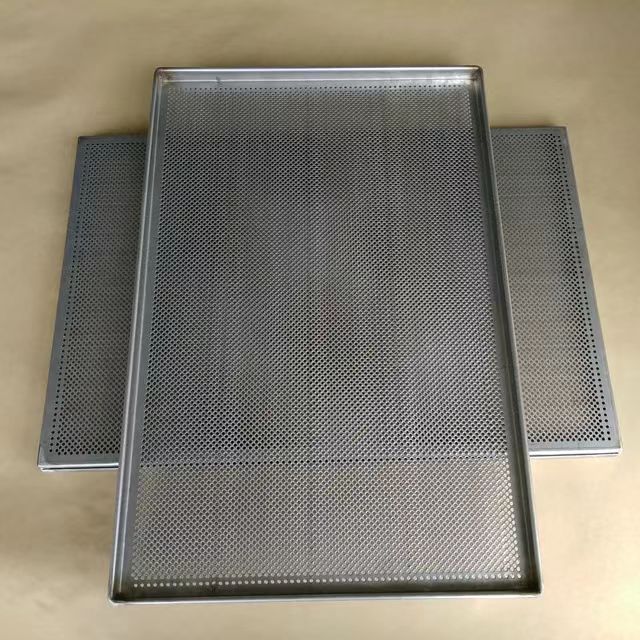
The frame of the trolley is typically made from stainless steel or aluminum. Stainless steel (201, 304, 316) offers excellent corrosion resistance and durability. Grade 304 is ideal for most food environments, while 316 provides superior resistance to harsh cleaning chemicals. Aluminum alloys (1060, 3003, 5052) are lightweight, offer good thermal conductivity, and are easier to handle, but may be less durable than stainless steel. For trays, you can choose between perforated or solid designs, depending on air circulation needs.
Perforated trays are essential for uniform heat distribution and airflow. Common perforation patterns include round holes with diameters from 1 mm to 10 mm. The open area, hole spacing, and arrangement can be customized to meet specific baking requirements. For instance, a higher open area speeds up baking but may reduce strength; thinner sheets (0.5 mm) suit light loads, while thicker sheets (2.0 mm) handle heavier products.
Casters and Mobility: Critical for Maneuverability
Casters determine how easily a trolley moves. When selecting, consider wheel diameter, material, and braking system. Polyurethane (PU) casters are quiet and floor-friendly, while nylon wheels offer higher load capacity and resistance to heat. Always choose casters with brakes on at least two wheels to ensure stability during loading and unloading. Ensure the caster swivel radius doesn't interfere with the oven entry.
Tray Retention and Safety
To prevent trays from slipping during movement, trolleys are equipped with tray retention designs such as angled ledges, center guide rails, or clips. The design must securely hold trays yet allow easy removal. For trays used in oven trolleys, ensure they can withstand high temperatures without warping. Additionally, the trolley structure should be robust enough to handle the combined weight of fully loaded trays without bending.
Compatibility with Existing Equipment
Your new trolley system must be compatible with your existing oven trolley tray systems, proofers, and refrigerated units. Measure the internal dimensions and rack supports of each piece of equipment. For example, the distance between rails in your oven door or proofer must match the trolley's tray spacing. Using non-standard trays like bakery rack trays can disrupt workflow and cause inefficiencies. Therefore, it's crucial to share detailed specifications with your supplier before purchase.
System Selection Table
Here is a quick reference table for selecting trolley features based on common requirements:
| Parameter | Options | Recommendation |
|---|---|---|
| Tray Size | 400×300 mm, 600×400 mm, 800×600 mm, Custom | Adopt 600×400 mm for universality |
| Number of Levels | 10, 15, 20, Custom | Match oven capacity |
| Shelf Spacing | 60-100 mm | Varies with product height |
| Frame Material | Stainless Steel 304/316, Aluminum | 304 SS for durability; Al for lightness |
| Tray Type | Perforated / Solid | Perforated for airflow |
| Caster Type | PU, Nylon, with/without brake | PU with brake for safety |
RFQ (Request for Quotation) Checklist
To ensure you get the right trolley, include the following in your RFQ:
- Exact tray dimensions and number of trays per trolley
- Required shelf spacing and number of levels
- Material preference for frame and trays (stainless steel grade)
- Perforation pattern (hole size, pitch, open area) if required
- Caster specifications (diameter, material, braking system)
- Loading direction (single/double-sided) and oven model specifications
- Maximum load capacity needed
- Compliance with food safety standards
FAQ: Common Questions About Bakery Trolleys
What is the standard size of a bread tray for a bakery trolley?
The most common size is 600×400 mm, which fits most ovens and racks. However, custom sizes are available.
Can I use aluminum trays in an oven?
Yes, aluminum trays are suitable for baking as they conduct heat well. Ensure they are thick enough to avoid warping at high temperatures.
How do I choose the right caster for my bakery trolley?
Consider weight load, floor type, and whether you need brakes. PU casters are ideal for hard floors, while nylon works well on uneven surfaces.
What is the maximum number of trays a trolley can hold?
It depends on the trolley design and load capacity. Standard trolleys hold 10-20 trays, but high-capacity models can hold more.
Conclusion and Call to Action
Investing in the right bakery trolley with trays is a strategic decision that enhances efficiency and quality. By paying attention to tray size, materials, compatibility, and safety features, you can optimize your bakery's workflow. Contact our expert team today to discuss your specific needs and request a customized quote. We are committed to providing high-quality, durable solutions tailored to your bakery.