





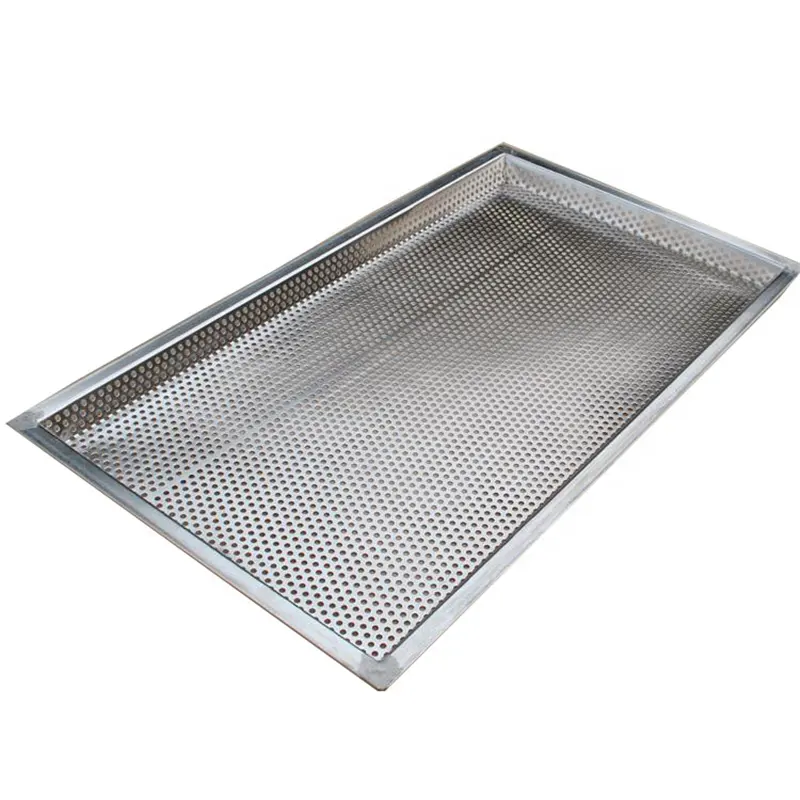
Solid vs Perforated Baking Tray: Choosing the Right Commercial Sheet Pan for Airflow, Texture, and Cleanup
Key Differences at a Glance
The primary difference lies in the presence of holes. A perforated baking tray features a pattern of small holes, allowing air and moisture to circulate freely. In contrast, a solid tray (including a commercial sheet pan) provides a flat, unbroken surface. This simple variation impacts everything from browning to cleanup.
| Feature | Solid Tray | Perforated Tray |
|---|---|---|
| Airflow | Restricted to edges | Excellent, all-around |
| Moisture Release | Poor; moisture collects | Excellent; prevents sogginess |
| Bottom Texture | Softer, often paler | Crispy, well-browned |
| Grease/Liquid Catch | Retains liquids | Drains away |
| Cleaning Effort | Easier, fewer crevices | More challenging |
| Best For | Breads, delicate items | Cookies, pizza, drying |
| Cost | Generally lower | Potentially higher |
Airflow and Moisture Management
Airflow is crucial for even baking. In a standard oven, hot air must reach all sides of the food. A perforated baking tray allows hot air to rise through the holes, promoting uniform cooking and reducing hot spots. This is particularly beneficial for items like cookies and pizzas, where a golden, crisp bottom is desired. Conversely, a solid stainless steel tray blocks airflow beneath the food, leading to a slower, more gentle heat transfer. This can be advantageous for thick items like bread loaves, where excessive bottom heat may cause burning before the crumb is set. Moisture release follows the same pattern: perforations allow steam to escape, preventing condensation that makes the bottom of pastries soggy. Solid trays trap steam, which can be useful for steam-baked goods or when you want a softer texture.
Bottom Crispiness and Texture Control
If your goal is a crispy bottom, the perforated baking tray is your ally. The holes expose the underside of the food to direct heat, encouraging browning and dehydration. This is ideal for crispy pizza, perfectly browned cookies, and roasted vegetables with caramelized edges. On the other hand, a solid tray offers more control for delicate items. For example, when baking sponges or certain breads, a pale, soft bottom is often preferred. The solid surface acts as a buffer, preventing over-browning. Additionally, for items that might stick, a solid tray with parchment or silicone mats is often easier to use.
Grease and Liquid Containment
Baking often involves melting fats or released juices. A solid tray catches these liquids, preventing messes in the oven. This is essential when roasting meats or baking items with cheese or fillings that may leak. Spills are contained and can be easily cleaned or used for making sauces. In contrast, a perforated baking tray allows fats and juices to drip through. While this is great for making foods less oily (e.g., crispy bacon or roasted vegetables), it requires a tray underneath to catch drips. This adds a cleanup step and can be problematic if oils smoke or burn on the bottom of your oven.
Cleaning and Maintenance Considerations
When it comes to cleaning, the solid stainless steel tray wins hands down. Its smooth surface wipes clean easily, even after baked-on grease. Perforated trays, with their many holes, are notoriously difficult to scrub. Food often gets trapped in the holes, and dried-on residues can be stubborn. To minimize cleaning hassle, consider coating your perforated tray with a non-stick spray or lining it with a reusable mesh liner. For heavy use, a commercial sheet pan made of heavy-gauge aluminum or steel offers durability and easy cleanup.
Product Suitability by Application
Bread and Pastries
Solid trays are often preferred for bread and pastries that need gentle bottom heat to rise fully without burning. For example, baguettes and sourdough loaves benefit from a longer bake time on a solid tray. For croissants and flaky pastries, a solid tray prevents the butter from melting too quickly, preserving flakiness.
Cookies and Biscuits
Here, the perforated baking tray shines. Its even airflow ensures uniform browning and crisp bottoms. Cookies spread less and bake more evenly. Use a perforated tray for chocolate chip cookies, shortbread, or biscotti to achieve that bakery-style crunch.
Pizza and Flatbreads
Whether thin-crust or deep-dish, a perforated tray is ideal for crisp bases. It allows moisture to escape quickly, preventing a soggy middle. For best results, preheat the tray before placing the pizza dough on it. For thick or stuffed pizzas, a solid pan may be better to avoid over-browning the bottom.
Meats and Vegetables
Roasting meat on a solid tray allows you to collect juices for gravies and keeps the oven clean. For crispy roasted vegetables or bacon, use a perforated tray over a solid one to drain excess fat. A food drying tray (often perforated) is essential for dehydrating fruits, vegetables, and herbs because it maximizes airflow from all sides.
Dehydrating and Drying
A food drying tray with perforations is a workhorse in preserving foods. The holes allow air to circulate around every piece, ensuring even and rapid drying. Whether you're making jerky, dried apple chips, or fruit leather, a perforated tray is non-negotiable for optimal results.
Choosing Your Tray: A Practical Guide
To select the right tray, consider your primary applications. If you bake mostly cookies and crispy items, invest in one or two high-quality perforated baking trays. If you bake breads and roast meats, a solid pan is a must. For most professional kitchens, stocking both is ideal. Remember that a commercial sheet pan often comes in half-size and full-size, so consider your oven dimensions. Also, evaluate the gauge: thicker sheets resist warping at high temperatures. For food drying, specifically look for a food drying tray with a fine mesh or small perforations to support smaller items.
Common Questions
Can I use a perforated tray for baking bread?
Yes, you can, but it's not always recommended. Perforated trays can cause over-browning on the bottom of bread loaves because of intense direct heat. For delicate breads, use a solid tray or add a layer of parchment paper to moderate the heat.
How do I clean a perforated baking tray effectively?
Soak it in warm soapy water immediately after use to soften any residue. Use a non-abrasive brush or sponge to scrub each hole gently. For stubborn residues, a paste of baking soda and water works well. Avoid harsh metal scrubbers that can scratch the surface.
Which tray is more durable: solid or perforated?
Both can be made equally durable. The durability depends more on material gauge and quality. Stainless steel is highly resistant to rust and warping. Look for trays with reinforced rims to prevent bending.
Is a perforated tray worth the extra cost?
If you frequently bake items that benefit from crispy bottoms and even browning, yes. Over time, the improved results and reduced food waste can offset the initial expense. For budget-conscious operations, a solid tray offers more versatility at a lower cost.