


Stainless Steel Bakery Trolley Quotation Guide: What to Include in Your RFQ
Product Introduction: What Is a Stainless Steel Bakery Trolley?
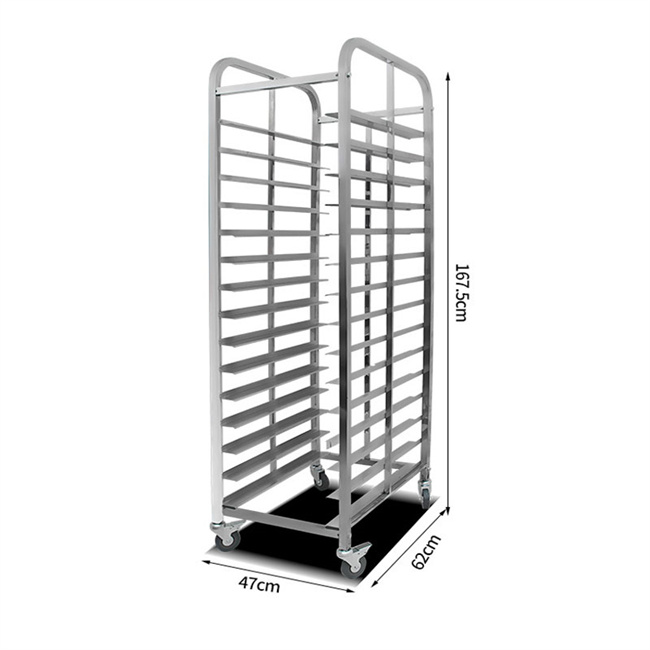
A stainless steel bakery trolley is a wheeled platform designed to hold multiple baking trays or pans, enabling efficient movement of goods through proofing, baking, cooling, and storage processes. Unlike generic carts, these trolleys are engineered for sanitary environments where corrosion resistance, load stability, and ease of cleaning are critical. In industrial bakeries, the trolley directly impacts workflow: a poorly specified unit can cause tray misalignment, wheel failure under heavy loads, or contamination risks. Therefore, the stainless steel bakery trolley quotation guide you use for procurement should capture every technical parameter that affects manufacturing cost and performance.
When you request a quote, you are not just buying a metal frame; you are investing in a handling system that must integrate with your existing racks, ovens, and conveyors. Suppliers who understand this will ask detailed questions before pricing. The following sections detail the information you should proactively provide to streamline the quotation process and avoid costly revisions.
Product Features: Structural Design and Material Advantages
Industrial bakery trolleys differ from commercial-grade units in several design aspects. The frame is typically constructed from stainless steel 304 or 316, with fully welded joints rather than bolted connections to eliminate crevices where bacteria can harbor. Reinforced cross-bracing improves load stability during repeated transportation over uneven floors. The tray slides are often formed with a hemmed edge to prevent injury and to allow smooth insertion of pans without snagging.
Wheel selection is equally important. For high-temperature environments such as oven loaders, heat-resistant phenolic or stainless steel casters with sealed bearings are specified. For washdown areas, IP66-rated casters prevent water ingress. A common mistake in RFQs is omitting the wheel type, leading to a quote that assumes standard nylon casters—unsuitable for temperatures above 80°C. Always specify the maximum operating temperature and floor conditions.
Material thickness also varies: load-bearing frames may use 1.5mm to 2.0mm wall thickness, while tray support bars can be 1.0mm to 1.2mm. Thin-gauge construction may reduce initial cost but often fails under continuous industrial use, leading to higher total cost of ownership.
Application Scenarios: Where Do These Trolleys Perform?
Stainless steel bakery trolleys are deployed across multiple industries, each with unique demands:
- Food Processing: Transporting ingredients, finished products, or waste in wet, acidic, or fatty environments. Requires 304 or 316 stainless steel and easy-to-clean surfaces.
- Bakery and Confectionery: Moving trays through proofers, deck ovens, and spiral coolers. Trolleys must withstand temperatures up to 250°C and frequent steam cleaning.
- Industrial Manufacturing: Holding components during assembly or painting. Often needs custom fixtures and higher load capacities (up to 500 kg).
- Cleaning and Drying: Used in washdown areas or drying rooms. Corrosion resistance and drainage design are critical.
- Storage and Transportation: Temporary storage of packaged goods or movement between warehouses. Stackable or nestable designs save space.
For each scenario, the application environment dictates material grade, wheel type, and surface finish. For example, a trolley used in a meat processing plant requires 316 stainless steel to resist chloride-based sanitizers, while a dry bakery can use 304. Providing this context in your RFQ helps the manufacturer recommend the optimal specification.
Material Selection: 304 vs. 316 vs. 201 vs. Aluminum
Material choice is a primary cost driver and must be justified by the operating environment. Here is a practical comparison:
- 304 Stainless Steel: General-purpose corrosion resistance, suitable for most bakery and food processing applications. Contains 18% chromium and 8% nickel. Not ideal for high-chloride environments.
- 316 Stainless Steel: Superior corrosion resistance due to molybdenum content. Recommended for coastal areas, meat processing, and chemical exposure. Higher cost, but longer service life.
- 201 Stainless Steel: Lower nickel content, lower cost, but reduced corrosion resistance. Often used for light-duty or dry storage. Not recommended for wet or acidic environments.
- Aluminum: Lightweight and conductive, but softer and prone to oxidation. Rarely used for structural frames in industrial bakeries due to strength limitations and reaction with alkaline cleaners.
When requesting a quotation, state the material grade explicitly. If you are unsure, describe the chemicals and cleaning agents used, and the manufacturer can advise. A reputable supplier will not substitute 201 for 304 without your approval.
Specification Parameters: What to Include in Your RFQ
To receive an accurate quotation, provide the following specifications. Missing data often leads to assumptions that may not match your needs:
- Overall Dimensions: Length x Width x Height (mm or inches). Include tray size and number of tiers.
- Thickness: Frame tube wall thickness (e.g., 1.5mm) and tray support bar thickness (e.g., 1.2mm).
- Capacity: Maximum load per trolley (kg) and load distribution (uniform or concentrated).
- Number of Tiers/Levels: Common configurations are 10, 15, 20, or custom.
- Load Capacity per Tier: Critical for structural design and wheel selection.
- Hole Diameter and Mesh Opening: If shelves are perforated, specify hole size and pitch. For wire mesh, specify mesh count and wire diameter.
- Tray Compatibility: Tray dimensions (e.g., 600x400mm, 18x26 inches) and style (rimmed, flat, baguette).
- Surface Treatment: Polished, brushed, or sandblasted. Polished is easier to clean but shows scratches; brushed hides wear.
- Wheel Type: Material (nylon, polyurethane, phenolic), diameter, brake option, and temperature range.
Additionally, specify any tolerance requirements (e.g., ±2mm for tray slide spacing) and whether the trolley must fit specific ovens or proofers. Supplying a drawing or reference photo reduces ambiguity.
Customization Services: OEM/ODM Capabilities
Most industrial suppliers offer customization to meet specific operational needs. When inquiring, ask about:
- Custom Size: Non-standard dimensions to fit existing equipment or space constraints.
- Custom Design: Modifications such as additional reinforcement, different wheel configurations, or specialized tray guides.
- Logo and Branding: Laser-etched or plate-mounted logos for fleet identification.
- Packing Requirements: Export-grade palletizing, individual wrapping, or knock-down packing to reduce freight costs.
- Special Requirements: Static-dissipative wheels for electronics areas, or extra-height push handles for ergonomic use.
For custom requirements, please contact our team with your specifications. A factory with in-house design and welding capabilities can often provide a prototype before mass production, ensuring fit and function.
Procurement Guide: How to Evaluate Suppliers and Specifications
Choosing the right trolley involves more than comparing prices. Consider these factors:
How to select dimensions? Measure your oven, proofer, and transport paths. Allow clearance for wheels and door frames. Standard sizes reduce lead time; custom sizes may add 2-4 weeks.
How to choose material? Match the grade to the most corrosive agent used. If in doubt, 304 is a safe default for food contact. For high-risk areas, specify 316.
How to confirm specifications? Request a detailed drawing for approval before production. Check tray slide spacing, wheel load rating, and welding quality (continuous vs. spot).
How to judge supplier capability? Ask for evidence of production capacity, such as factory audit reports, photos of welding lines, and references from similar industries. A manufacturer that specializes in stainless steel fabrication will have better control over material traceability and finish quality.
Finally, clarify the quotation terms: FOB, CIF, or EXW; lead time; warranty; and minimum order quantity (MOQ). These details prevent misunderstandings later.
FAQ: Common Questions About Stainless Steel Bakery Trolley Quotations
Q1: What is the typical lead time for a custom stainless steel bakery trolley?
A1: For standard sizes, lead time is usually 15-25 days after deposit. Custom designs may require 30-45 days, including drawing approval and sample production.
Q2: Can I mix 304 and 201 stainless steel to reduce cost?
A2: We do not recommend mixing grades in structural components due to galvanic corrosion risk and inconsistent strength. If cost is a concern, consider 201 for dry storage only, but clearly specify it.
Q3: What information is needed for an accurate quotation?
A3: Provide dimensions, quantity, material grade, number of tiers, load capacity, wheel type, tray size, surface finish, and application environment. A drawing or photo is helpful.
Q4: Do you offer OEM/ODM services?
A4: Yes. As a manufacturer, we provide custom design, logo printing, and specialized packaging. Send us your requirements for a feasibility assessment.
Q5: How do I choose the right wheels for my bakery trolley?
A5: Consider temperature, floor surface, and load. For ovens, use heat-resistant phenolic or stainless steel wheels. For wet areas, use polyurethane or nylon with sealed bearings.
Q6: What surface treatment is best for hygiene?
A6: Polished surfaces are easiest to clean but may show wear. Brushed finishes hide scratches and are acceptable in most food areas. Ensure all welds are ground smooth.
Q7: Can the trolley be stackable or nestable?
A7: Yes, we offer stackable designs that save space when not in use. Specify if you need this feature, as it affects frame design.
Q8: What is your MOQ and payment terms?
A8: MOQ is typically 10 units for standard models and 5 units for custom orders. Payment terms are 30% deposit, 70% before shipment. Contact us for details.
For further assistance or to request a quotation, please contact our team with your specific requirements.
Image ALT Text Suggestions
Image 1: Stainless steel bakery trolley with 20 tiers loaded with baking trays in a commercial bakery.
Image 2: Close-up of reinforced welded frame and heat-resistant casters on a stainless steel trolley.
Image 3: Custom stainless steel trolley with logo and specialized tray guides for baguette pans.
SEO Information
SEO Title: Stainless Steel Bakery Trolley Quotation Guide | RFQ Tips
Meta Description: Learn what to include in your RFQ for a stainless steel bakery trolley quotation: dimensions, material, load, and application. Get accurate quotes fast.
SEO Keywords: stainless steel bakery trolley quotation, bakery trolley RFQ, stainless steel trolley manufacturer, custom bakery trolley, 304 stainless steel trolley, 316 stainless steel trolley, industrial bakery trolley, bakery trolley specifications, OEM bakery trolley, bakery trolley supplier

