





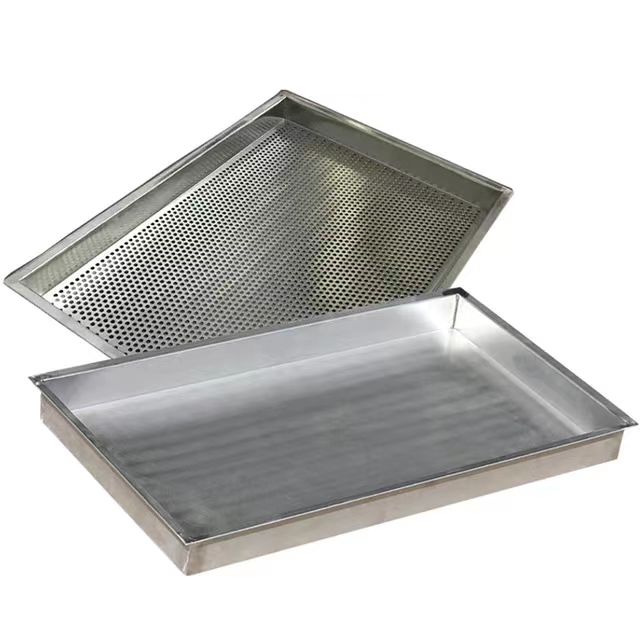
Stainless Steel Baking Tray Packaging for Export: Surface Protection, Stacking, and Shipping Strategies
Understanding Export Packaging Challenges for Baking Trays
When exporting baking trays, the biggest risks are surface scratches, denting, and moisture damage. Baking trays are often large, flat, and have smooth finishes that easily show imperfections. Without proper protection, trays can rub against each other during transit, causing unsightly marks that reduce their value. Additionally, condensation inside containers can lead to water spots or even corrosion. Exporters must design packaging that addresses these issues while keeping costs manageable. No single packaging method fits all scenarios—air freight, sea freight, and road transport each have different requirements.
Key Packaging Considerations for Stainless Steel Trays
Surface Protection: Each tray must be protected from scratches and abrasions. Common methods include interleaving with foam, paper, or plastic film between trays. For premium finishes, a peel-off protective film can be applied to the tray surface. Tray Isolation: Trays should be separated to avoid direct metal-to-metal contact. Corrugated cardboard dividers or foam edge protectors work well. Stacking: Trays stacked too high can deform under weight. Use sturdy boxes that match tray dimensions to prevent shifting. Reinforce corners with double-wall cardboard. Box Material: For smaller orders, corrugated cartons are cost-effective. For bulk or heavy shipments, plywood or OSB crates are better. Palletization: Place boxes on pallets and secure with stretch wrap or banding. Use corner boards to protect edges. Moisture Protection: Add desiccant packs and use moisture-resistant barrier bags if the shipping route involves high humidity. Labeling: Clearly mark cartons with handling instructions, fragile warnings, and export documentation. Quantity Checks: Before sealing, verify count and quality to avoid disputes. Transport Mode: Sea freight requires more robust packaging against stacking forces and moisture; air freight is quicker but often more expensive.
Packaging Options Comparison: Cartons vs. Wooden Crates
Choosing between cartons and wooden crates depends on shipment size, weight, and destination. Here is a comparison:
Corrugated Cartons: Ideal for lighter trays (up to 20kg per carton). They are lightweight, recyclable, and lower cost. However, they are less resistant to crushing and moisture. Use double-wall or triple-wall construction for added strength. Cartons are suitable for consolidated shipments or LCL (less than container load) where stacking height is controlled. They are not recommended for heavy-duty long-distance sea shipments without proper palletization.
Plywood or Wooden Crates: Better for heavier trays, high volumes, or routes with rough handling. Crates offer superior rigidity and stackability. They can be customized with internal padding and moisture barriers. Cost is higher, and they require more storage space when empty. Wooden crates are often used for full container loads or when trays are very large (e.g., 800×600mm). Heat-treated or fumigated wood is required for export compliance.
Palletizing and Stacking Best Practices
Proper palletization prevents damage and simplifies handling. Use strictly uniform pallets—preferably 1200×1000mm or 1100×1100mm, depending on destination. Stack cartons or crates in an interlocking pattern to distribute weight. Secure each layer with shrink wrap or corner protectors. When stacking multiple pallets, do not exceed the Safe Working Load (SWL). For sea freight, maximize space by using high-quality pallets that can bear dynamic loads. Label each pallet with the total weight, dimensions, and handling instructions.
Moisture and Corrosion Prevention
Stainless steel resists corrosion, but prolonged exposure to humidity can cause tea staining or pitting. Use moisture-proof packaging such as VCI (Vapor Corrosion Inhibitor) film or paper. Place desiccant bags inside cartons or crates—typically 50-100g per cubic meter. For long sea voyages through tropical zones, consider vacuum sealing trays in plastic bags. Ensure the packaging material itself is dry and free from acids (like wood with high humidity). A simple moisture test with a hygrometer helps.
Labeling and Documentation
Accurate labeling is crucial for customs clearance and safe handling. Each carton or crate must show: product name (e.g., "stainless steel baking tray"), dimensions, quantity, gross weight, net weight, and origin. Include handling symbols: "Fragile", "This Side Up", "Keep Dry". For export, attach a packing list and commercial invoice. Also, include the HS code and proper serial numbers if required. Labeling your brand and model helps avoid mix-ups.
Procurement Checklist for Export Packaging
When working with a stainless steel tray supplier, confirm the following:
1. Tray dimensions and weight per piece.
2. Surface finish requirements (e.g., brushed, mirror) and protective film availability.
3. Quantity per carton/crate and number of units needed.
4. Packaging material options (carton, plywood) and costs.
5. Palletizing: number of cartons per pallet, total pallet weight, and height.
6. Labeling and marking preferences.
7. Moisture protection measures
8. Inspection and quality checks before sealing.
9. Loading method (by container type) and transport mode.
10. Export documentation and compliance (e.g., ISPM 15 for wooden packages).
FAQ: Common Questions on Baking Tray Export Packaging
Q: Can I use regular cardboard boxes for sea freight?
A: For short sea routes or consolidated shipments with controlled stacking, yes if you use thick, double-wall boxes and proper palletization. But for long voyages with full container load, wooden crates are safer.
Q: How do I prevent scratches on brushed stainless steel surfaces?
A: Use interleaving foam or bubble wrap between trays, and cover the surface with a peel-off film. Also, ensure that the packaging material is clean and free of grit.
Q: Is it necessary to use desiccants?
A: Yes, especially for sea freight. Desiccants protect against moisture under variable temperatures. Use silica gel sachets.
Q: What is the best way to stack trays in a carton?
A: Lay them flat with dividers between each. Do not stand them on edge unless they are rigid. For heavy trays, use corner supports.
Q: Can I use stretch wrap alone for palletizing?
A: Stretch wrap holds cartons together but does not protect against impacts. Use corner boards and edge protectors for better stability.
Q: How do I account for weight when selecting packaging?
A: Always check your supplier's weight specifications. If trays are heavy (e.g., >2mm thick), opt for plywood crates.
Q: Does packaging affect customs clearance?
A: Yes. Proper labels and documentation reduce delays. Ensure wood materials comply with ISPM 15.
Q: What are the cost implications of different packaging?
A: Cartons are cheaper but offer less protection. Crates cost more but reduce damage risk. Consider total logistics cost, including insurance and potential damage claims.
Q: Can I use airfreight to avoid heavy packaging?
A: Yes, airfreight is faster and less prone to moisture, but it is more expensive per kg. You still need some protection against handling.
Meta Information for SEO
Meta Title: Stainless Steel Baking Tray Packaging for Export | Strategies & Tips
Meta Description: Learn how to package stainless steel baking trays for export—surface protection, stacking, crating, palletizing, moisture control, labeling, and quantity checks. Get packaging comparison and procurement checklist.
Meta Keywords: export baking trays, stainless steel tray supplier, commercial sheet pan wholesale, baking tray packaging, tray export packing