


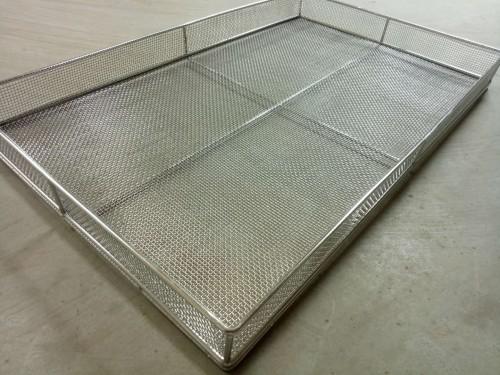
Stainless Steel Baking Tray Sourcing Guide for Industrial Buyers
Product Introduction
In industrial food production and manufacturing environments, a stainless steel baking tray is not a kitchen accessory—it is a durable production tool expected to withstand continuous heat cycles, repeated handling, and aggressive cleaning regimes. For procurement teams, importers, and distributors serving the food processing, bakery, pharmaceutical, and electronics sectors, selecting the right tray directly affects line efficiency, product contamination risk, and total cost of ownership.
These trays are typically fabricated from food-grade stainless steel and are engineered to be compatible with conveyor ovens, blast freezers, proofing cabinets, and automated handling systems. Unlike consumer-grade bakeware, industrial trays are designed for dimensional consistency, load-bearing capacity, and long service life under high-frequency operation. For buyers, the key challenge is balancing material grade, fabrication quality, and supplier reliability to meet both end-user specifications and regulatory requirements.
Product Features and Engineering Advantages
Industrial stainless steel baking trays differ from standard sheet metal products in several critical ways. The structural design, welding method, and surface treatment all influence how the tray performs in a production environment.
Reinforced frame and corner construction improve load stability during repeated transportation and high-frequency industrial handling. Trays are often subjected to automated loading and unloading, and weak corners can lead to deformation, jamming, or product loss. A properly engineered tray maintains its geometry even after thousands of cycles.
Material selection matters. Food-grade 304 stainless steel provides reliable corrosion resistance for food contact applications and daily industrial cleaning environments. For more aggressive conditions—such as exposure to acidic foods, salt, or harsh sanitizers—316 stainless steel offers superior pitting resistance, although at a higher cost. The choice should be driven by the actual production environment, not by default.
Other engineering advantages include:
- High corrosion resistance for humid, hot, and wash-down environments
- Easy-cleaning surface to reduce sanitation time and contamination risk
- Stable load capacity for stacked and conveyor-based operations
- Custom manufacturing options to match existing equipment dimensions
- Consistent flatness and tolerance control for automated lines
These features are not marketing claims; they are measurable requirements that affect downtime, product quality, and compliance with food safety standards such as HACCP and FDA regulations.
Application Scenarios
Stainless steel baking trays are used across a wide range of industries, each with specific demands.
Food processing: Trays are used for baking, roasting, freezing, and transporting products such as meat, fish, vegetables, and ready meals. Corrosion resistance and cleanability are critical to prevent bacterial growth and cross-contamination.
Bakery and confectionery: High-volume bakeries require trays that withstand repeated thermal cycling without warping. Consistent size and flatness ensure uniform baking and compatibility with automated rack ovens.
Industrial manufacturing: Beyond food, trays are used for drying, curing, and transporting components in electronics, automotive, and general manufacturing. Here, trays may be exposed to solvents, coatings, or elevated temperatures.
Drying and cleaning processes: In pharmaceutical and laboratory settings, trays are used in drying ovens, sterilizers, and parts washers. Material traceability and surface finish are often specified.
Storage and transportation: Trays serve as standardized containers for moving goods between production stages, reducing handling damage and improving organization.
Each application demands a different balance of strength, weight, and corrosion resistance, which is why custom fabrication is common in B2B supply.
Material Options and Manufacturing Details
Material selection is one of the most important decisions for buyers. The three most common grades are 201, 304, and 316 stainless steel.
201 stainless steel is a lower-cost option with moderate corrosion resistance. It is suitable for dry or lightly humid environments and non-food applications where cost is a primary driver. However, it is not recommended for frequent wash-down or acidic food contact.
304 stainless steel is the industry standard for food processing and commercial baking. It provides reliable corrosion resistance for food contact applications and daily industrial cleaning environments. It is suitable for most bakery, catering, and food production uses.
316 stainless steel offers higher resistance to chlorides and acids, making it appropriate for pharmaceutical, chemical, and marine environments, as well as food processing with high salt or acidic content. The higher cost is justified in these specific conditions.
Aluminum trays are also available for lightweight applications, but they are generally not suitable for high-temperature or corrosive environments.
Manufacturing details that buyers should verify include:
- Welding quality and finish (spot welds vs. continuous welds)
- Surface treatment (polished, passivated, or coated)
- Edge treatment to prevent injury and improve durability
- Tolerance control for automated handling systems
Specifications and Technical Parameters
Because industrial trays are often custom-made, there is no single standard specification. However, buyers should be prepared to define the following parameters when requesting a quotation:
- Size: Length, width, and height, including tolerances.
- Thickness: Typically 0.8 mm to 2.0 mm, depending on load requirements.
- Capacity: Maximum load per tray, often expressed in kilograms.
- Weight loading: Static and dynamic load ratings.
- Layers: Number of tiers if the tray is part of a rack system.
- Mesh opening and wire diameter: For mesh-style trays, these affect airflow and product support.
- Tray compatibility: Must match existing racks, ovens, and conveyor systems.
- Surface treatment: Polished, sandblasted, or coated.
- Production tolerance: Critical for automated lines; typically ±1 mm or tighter.
If exact parameters are not available, suppliers can work from equipment drawings or samples. Available sizes can be customized according to equipment dimensions and production requirements.
Custom OEM Manufacturing Service
For buyers seeking a long-term supply partner, OEM manufacturing capability is essential. A reliable manufacturer should offer:
- Custom size and design based on drawings or samples
- Material selection guidance for specific environments
- Logo marking and branding
- Special packaging for export and storage
- Prototype development before mass production
- Bulk production with consistent quality control
Working with an OEM supplier allows importers and distributors to build their own brand and offer tailored solutions to end users. For custom requirements, please contact our team to discuss your specifications.
Purchasing Guide for Industrial Buyers
Procurement decisions in B2B should be based on total value, not just unit price. The following checklist can help buyers evaluate suppliers and avoid costly mistakes.
- Confirm working environment: temperature, humidity, chemicals, and food contact.
- Check material requirements: grade, thickness, and surface finish.
- Verify equipment compatibility: dimensions, loading, and handling method.
- Evaluate supplier production capacity: monthly output, lead time, and QC process.
- Review export experience: packaging, documentation, and shipping reliability.
Quality control should include material certificates, dimensional inspection, and surface finish checks. For large orders, a pre-shipment inspection is recommended. Delivery reliability is equally important, especially for buyers managing just-in-time production schedules.
FAQ
What stainless steel grade is recommended for food processing applications?
304 stainless steel is the most common choice for food processing because it offers a good balance of corrosion resistance, cleanability, and cost. For high-salt or acidic environments, 316 stainless steel is recommended. 201 is generally not suitable for direct food contact or frequent wash-down.
Can the tray size be customized?
Yes. Most industrial tray manufacturers provide custom sizes based on drawings or samples. Buyers should provide accurate dimensions, tolerances, and any compatibility requirements with existing equipment. Custom sizes typically require a mold or fixture, which may affect lead time and minimum order quantity.
Do you provide OEM manufacturing service?
Yes. OEM services include custom design, logo marking, special packaging, and material selection. Buyers can supply their own specifications or work with the manufacturer’s engineering team to develop a suitable product. Prototypes are often available before bulk production.
What information should buyers provide before quotation?
Buyers should provide dimensions, material grade, thickness, load capacity, surface finish, quantity, and any special requirements such as logo or packaging. If available, drawings or samples help ensure accurate quoting and reduce the risk of misalignment.
How do you control product quality?
Quality control typically includes incoming material inspection, in-process checks, and final inspection before shipment. Key checks include dimensions, flatness, weld quality, and surface finish. Material certificates and inspection reports can be provided upon request.
What is the typical lead time for bulk orders?
Lead time depends on order quantity, customization level, and production capacity. For standard sizes, it may range from 15 to 30 days. Custom orders may require 30 to 45 days, including prototype approval. Buyers should confirm lead time before placing orders.
How should trays be packaged for export?
Packaging should protect trays from scratches, deformation, and moisture during shipping. Common methods include carton boxes, wooden pallets, and protective film. For large orders, customized packaging with buyer branding is often available.
Can you provide samples before bulk production?
Yes. Most manufacturers provide samples for evaluation, although sample costs and shipping fees may apply. Samples help buyers verify dimensions, material, and workmanship before committing to a bulk order.

