


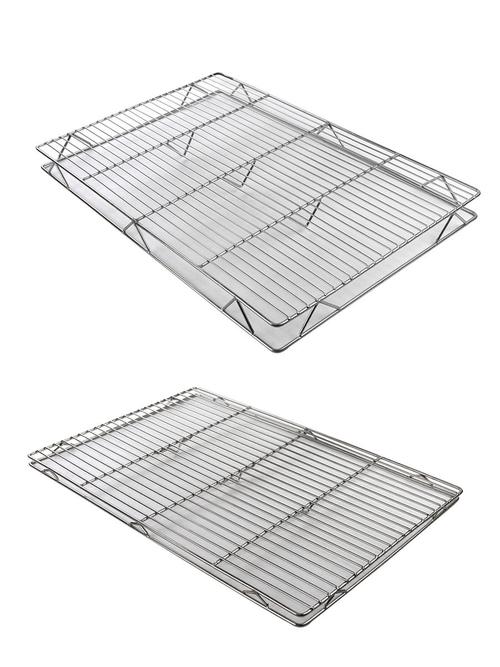
Stainless Steel Dehydrator Trays: A Strategic Sourcing Guide for Industrial Buyers
Product Introduction
In the world of industrial food processing and manufacturing, the stainless steel dehydrator tray is far more than a simple accessory—it is a critical component that directly influences throughput, hygiene standards, and operational reliability. Designed for continuous production environments, these trays are engineered to withstand the rigors of high-temperature drying, frequent cleaning cycles, and heavy loading. For importers, distributors, and industrial buyers, sourcing the correct tray means ensuring uninterrupted production flow and compliance with stringent safety regulations. Unlike consumer-grade products, industrial dehydrator trays must maintain structural integrity under repeated thermal stress and mechanical handling. This article delves into the engineering aspects, material choices, and procurement strategies essential for making informed purchasing decisions in the competitive global market.
Product Features and Engineering Advantages
Industrial stainless steel dehydrator trays are distinguished by their robust construction and thoughtful design, tailored to meet the demands of continuous operation. The core engineering advantages stem from the strategic selection of materials and manufacturing processes. For instance, the reinforced frame design—often achieved through precision welding or forming—significantly improves load stability during repeated transportation and high-frequency industrial handling. This prevents deformation and ensures consistent performance over thousands of cycles. The mesh or perforated surface is engineered for optimal airflow, facilitating uniform drying and reducing energy consumption. Furthermore, the use of high-grade stainless steel ensures excellent corrosion resistance, even when exposed to acidic food residues or harsh cleaning agents. Key features include:
- High corrosion resistance: Suitable for wash-down environments and food contact.
- Easy cleaning surface: Minimizes bacterial growth and simplifies sanitation.
- Stable load capacity: Engineered to support heavy product loads without sagging.
- Custom manufacturing options: Tailored dimensions, mesh patterns, and finishes.
- Thermal stability: Withstands repeated cycles from -40°C to 300°C.
These features translate into tangible benefits: reduced downtime, lower replacement costs, and enhanced product safety. For engineering companies and food processors, investing in trays with these characteristics is a strategic move to optimize production efficiency and uphold quality standards.
Application Scenarios
The versatility of stainless steel dehydrator trays makes them indispensable across a wide spectrum of industries. In food processing, they are used for drying fruits, vegetables, meat, and seafood, where hygiene and uniform airflow are paramount. Bakery operations rely on these trays for proofing and baking, benefiting from even heat distribution and easy release. Industrial manufacturing employs them for parts drying and curing, where chemical resistance and durability are critical. In pharmaceutical and laboratory settings, precision and cleanliness are non-negotiable, and stainless steel trays meet these stringent requirements. Commercial production lines for pet food or snacks utilize them for continuous drying processes. Storage and transportation applications benefit from the trays' stackability and robust construction, ensuring safe handling of components. Each scenario underscores a common need: a reliable, long-lasting tray that maintains performance under repetitive use. By selecting application-specific trays, businesses can enhance product quality, reduce waste, and comply with industry regulations.
Material Options and Manufacturing Details
Material selection is a pivotal decision in the procurement of stainless steel dehydrator trays, directly impacting performance, longevity, and cost. The most common grades are 304 and 316 stainless steel, with 201 and aluminum as cost-effective alternatives. 304 stainless steel provides reliable corrosion resistance for food contact applications and daily industrial cleaning environments, making it the industry standard for most drying processes. 316 stainless steel offers superior resistance to chlorides and harsh chemicals, ideal for pharmaceutical or marine applications. 201 stainless steel is a budget-friendly option with moderate corrosion resistance, suitable for dry environments or light-duty use. Aluminum trays are lightweight and offer excellent thermal conductivity but are less durable in aggressive wash-down settings. Manufacturing details such as mesh opening size, wire diameter, and surface treatment (e.g., passivation or electropolishing) further influence performance. For instance, a finer mesh is used for small particulates, while a larger opening suits bulky items. Understanding these distinctions allows buyers to specify the right material for their specific operational environment, balancing upfront costs with total cost of ownership.
Specifications and Technical Parameters
When sourcing stainless steel dehydrator trays, buyers must define precise specifications to ensure compatibility and performance. Key parameters include:
- Size: Customizable to fit existing drying racks, ovens, or conveyor systems. Common dimensions range from 400x600 mm to 800x1000 mm.
- Thickness: Typically 0.5 mm to 2.0 mm, depending on load requirements.
- Weight loading: Engineered to support 10 kg to 50 kg per tray, with reinforced designs for heavier loads.
- Mesh opening: Available from 1 mm to 10 mm, or perforated patterns, to suit different product sizes.
- Wire diameter: 0.5 mm to 2.0 mm, affecting strength and airflow.
- Surface treatment: Passivation, electropolishing, or coating for enhanced corrosion resistance.
- Production tolerance: ±0.5 mm on dimensions to ensure fit and interchangeability.
These specifications should be clearly communicated to suppliers to avoid mismatches. For custom requirements, buyers can provide drawings or samples for precise manufacturing. It is advisable to request material certificates and dimensional reports to verify compliance.
Custom OEM Manufacturing Service
For buyers with unique production needs, partnering with an OEM stainless steel tray manufacturer offers significant advantages. Custom manufacturing services encompass size modifications, design alterations (e.g., reinforced edges, handles), logo marking for branding, and special packaging for safe transport. Material selection can be tailored to specific corrosion resistance or cost targets. Prototype development allows for testing before bulk production, minimizing risks. Factories with in-house engineering teams can collaborate closely with clients to optimize designs for manufacturability and performance. For custom requirements, please contact our team to discuss your project. Whether you need a single prototype or thousands of units, a capable OEM partner ensures seamless integration with your supply chain and adherence to quality standards.
Purchasing Guide for Industrial Buyers
Effective procurement of stainless steel dehydrator trays requires a structured approach. Begin by clearly defining your operational requirements: what is the working environment (temperature, humidity, chemicals)? What load capacity is needed? What are the dimensions of your existing equipment? Use these criteria to shortlist suppliers. When evaluating suppliers, consider the following:
- Confirm working environment: Ensure material grade suits exposure to heat, moisture, and cleaning agents.
- Check material requirements: Request mill test certificates for grade verification.
- Verify equipment compatibility: Provide accurate dimensions and tolerances to avoid fit issues.
- Evaluate supplier production capacity: Assess their ability to handle your order volume and lead times.
- Review quality control processes: Inquire about inspections, testing, and documentation.
- Assess export experience: Experienced suppliers understand international shipping and customs.
- Packaging and delivery reliability: Confirm packaging methods to prevent damage during transit and agree on delivery schedules.
Additionally, request samples for hands-on evaluation and verify references from other industrial clients. A thorough due diligence process mitigates risks and ensures a reliable supply of high-quality trays.
FAQ
Q1: What stainless steel grade is recommended for food processing applications?
For food processing, 304 stainless steel is the standard choice due to its excellent corrosion resistance and food-safe properties. It withstands frequent cleaning and resists organic acids. For more aggressive environments, such as those with high chloride exposure, 316 stainless steel is recommended.
Q2: Can the tray size be customized?
Yes, most manufacturers offer custom sizes to fit specific equipment dimensions. Provide detailed drawings or samples, and the factory will produce trays to your exact specifications, ensuring compatibility and optimal performance.
Q3: Do you provide OEM manufacturing service?
Absolutely. OEM services include custom design, material selection, logo marking, and special packaging. Our engineering team works closely with clients to develop trays that meet their unique requirements, from prototype to mass production.
Q4: What information should buyers provide before quotation?
Buyers should provide tray dimensions (length, width, height), material grade, mesh specifications (opening, wire diameter), surface treatment, quantity, and any special requirements such as load capacity or certification needs. Clear specifications enable accurate and competitive quotations.
Q5: How do you control product quality?
We implement strict quality control at every stage: incoming material inspection, in-process checks, and final dimensional and surface inspections. We provide material certificates and inspection reports. Our facilities are ISO 9001 certified, ensuring consistent quality.
Q6: What is the typical lead time for bulk orders?
Lead times vary based on order volume and customization. Standard orders typically ship within 4-6 weeks after order confirmation. For large or complex projects, we provide a detailed production schedule.
Q7: Can you provide samples for evaluation?
Yes, we can provide samples for a nominal fee, which is often credited against future orders. Samples help verify quality and compatibility before committing to bulk purchase.

