


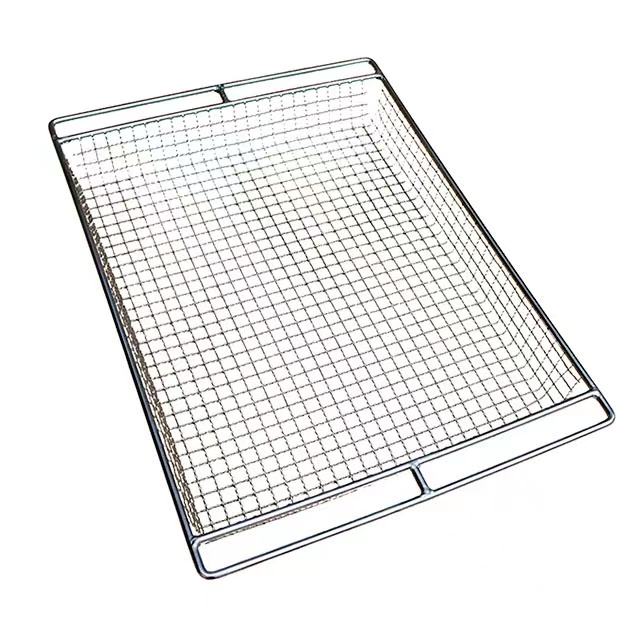
Stainless Steel Drying Tray: A Comprehensive Guide for Industrial B2B Buyers
Product Introduction
In the world of industrial processing, the stainless steel drying tray is far more than a simple accessory. It is a fundamental component that directly impacts workflow efficiency, product hygiene, and operational longevity. For B2B buyers—importers, distributors, and plant managers—understanding the nuances of this product is essential for making cost-effective and reliable procurement decisions.
A stainless steel drying tray is a durable, corrosion-resistant platform engineered to hold, dry, cool, or transport products through various stages of manufacturing. Its primary industrial purpose is to facilitate efficient drying and handling in continuous production environments. Unlike consumer-grade trays, these industrial workhorses are designed to withstand heavy loads, high temperatures, and frequent exposure to moisture and chemicals without degrading.
The core problem they solve is maintaining product integrity and process consistency. In food processing, for example, wet products must be dried quickly and hygienically to prevent bacterial growth. In electronics manufacturing, components need to be dried without contamination. A well-designed stainless steel drying tray ensures uniform airflow, stable stacking, and easy cleaning, which minimizes downtime and maximizes throughput. For a procurement officer, sourcing the right tray means fewer replacements, lower maintenance costs, and a more reliable production line.
Product Features and Engineering Advantages
When evaluating a stainless steel drying tray, it's crucial to look beyond the surface. The engineering behind the product determines its performance and lifespan. Our trays are not just stamped metal; they are precision-built tools for industry.
Key features and their engineering rationale include:
- Reinforced Frame Design: The frame is often the first point of failure under heavy loads. We use a reinforced, often welded, frame structure that improves load stability during repeated transportation and high-frequency industrial handling. This prevents warping and ensures the tray maintains its shape, even when stacked with heavy products.
- Open Mesh or Perforated Surface: The choice between mesh and perforation is critical. A stainless steel mesh tray offers superior airflow and drainage, making it ideal for drying processes where uniform air circulation is key. Perforated trays, with their punched holes, provide a smoother surface for smaller items and are easier to clean. We manufacture both types, allowing you to match the tray to your specific process.
- High-Quality Welding and Finishing: Welds are potential weak points for corrosion. Our trays undergo rigorous welding processes, often with post-weld passivation, to ensure the chromium oxide layer is restored. This is particularly important for 304 and 316 stainless steel, where the weld area must maintain the same corrosion resistance as the base metal.
- Edge Treatment: Sharp edges are a safety hazard and can damage products or equipment. Our trays feature deburred and often hemmed edges, ensuring safe handling for workers and protecting sensitive products from snags.
- Stacking and Handling Compatibility: Trays are designed to be compatible with automated handling systems, racking, and conveyor belts. We consider the overall dimensions, corner radii, and stacking lugs to ensure seamless integration into your existing production line.
These features are not just marketing points; they are the result of years of manufacturing experience and feedback from industrial clients. The goal is to provide a tray that performs reliably day in and day out, reducing the total cost of ownership.
Application Scenarios
The versatility of a stainless steel drying tray is evident in its wide range of industrial applications. Each scenario demands specific characteristics from the tray, and understanding these helps in selecting the right product.
- Food Processing: This is perhaps the most demanding application. Trays are used for drying fruits, vegetables, meat, and seafood. They must be non-toxic, easy to sanitize, and resistant to corrosion from salts, acids, and cleaning agents. A stainless steel drying tray for food processing is typically made from 304 or 316 stainless steel and features a mesh design for optimal airflow.
- Bakery and Confectionery: From cooling freshly baked bread to drying candies, trays are essential. They need to withstand high temperatures without warping and provide a non-stick, easy-release surface. Perforated trays are often used here to allow even cooling and prevent condensation.
- Industrial Manufacturing: In sectors like automotive or electronics, trays are used for drying and curing painted parts, PCBs, and other components. They must be resistant to solvents and capable of withstanding oven temperatures. Custom sizes and configurations are common to fit specific production lines.
- Pharmaceutical and Laboratory: Hygiene is paramount. Trays used in these environments must be able to withstand repeated sterilization, often via autoclave. They are typically made from high-grade 316 stainless steel and have a smooth, non-porous finish to prevent contamination.
- Cleaning and Storage: Trays are used to hold parts during ultrasonic or spray cleaning processes and for storing components in warehouses. They need to be stackable, durable, and resistant to the chemicals used in cleaning.
- Commercial Production: From large-scale catering to commercial laundries, trays facilitate the handling and drying of various items. Their robust construction ensures they can handle the rigors of daily commercial use.
Material Options and Manufacturing Details
The material of construction is a primary decision point for any industrial buyer. The choice between different grades of stainless steel or aluminum impacts corrosion resistance, cost, and suitability for specific environments.
- 304 Stainless Steel: The workhorse of the industry. It provides reliable corrosion resistance for food contact applications and daily industrial cleaning environments. It is suitable for most food processing, bakery, and general manufacturing applications. It is not recommended for highly saline or acidic environments.
- 316 Stainless Steel: The premium choice for harsh environments. The addition of molybdenum gives it superior resistance to chlorides and acids. It is the go-to material for pharmaceutical, chemical processing, and marine applications, as well as food processing where salty or acidic products are handled.
- 201 Stainless Steel: A lower-cost alternative with lower nickel content. It offers moderate corrosion resistance and is suitable for dry environments or applications with minimal exposure to moisture. It is often used for budget-sensitive projects but is not recommended for wet or highly humid industrial settings.
- Aluminum: Lightweight and cost-effective, aluminum trays are used in some baking and cooling applications. However, they are susceptible to corrosion and are not as durable as stainless steel in harsh environments. They are not suitable for high-temperature or caustic cleaning processes.
The manufacturing process also plays a critical role. Our trays are produced using a combination of automated and manual processes, including laser cutting, CNC bending, robotic welding, and surface treatment. Each step is subject to strict quality control to ensure the final product meets the required specifications.
Specifications and Technical Parameters
For B2B buyers, a clear understanding of specifications is crucial for a successful procurement. Here are the key parameters to consider when specifying a stainless steel drying tray:
- Dimensions: Length, width, and height (or depth). These must be compatible with your existing racks, ovens, and conveyor systems. Custom sizes are available to fit specific equipment.
- Thickness: The gauge of the material affects load capacity and durability. Common thicknesses range from 0.5mm to 2.0mm, depending on the application and load requirements.
- Mesh Opening / Perforation Size: For mesh trays, the opening size determines airflow and the smallest product that can be held. For perforated trays, the hole diameter and pitch are key.
- Wire Diameter: For mesh trays, the wire diameter affects both load capacity and airflow. A thicker wire provides more strength but reduces open area.
- Surface Treatment: Options include pickling and passivation, electropolishing, or a simple brushed finish. This affects corrosion resistance and cleanability.
- Load Capacity: The maximum weight the tray can support without deformation, often expressed in kg per tray or kg per square meter.
- Production Tolerance: Dimensional tolerances are critical for automation. We typically work with tolerances of ±0.5mm, but tighter tolerances can be achieved upon request.
If you have specific requirements, our engineering team can work with you to define the exact specifications for your application.
Custom OEM Manufacturing Service
Every production line is different. Off-the-shelf trays may not fit your equipment or process. That's why we offer comprehensive OEM and custom manufacturing services. As a leading OEM stainless steel tray manufacturer, we can produce trays to your exact drawings and specifications.
Our custom services include:
- Custom Size and Design: From small laboratory trays to large industrial racks, we can manufacture to your dimensions.
- Logo Marking: Laser etching or stamping of your company logo for branding and traceability.
- Special Packaging: Custom packaging solutions to protect your trays during shipping and storage.
- Material Selection: Expert advice on choosing the right grade of stainless steel for your environment.
- Prototype Development: We can produce prototypes for testing and validation before you commit to a bulk order.
- Bulk Production: With our automated production lines, we can handle large volume orders with consistent quality and on-time delivery.
For custom requirements, please contact our team to discuss your project. We are dedicated to providing solutions that fit your needs.
Purchasing Guide for Industrial Buyers
Navigating the procurement process for industrial trays requires a strategic approach. Here is a guide to help you make informed decisions.
How to Select the Right Supplier?
- Evaluate Production Capability: Can they handle your volume? Do they have the necessary machinery for cutting, welding, and finishing? Ask for a factory tour or video verification.
- Check Quality Control: What are their inspection procedures? Do they have a dedicated QC team? Ask for material certificates and test reports.
- Assess Export Experience: Do they understand international shipping and packaging requirements? Have they exported to your region before?
- Review Packaging: Proper packaging is essential to prevent damage during transit. Ask about their standard export packaging.
- Verify Delivery Reliability: Can they meet your deadlines? Ask for references from existing clients.
What to Consider in Bulk Purchasing?
- Confirm Working Environment: Is it wet, dry, high-temperature, or chemical-heavy? This determines the material grade.
- Check Material Requirements: Ensure the supplier uses genuine 304 or 316 stainless steel. Ask for a mill certificate.
- Verify Equipment Compatibility: Double-check dimensions and tolerances with your engineering team.
- Evaluate Supplier Production Capacity: Ensure they can meet your lead times without compromising quality.
- Negotiate Payment and Shipping Terms: Clearly define Incoterms, payment schedule, and warranty.
By following this guide, you can minimize risks and ensure a smooth procurement process.
FAQ
Q1: What stainless steel grade is recommended for food processing applications?
A1: For most food processing applications, 304 stainless steel is the standard choice due to its excellent corrosion resistance and food-safe properties. However, if your process involves high salinity, acidic products, or harsh cleaning chemicals, 316 stainless steel is recommended for its superior resistance to chlorides and acids.
Q2: Can the tray size be customized?
A2: Yes, we specialize in custom manufacturing. We can produce stainless steel drying trays in virtually any size to fit your specific equipment and production requirements. Simply provide us with your required dimensions and tolerance specifications.
Q3: Do you provide OEM manufacturing service?
A3: Absolutely. We offer full OEM services, including custom design, logo marking, and special packaging. Our engineering team can work with your drawings or develop a design from scratch to meet your needs.
Q4: What information should buyers provide before quotation?
A4: To provide an accurate quote, we need the following: dimensions (length, width, height), material grade, mesh/perforation specifications, quantity, surface treatment requirements, and any special packaging or branding needs. Drawings or samples are also helpful.
Q5: How do you control product quality?
A5: We implement strict quality control at every stage of production. This includes incoming material inspection, in-process checks during cutting, welding, and finishing, and a final inspection before packaging. We can provide material certificates and inspection reports upon request.
Q6: What is the typical lead time for a bulk order?
A6: Lead time depends on the order quantity and customization requirements. For standard trays, it is typically 15-25 days. For custom orders, it may take 25-40 days. We will provide a specific timeline upon order confirmation.
Q7: How are the trays packaged for export?
A7: We use standard export packaging to prevent damage during transit. Trays are typically stacked, wrapped in protective material, and secured on pallets or in wooden crates. Custom packaging is available upon request.
Q8: Do you offer samples for testing?
A8: Yes, we can provide samples for evaluation. For standard trays, we may offer free samples, but the buyer is usually responsible for shipping costs. For custom prototypes, a sample fee may apply, which can be credited toward a bulk order.

