


Stainless Steel Food Tray Sourcing Guide for Industrial Food Processing & Manufacturing
Product Introduction
In industrial food processing and manufacturing environments, a stainless steel food tray is not a peripheral item. It is a critical component in production lines, drying systems, transportation workflows, and hygiene-controlled storage. Unlike consumer-grade trays sold in retail, industrial stainless steel food trays are engineered for continuous operation, repeated cleaning, heavy loads, and strict sanitation standards. They must maintain structural integrity under high temperatures, moisture, chemicals, and frequent handling. For B2B buyers, importers, and distributors, the sourcing decision directly affects production uptime, product safety, and long-term operating costs. This article is written from a manufacturer’s perspective to help procurement teams evaluate suppliers, specify requirements, and avoid common purchasing mistakes.
Product Features and Engineering Advantages
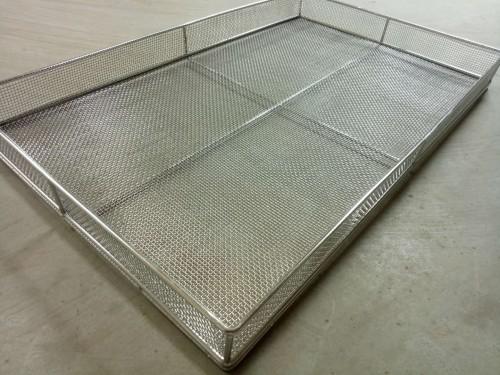
A well-manufactured stainless steel food tray is defined by its structural design and fabrication quality, not by marketing claims. The tray body is typically formed from stainless steel sheet with uniform thickness, then reinforced at the edges or corners to prevent deformation during repeated lifting and stacking. The mesh or perforated design, when applicable, is engineered to balance airflow, drainage, and load-bearing capacity. Welded joints are ground and polished to eliminate crevices where bacteria or residue can accumulate. This is especially important in food processing and pharmaceutical environments where hygiene validation is mandatory.
Key engineering advantages include:
- High corrosion resistance for wet, acidic, and high-humidity environments
- Easy-cleaning surface that supports manual and automated washing systems
- Stable load capacity under repeated transportation and stacking
- Custom manufacturing options to match existing equipment dimensions
- Consistent production tolerances for automated handling systems
The reinforced frame design improves load stability during repeated transportation and high-frequency industrial handling. When trays are used in conveyorized baking, blast freezing, or drying tunnels, dimensional consistency is as important as material grade. A tray that is 2 mm out of tolerance can jam an automated line and cause unplanned downtime. For this reason, experienced industrial mesh tray suppliers focus on fixture-based welding, controlled forming, and post-production inspection rather than simply offering a low unit price.
Application Scenarios
Stainless steel food trays are used across multiple industries, each with specific performance requirements. In food processing, trays carry raw materials, semi-finished products, and finished goods through washing, blanching, cooling, and packaging stages. They must resist grease, salt, organic acids, and frequent sanitation chemicals. In bakery production, trays are exposed to high oven temperatures and rapid temperature changes. A stainless steel baking tray must maintain flatness and avoid warping after repeated thermal cycles. In industrial manufacturing, trays are used for parts handling, degreasing, and component drying. The tray surface must not contaminate the product or react with cleaning agents. In drying processes, stainless steel drying trays with mesh or perforated bottoms allow hot air to circulate evenly, reducing drying time and improving consistency. In cleaning processes, trays hold components during ultrasonic cleaning, spray washing, and passivation. In storage and transportation, stackable stainless steel trays improve space utilization and protect products during internal logistics. In pharmaceutical and laboratory environments, trays must meet strict cleanliness standards and often require documentation for material traceability. In commercial production, such as central kitchens and catering facilities, trays must withstand high-volume use without losing shape. Each application demands a different balance of material grade, thickness, mesh opening, and surface finish. Buyers who treat trays as a commodity often discover that the lowest-priced option fails within months, creating replacement costs and production disruption.
Material Options and Manufacturing Details
Material selection is the most important specification decision in stainless steel food tray procurement. The most common grades are 304 stainless steel, 316 stainless steel, 201 stainless steel, and in some cases aluminum. 304 stainless steel provides reliable corrosion resistance for food contact applications and daily industrial cleaning environments. It is suitable for most food processing, bakery, and general manufacturing applications. 316 stainless steel offers higher resistance to chlorides and aggressive chemicals. It is typically specified for pharmaceutical, marine, and chemical processing environments where 304 may pit or corrode over time. 201 stainless steel is a lower-cost option with reduced nickel content. It can be used in dry or less corrosive environments, but it is not recommended for frequent wet cleaning or acidic food contact. Aluminum trays are lightweight and offer good thermal conductivity, but they are softer and less corrosion-resistant. They are sometimes used in baking where weight reduction is a priority, but they are not suitable for caustic cleaning or long-term wet environments. Manufacturing details also matter. Trays can be produced with wire mesh bottoms, perforated holes, slotted openings, or solid surfaces. Edge treatments include folded edges, reinforced rims, and welded frames. Surface finishes range from 2B mill finish to polished and electropolished surfaces. Each choice affects cleanability, drainage, airflow, and cost. Buyers should specify the working environment first, then select the material and finish accordingly.
Specifications and Technical Parameters
Industrial buyers should confirm the following parameters before requesting a quotation. Size: Length, width, and height must match existing racks, conveyors, ovens, and washing systems. Available sizes can be customized according to equipment dimensions and production requirements. Thickness: Common sheet thickness ranges from 0.8 mm to 3.0 mm, depending on load and handling frequency. Capacity and weight loading: Static load capacity typically ranges from 20 kg to 150 kg per tray, based on design and material. Layers: Trays may be designed for single-layer use or stacking systems with 5 to 20 layers. Mesh opening and wire diameter: For mesh trays, opening sizes commonly range from 3 mm to 25 mm, with wire diameters from 1.0 mm to 4.0 mm. Tray compatibility: Confirm whether the tray must fit existing racks, trolleys, or automated handling equipment. Surface treatment: Specify polished, passivated, or electropolished surfaces for hygiene-critical applications. Production tolerance: Dimensional tolerances typically range from ±0.5 mm to ±2.0 mm, depending on the manufacturing process. Buyers should always request a technical drawing or sample before mass production.
Custom OEM Manufacturing Service
For buyers who need non-standard trays, working with an OEM stainless steel tray manufacturer is often more cost-effective than modifying standard products. Custom OEM services typically include custom size, custom design, logo marking, special packaging, material selection, prototype development, and bulk production. The process usually starts with a drawing or sample review, followed by material confirmation, tooling or fixture preparation, sample approval, and then mass production. Logo marking can be applied through laser engraving, stamping, or etching, depending on the material and surface finish. Special packaging is important for export buyers who need protection during ocean freight and warehouse handling. Prototype development allows buyers to validate fit, function, and cleanability before committing to large orders. For custom requirements, please contact our team to discuss your specifications, target quantities, and delivery schedule. A professional manufacturer will ask detailed questions about your application before quoting, not simply provide a price per piece.
Purchasing Guide for Industrial Buyers
This purchasing guide is designed to help importers, distributors, and industrial buyers make better sourcing decisions. First, define the working environment. Is the tray exposed to moisture, acid, salt, high heat, or caustic cleaning chemicals? This determines whether 304 or 316 stainless steel is required. Second, confirm equipment compatibility. Measure the existing racks, conveyor widths, oven chambers, and washing tunnels. A tray that does not fit is worthless, regardless of quality. Third, verify material certificates. Ask for mill test reports or material certification to confirm the grade and chemical composition. Fourth, evaluate supplier production capacity. Can the factory handle your monthly volume consistently? Do they have in-house welding, forming, polishing, and inspection capabilities? Fifth, review quality control procedures. Ask about dimensional inspection, weld quality checks, surface finish inspection, and load testing. Sixth, confirm packaging and delivery reliability. Export packaging should prevent bending, scratching, and moisture damage during transit. Seventh, request references or past export records. A supplier with experience in your region and industry is less likely to cause compliance or logistics problems.
Procurement checklist:
- Confirm working environment and cleaning method
- Check material requirements and request certification
- Verify equipment compatibility with drawings or samples
- Evaluate supplier production capacity and lead times
- Review quality control and inspection reports
- Confirm packaging, labeling, and delivery terms
For bulk purchasing, avoid selecting a supplier based only on unit price. The total cost of ownership includes replacement frequency, production downtime, and quality rejection rates. A slightly higher-priced tray that lasts three times longer is usually the better business decision.
FAQ
Q1: What stainless steel grade is recommended for food processing applications?
For most food processing applications, 304 stainless steel is the standard choice. It offers good corrosion resistance, cleanability, and compliance with food contact requirements. If the environment involves chlorides, salt, or aggressive sanitizing chemicals, 316 stainless steel is recommended. Buyers should always confirm the specific cleaning agents and operating temperatures before selecting a grade.
Q2: Can the tray size be customized?
Yes. Most industrial tray manufacturers offer custom sizes based on equipment dimensions and production requirements. Buyers should provide detailed drawings or physical samples, including length, width, height, corner radius, and any special cutouts. Custom sizes typically require a sample approval before mass production to avoid costly errors.
Q3: Do you provide OEM manufacturing service?
Yes. OEM manufacturing services include custom design, material selection, logo marking, special packaging, prototype development, and bulk production. Buyers can supply their own drawings or work with the manufacturer’s engineering team to develop a suitable design. OEM service is ideal for distributors who want to build their own brand or for factories that need trays matched to specific equipment.
Q4: What information should buyers provide before quotation?
Buyers should provide dimensions, material grade, thickness, surface finish, load capacity, quantity, application environment, and any special requirements such as logo marking or packaging. If trays must fit existing equipment, include drawings or photos. The more detailed the information, the more accurate the quotation and the lower the risk of production errors.
Q5: How do you control product quality?
Quality control typically includes incoming material inspection, dimensional checks during production, weld quality inspection, surface finish inspection, load testing, and final pre-shipment inspection. Buyers should request inspection reports and, for large orders, consider third-party inspection. A reliable manufacturer will welcome quality audits and provide material certificates.
Q6: What is the typical lead time for bulk orders?
Lead time depends on order quantity, customization requirements, and production capacity. Standard trays may take 15 to 30 days, while custom OEM orders may require 30 to 45 days, including sample approval. Buyers should confirm lead times in writing and plan inventory accordingly to avoid production delays.
Q7: How should trays be packaged for export?
Export packaging should protect trays from bending, scratching, and moisture. Common methods include individual wrapping, edge protection, wooden pallets, and reinforced cartons. For large orders, containers should be loaded with adequate bracing to prevent movement during transit. Buyers should specify packaging requirements in the purchase order.
Q8: Can you provide samples before bulk production?
Yes. Most manufacturers provide samples for evaluation, although sample costs and freight may apply. For custom orders, a pre-production sample is strongly recommended. Sample approval ensures that dimensions, material, surface finish, and workmanship meet expectations before committing to mass production.
Image ALT Text Suggestion
Stainless steel food tray for industrial food processing and drying applications
SEO Title
Stainless Steel Food Tray Manufacturer for Industrial Use
Meta Description
Source stainless steel food trays for food processing, drying, and manufacturing. Custom sizes, 304/316 material, OEM service, and export quality control.
SEO Keywords
stainless steel food tray, industrial stainless steel tray, stainless steel drying tray, food processing tray, custom stainless steel tray, OEM stainless steel tray manufacturer, industrial mesh tray supplier, commercial drying rack, stainless steel baking tray, bulk stainless steel trays

