


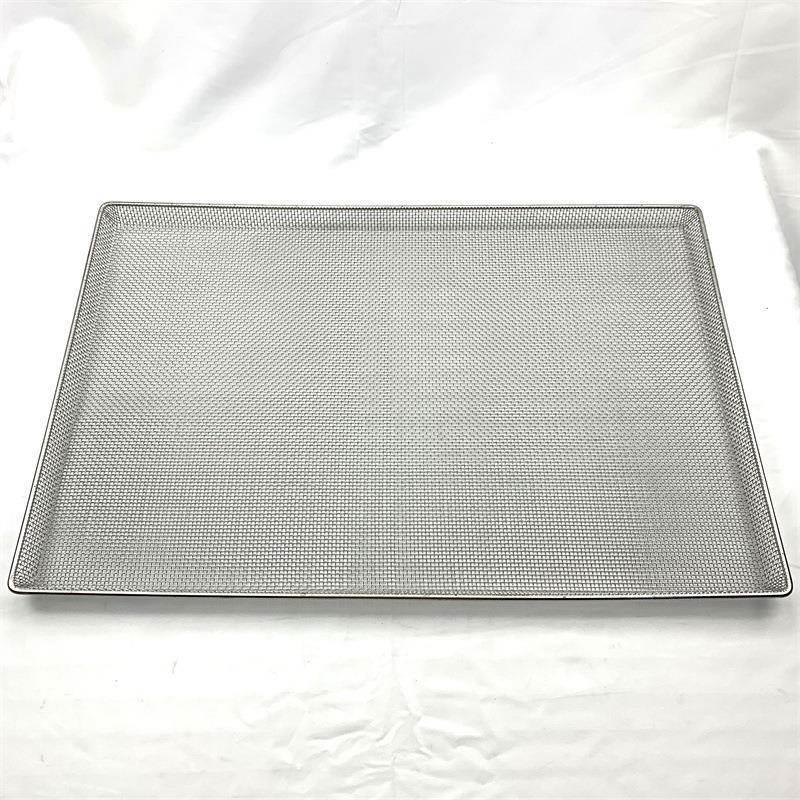
Stainless Steel Mesh Rack Sourcing Guide for Industrial Buyers
Why Stainless Steel Mesh Rack Procurement Deserves a Closer Look
If you are sourcing stainless steel mesh rack systems for industrial use, you already know this is not a simple commodity purchase. A stainless steel mesh rack is a structural component that must survive daily washdowns, high-temperature drying, repeated loading, and years of continuous operation. For importers, distributors, and OEM buyers, the real question is not whether a rack looks acceptable in a sample photo — it is whether the supplier can deliver consistent welds, stable dimensions, and traceable material across repeated purchase orders.
In food processing plants, commercial bakeries, pharmaceutical lines, and general manufacturing facilities, mesh racks are often specified as part of a larger equipment system. That means your procurement decision affects line compatibility, hygiene compliance, maintenance costs, and ultimately your reputation with your own customers. This guide is written for B2B buyers who need practical sourcing criteria, not a generic product description.
Product Introduction: What Industrial Buyers Are Actually Purchasing
From a manufacturer's perspective, a stainless steel mesh rack is a welded or assembled structure consisting of a stainless steel frame, mesh surface, and often reinforced supports or stacking posts. It is designed for continuous production environments where hygiene, load stability, and long-term operational reliability are critical.
Typical uses include:
- Holding food products during baking, cooling, or freezing
- Supporting parts through cleaning, drying, or coating processes
- Acting as a transport tray inside automated handling systems
- Providing ventilated storage for wet or heat-sensitive components
For procurement teams, the key issue is standardization. When a rack is integrated into a production line, every millimeter of length, width, stacking height, and mesh opening matters. A supplier who cannot hold tolerances will create jams, unstable stacks, or rejected batches. That is why experienced buyers treat mesh rack sourcing as an engineering purchase, not a price-per-unit exercise.
Product Features and Engineering Advantages
The engineering value of a stainless steel mesh rack comes from how it is built, not from marketing adjectives. Buyers should look for the following:
- High corrosion resistance supported by verified material certificates
- Easy cleaning surface with smooth welds and no trapped crevices
- Stable load capacity achieved through reinforced frame geometry
- Custom manufacturing options for line-specific dimensions
- Stacking and nesting compatibility for high-density storage or transport
The reinforced frame design improves load stability during repeated transportation and high-frequency industrial handling. In practical terms, this means the rack resists twisting when lifted by forklifts or transferred between conveyor sections. The mesh-to-frame welding method also determines service life. Spot welding is common, but full seam welding or additional support bars may be required for heavier loads or elevated-temperature cycles.
Another engineering factor is open area. A well-designed mesh pattern allows air, steam, or water to pass through efficiently, which shortens drying time and improves cleaning effectiveness. If the open area is too low, products retain moisture; if it is too high, the rack may lose structural rigidity. This balance is where an experienced industrial mesh rack supplier adds real value.
Application Scenarios: Where Mesh Racks Prove Their Worth
Food Processing
In food processing, stainless steel mesh rack systems are used for blanching, frying, cooling, and freezing. The open mesh structure allows rapid temperature exchange and drainage. Buyers in this sector should prioritize 304 or 316 stainless steel and verify that welding areas are smooth enough for hygiene audits.
Bakery and Commercial Baking
Bakeries use mesh racks for bread, pastries, and confectionery items moving through proofing, baking, and cooling tunnels. The rack must resist repeated thermal cycling without warping. Custom stainless steel tray dimensions are often required to match existing oven or rack trolley systems.
Industrial Manufacturing
In manufacturing environments, mesh racks carry components through degreasing, phosphating, painting, or drying lines. Here, chemical resistance and load capacity are more important than food-grade finish. Buyers should confirm the specific chemicals and operating temperatures before selecting a material grade.
Drying and Cleaning Processes
Industrial drying trays and cleaning racks must allow uniform airflow and complete drainage. Mesh openings that are too small can trap debris, while oversized openings may allow small parts to fall through. Procurement teams should provide sample parts or precise part dimensions when requesting a quotation.
Pharmaceutical and Laboratory
In pharmaceutical and laboratory settings, mesh racks are used for sterilization, sample handling, and cleanroom storage. Surface finish, particle retention, and documentation traceability become critical. Buyers often require material certificates and dimensional inspection reports.
Storage and Transportation
Stackable mesh racks improve warehouse density and protect products during internal transport. For distributors, offering a standardized rack range with optional custom sizes can cover both stock and project-based demand.
Material Options and Manufacturing Details
Material selection is one of the most common sources of confusion in mesh rack procurement. The table below summarizes typical options:
- 304 stainless steel — provides reliable corrosion resistance for food contact applications and daily industrial cleaning environments. Suitable for most bakery, food processing, and general manufacturing uses.
- 316 stainless steel — offers higher resistance to chlorides and aggressive chemicals. Recommended for seafood processing, pharmaceutical applications, and coastal or high-humidity environments.
- 201 stainless steel — a lower-cost option with reduced corrosion resistance. Sometimes used for dry storage or light-duty applications where budget is the primary constraint.
- Aluminum — lightweight and suitable for some drying applications, but not recommended for caustic cleaning or high-temperature food contact.
Manufacturing details also matter. Wire diameter and mesh opening determine both strength and airflow. Frame thickness affects load capacity. Surface treatment — such as pickling, passivation, or electropolishing — influences corrosion resistance and cleanability. Buyers should ask for actual measurements, not nominal descriptions.
Specifications and Technical Parameters
When requesting quotations, provide as much of the following information as possible:
- Overall length, width, and height
- Mesh opening size and wire diameter
- Load capacity per rack and per layer
- Number of layers or stacking height
- Frame tube or bar dimensions
- Surface treatment requirements
- Compatibility with existing trolleys, ovens, or conveyors
- Production tolerance acceptable for your line
Available sizes can be customized according to equipment dimensions and production requirements. If you do not have finalized drawings, a sample or measured sketch is often enough for a manufacturer to propose a workable design. Typical production tolerances for industrial mesh racks range from ±1 mm to ±3 mm depending on overall size and welding method.
Custom OEM Manufacturing Service
For buyers who need a dedicated product line, OEM manufacturing is often the most practical route. A capable factory should offer:
- Custom size and geometry development
- Design support based on load and process requirements
- Logo marking or branding on frames or packaging
- Special packaging for sea freight or retail distribution
- Material selection guidance
- Prototype development before mass production
- Bulk production with consistent quality control
For custom requirements, please contact our team. Experienced manufacturers can review your drawings, suggest cost-effective modifications, and provide samples before you commit to a full production run.
Purchasing Guide for Industrial Buyers
This section answers the questions that matter most during sourcing:
How to choose the right size? Start with the equipment or trolley the rack must fit. Confirm internal clearances, stacking height, and any automated handling requirements.
How to select material? Match the grade to the operating environment. Food contact and washdown usually require 304 or 316. Dry storage may allow 201.
How to confirm specifications? Request a dimensioned drawing before production. Verify mesh opening, wire diameter, and frame thickness with calipers on the sample.
How to judge supplier capability? Look for in-house welding, mesh production, and surface treatment. A supplier who outsources critical processes will struggle with consistency.
What to check before bulk ordering?
- Confirm working environment and cleaning chemicals
- Check material certificates and grade
- Verify equipment compatibility with a sample
- Evaluate supplier production capacity and lead time
- Review packaging methods for export shipping
- Confirm quality control process and inspection reports
Experienced buyers also assess export experience, communication responsiveness, and willingness to provide references. A low unit price is meaningless if the first container arrives with inconsistent dimensions or failed welds.
FAQ
Q1: What stainless steel grade is recommended for food processing applications?
For most food processing applications, 304 stainless steel is the standard choice because it offers reliable corrosion resistance and is easy to clean. If the environment involves chlorides, salt water, or aggressive sanitizers, 316 stainless steel is a better option. Buyers should confirm the cleaning chemicals and operating temperature before finalizing the grade.
Q2: Can the tray size be customized?
Yes. Most industrial mesh rack manufacturers offer custom sizes based on equipment dimensions, load requirements, and production line layout. Provide length, width, height, and any stacking or handling constraints. A dimensioned drawing or sample is preferred, but a measured sketch can also be used for initial quotation.
Q3: Do you provide OEM manufacturing service?
Yes. OEM service typically includes custom dimensions, design support, logo marking, special packaging, material selection, prototype development, and bulk production. Buyers should discuss target markets, expected volumes, and branding requirements early in the process so the manufacturer can propose a suitable production plan.
Q4: What information should buyers provide before quotation?
Provide overall dimensions, mesh opening, wire diameter, load capacity, material grade, surface treatment, quantity, and any compatibility requirements with existing equipment. If available, include drawings, samples, or photos. The more detailed the input, the more accurate the quotation and the lower the risk of production delays.
Q5: How do you control product quality?
Quality control should cover incoming material inspection, dimensional checks during production, weld strength testing, surface finish inspection, and final pre-shipment inspection. Buyers should request inspection reports and, for critical orders, arrange third-party inspection. A reliable supplier will welcome this process rather than avoid it.
Q6: What is the typical lead time for bulk orders?
Lead time depends on order quantity, customization level, and material availability. Standard sizes may ship in 15–25 days, while fully custom OEM orders often require 25–45 days. Buyers should confirm production schedules before committing to delivery deadlines and allow buffer time for ocean freight.
Q7: How should mesh racks be packaged for export?
Packaging should prevent deformation, scratching, and moisture damage. Common methods include carton boxes with foam protection, wooden crates for heavy or large racks, and palletized loading for container efficiency. Buyers should specify packaging requirements in the purchase order to avoid disputes or damage claims.
Q8: Can you provide samples before mass production?
Yes. Most manufacturers provide samples for evaluation, though sample and freight costs are usually charged. Once the sample is approved, these costs can sometimes be credited against the bulk order. Buyers should confirm sample lead time and whether the sample will be produced with the same material and process as mass production.
Final Sourcing Notes
Sourcing a stainless steel mesh rack for industrial use requires a balance of material knowledge, engineering review, and supplier evaluation. The lowest price is rarely the best total cost when racks fail early, cause line downtime, or trigger hygiene issues. Buyers who invest time in specification review, sample validation, and supplier capability checks consistently achieve better long-term results.
For importers and distributors, a reliable mesh rack manufacturing partner can become a stable product line. For end users in food processing, baking, pharmaceuticals, and manufacturing, the right rack improves throughput, hygiene, and maintenance costs. Treat the purchase as an engineered component, and the sourcing process becomes far more predictable.

