


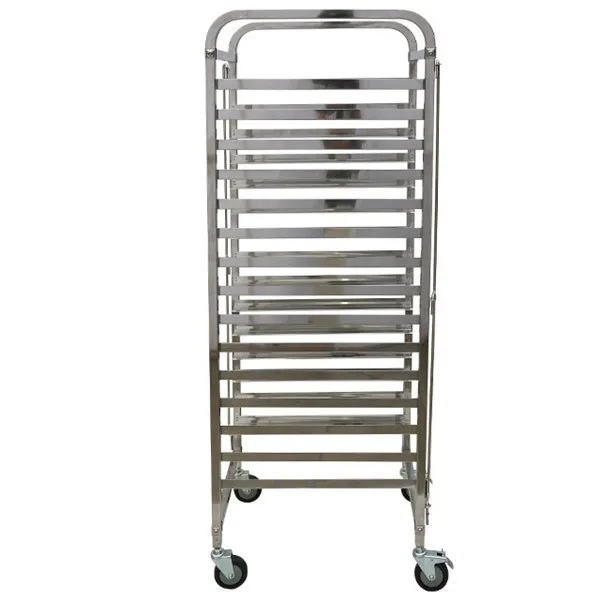
Stainless Steel Rack Trolley with Wheels: A Comprehensive Guide for Industrial Buyers
Product Introduction
When it comes to optimizing material flow in industrial environments, a stainless steel rack trolley with wheels is a versatile and indispensable asset. Designed to transport, store, and organize goods across various stages of production, this equipment addresses critical challenges such as reducing manual handling, improving workplace safety, and enhancing operational efficiency. Unlike standard carts, these trolleys are engineered for heavy-duty cycles, often featuring multiple tiers to maximize vertical space. They are particularly valuable in sectors where hygiene, corrosion resistance, and durability are non-negotiable, such as food processing and pharmaceuticals. By integrating wheels, the trolley transforms static shelving into a mobile workstation, allowing for seamless transitions between departments and reducing bottlenecks. For manufacturers and suppliers, investing in high-quality stainless steel trolleys means fewer replacements, lower maintenance costs, and a safer working environment.
Product Features
The structural design of a stainless steel rack trolley is focused on robust performance. Key features include:
- Reinforced frame structure: The use of thick-gauge stainless steel tubing and cross-bracing improves load stability during repeated transportation and industrial handling, preventing sway and deformation under heavy loads.
- High-quality casters: Swivel casters with brakes, often made of polyurethane or nylon, ensure smooth mobility over uneven floors and lock securely in place for stationary tasks. Some models offer shock-absorbing wheels for delicate cargo.
- Adjustable shelving: Many designs allow shelf height adjustment in increments, accommodating items of varying sizes and optimizing space utilization.
- Corrosion resistance: Stainless steel construction (typically 304 or 316) resists rust, chemicals, and moisture, making it suitable for washdown environments and humid conditions.
- Easy to clean: The non-porous surface prevents bacterial growth and simplifies sanitation, critical for food safety and cleanroom applications.
These features collectively enhance productivity by enabling quick access to materials and reducing worker fatigue.
Application Scenarios
The versatility of stainless steel rack trolleys makes them indispensable across numerous industries:
- Food Processing: Transporting ingredients, finished products, and utensils in compliance with hygiene standards. Trolleys are often used in chillers, freezers, and washdown areas.
- Bakery: Moving dough trays, baked goods, and cooling racks. Stainless steel resists sticky residues and is easy to sanitize.
- Industrial Manufacturing: Carrying parts, tools, and assemblies between workstations. The robust build handles heavy metal components.
- Cleaning: Holding cleaning supplies and waste bins, with corrosion resistance to withstand chemical cleaners.
- Drying: As drying racks for parts or produce, with airflow-friendly mesh shelves.
- Storage: Mobile shelving for warehouses, reducing the need for fixed racks and enabling flexible space usage.
- Transportation: In logistics and distribution centers, for order picking and movement of goods.
In each scenario, the trolley's design directly addresses specific pain points, such as the need for mobility, hygiene, or heavy load capacity.
Material Specifications
The choice of material significantly impacts performance and cost. Common options include:
- 304 Stainless Steel: The industry standard for food and medical applications. It offers excellent corrosion resistance and durability at a moderate cost. Suitable for most environments, including wet and humid conditions.
- 316 Stainless Steel: Superior corrosion resistance, especially against chlorides and harsh chemicals. Ideal for pharmaceutical, chemical, and marine environments. Higher cost but longer lifespan in aggressive settings.
- 201 Stainless Steel: A cost-effective alternative with lower nickel content, offering moderate corrosion resistance. Best for dry, indoor applications with light to medium loads.
- Aluminum: Lightweight and corrosion-resistant, but less durable than stainless steel. Often used for lighter-duty trolleys where portability is prioritized.
For B2B buyers, selecting the right material depends on the operating environment, load requirements, and budget. Our factory can provide guidance based on years of experience.
Specifications and Customization
When specifying a stainless steel rack trolley, consider these parameters:
- Dimensions: Length, width, and height should fit through doorways, aisles, and into ovens or chillers. Custom sizes are available.
- Thickness: Tube wall thickness (e.g., 1.2mm, 1.5mm) and shelf gauge affect load capacity and durability.
- Capacity: Load capacity per shelf and total capacity must match your heaviest items. Typical capacities range from 100kg to 500kg.
- Number of Shelves: 2 to 5 tiers, or more, depending on vertical space and accessibility needs.
- Load Capacity: Ensure even weight distribution and consider dynamic loads during movement.
- Hole Size and Mesh: For airflow or drainage, options include perforated, wire mesh, or solid shelves. Mesh sizes vary to contain small items.
- Tray Compatibility: If used with standard trays (e.g., Euronorm, Gastronorm), confirm slot spacing and shelf design.
- Surface Treatment: Polished, brushed, or electropolished for enhanced cleanliness and appearance.
As a manufacturer, we offer OEM/ODM services to tailor trolleys to your exact specifications, including custom sizes, designs, logos, and packaging. For custom requirements, please contact our team to discuss your project.
Procurement Guide
Purchasing stainless steel rack trolleys for industrial use requires careful consideration to ensure you get the right product at the best value. Here are key factors:
- How to choose the size? Measure your narrowest aisle, doorways, and storage areas. Consider the largest item you'll transport and add clearance. Also, think about ergonomics: shelf height should be accessible without excessive bending or reaching.
- How to choose the material? Match the material to your environment: 304 for general food and medical use, 316 for corrosive or high-hygiene areas, 201 for dry, light-duty applications. Consult with a supplier to avoid over- or under-specifying.
- How to confirm specifications? Request detailed drawings and material certificates. Ask for load test reports if available. Clarify caster type, braking mechanism, and shelf adjustability.
- How to judge supplier capability? Evaluate their manufacturing experience, quality control processes, and ability to provide custom solutions. Check certifications (e.g., ISO, NSF) and request references. A factory with in-house production and engineering support is more reliable.
Working with a reputable manufacturer ensures you receive a product that meets your operational needs and lasts for years.
Frequently Asked Questions (FAQ)
Q1: What is the typical load capacity of a stainless steel rack trolley?
A1: Load capacity varies by design, but most industrial trolleys handle 100-500 kg total, with per-shelf capacities of 50-150 kg. Heavy-duty models can support up to 1000 kg.
Q2: Can I use these trolleys in a freezer or oven?
A2: Yes, stainless steel trolleys are suitable for extreme temperatures. However, ensure casters are rated for the temperature range, and consider thermal expansion effects.
Q3: Are wheels replaceable?
A3: Most casters are bolted on and can be replaced. We recommend using high-quality casters from reputable brands for longevity.
Q4: What is the difference between 304 and 316 stainless steel?
A4: 316 contains molybdenum, providing better resistance to chlorides and acids. It's preferred in pharmaceutical and chemical industries, while 304 is adequate for most food applications.
Q5: Can I customize the trolley with my logo?
A5: Yes, as a manufacturer, we offer OEM services including logo printing or engraving, custom colors, and packaging.
Q6: How do I maintain the trolley?
A6: Regular cleaning with mild detergent and water is sufficient. Avoid abrasive cleaners that can scratch the surface. Lubricate casters periodically.
Q7: What is the lead time for custom orders?
A7: Lead time depends on order volume and customization complexity. Typically, it ranges from 4 to 8 weeks. Contact us for a specific quote.
Q8: Do you provide samples?
A8: For standard models, we can provide samples for evaluation. Custom samples may incur a fee, which can be credited against bulk orders.
Image ALT Text Suggestions
For SEO, when uploading product images, use ALT text such as: 'Stainless steel rack trolley with wheels for industrial use', 'Mobile stainless steel trolley with four shelves', 'Heavy-duty stainless steel cart with casters'.
SEO Metadata
SEO Title: Stainless Steel Rack Trolley with Wheels | Industrial Supplier
Meta Description: Discover the structural advantages of stainless steel rack trolleys with wheels. Ideal for food, pharma, and industrial use. Custom OEM solutions available. Contact us for a quote.
SEO Keywords: stainless steel rack trolley, wheeled stainless steel cart, industrial trolley, mobile shelving, stainless steel cart with wheels, food grade trolley, custom stainless steel trolley, OEM stainless steel trolley, stainless steel trolley manufacturer, heavy duty trolley.

