





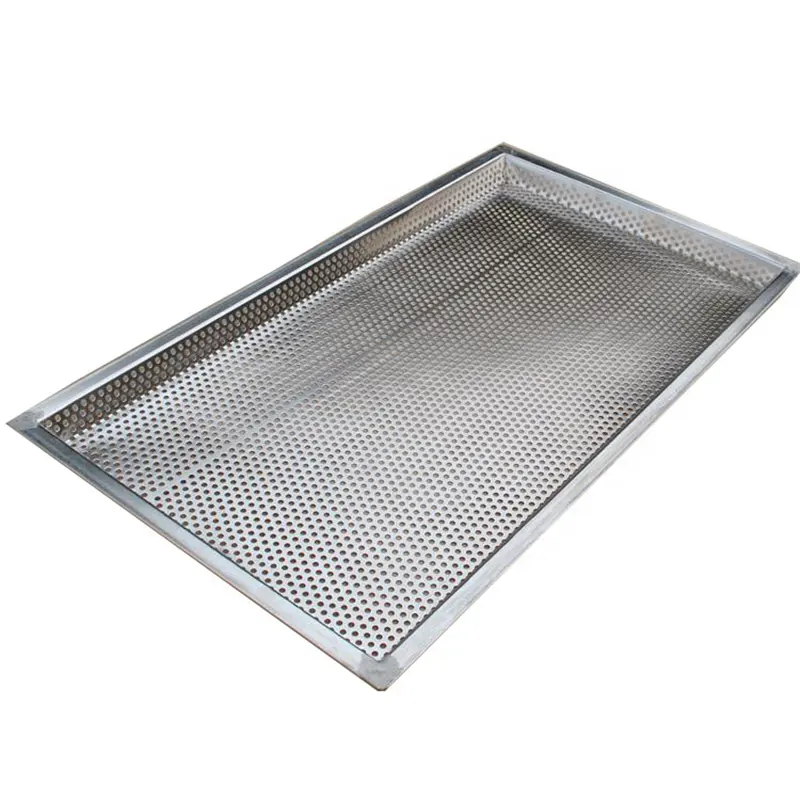
Stainless Steel Trays for Central Kitchens: Optimize Prep, Cooking & Hygiene
Why Stainless Steel Trays Are Essential for Central Kitchens
Central kitchens operate on a massive scale, processing hundreds or thousands of meals daily. In such high-volume environments, the choice of trays directly impacts workflow efficiency, food safety, and operational costs. Stainless steel food trays offer unparalleled durability, hygiene, and versatility. Unlike plastic or aluminum, they withstand extreme temperatures, resist corrosion, and are easy to clean. Moreover, their robust construction ensures longevity, reducing replacement frequency.
An industrial stainless steel tray is designed for heavy-duty use, accommodating everything from raw ingredients to finished dishes. With proper selection, you can streamline processes like marinating, baking, cooling, and storage. The key is understanding the specific requirements of each stage in your central kitchen.
Application Matrix: Using the Right Tray at Every Stage
Different kitchen operations require different tray characteristics. Below is a detailed application matrix that maps common tasks to ideal tray specifications:
• Preparation & Weighing: During prep, ingredients need to be sorted, portioned, and weighed. A solid, shallow tray (e.g., 40x60 cm, depth 4-6 cm) works best. The smooth surface prevents sticking and makes weighing simple. For ingredient staging, stackable solid trays with reinforced rims are ideal.
• Marinating: Marinating often requires trays that can hold liquids and are easy to maneuver. Choose a deep tray with lids (depth 10-15 cm) to prevent spillage and maintain even marinade distribution. Lids also help with space saving when stacking in refrigerators.
• Baking & Roasting: Ovens and convection ovens need trays that promote even heat circulation. A perforated tray (holes 2-3mm) allows hot air to reach the food's underside, reducing cooking time and ensuring even browning. For roasting vegetables or meats, a heavy-gauge, solid tray with rimmed edges prevents juices from dripping.
• Cooling & Freezing: Rapid cooling is a critical food safety step. Use perforated trays to allow cold air to circulate around food, accelerating the cooling process. Ensure trays are stackable to maximize space in blast chillers.
• Storage & Delivery: Trays used for storage and transport should be robust and stackable, with rails for easy gripping. Lidded trays protect food during transport and prevent contamination. For distribution, choose trays that fit standard carts and racks.
• Cleaning & Sanitizing: After use, trays must withstand frequent washing. Solid trays with smooth, seamless construction are easier to clean. Perforated trays require thorough rinsing to remove food residue. Always select trays that are dishwasher safe and resistant to chemicals used in commercial washing.
Choosing the Right Material and Thickness
The material grade and thickness of your trays significantly affect performance and cost. 304 stainless steel is the standard for food contact surfaces; it offers excellent corrosion resistance and durability. For environments with high salt content or acidic foods, 316 stainless steel provides superior resistance. 201 stainless steel is a more economical option, suitable for dry goods or less demanding tasks.
Thickness ranges from 0.5mm to 2.0mm. Thinner trays (0.5-0.8mm) are lightweight and ideal for light prep work. Thicker trays (1.0-1.5mm) offer better durability and are recommended for heavy loads, such as large batches of meat. For large pan trays used in ovens, a thickness of at least 1.0mm is advised to prevent warping under high heat.
Customization: Tailoring Trays to Your Unique Needs
No two central kitchens are alike. We understand that off-the-shelf trays may not fit every application. That’s why we offer custom stainless steel tray manufacturing:
• Size: Standard sizes like 400×300mm, 600×400mm, and 800×600mm are available, but we can create trays to fit your specific racks, ovens, and carts.
• Depth: Choose from shallow (20mm) to deep (150mm) to accommodate different food volumes and liquid contents.
• Perforation: Custom hole patterns, diameters (1-10mm), and spacing are possible to optimize airflow or drainage.
• Edge Types: Choose from flat, rolled, or reinforced edges for added rigidity and safety.
• Surface Finish: A brushed finish reduces scratching, while a mirror finish is easier to wipe down. We can apply a non-stick coating if needed.
Hygiene Design Checklist for Central Kitchen Trays
To maintain impeccable hygiene, your trays must meet certain design standards. Use this checklist when evaluating suppliers:
• Smooth, seamless surfaces: No crevices for bacteria to hide.
• Rounded corners: Easy to clean and prevent food buildup.
• Reinforced rims: Prevent warping and maintain shape after repeated washing.
• Stacking lugs: Allow secure stacking without sticking, improving ventilation and drying.
• Anti-slip edges: For safe handling, especially when wearing gloves.
Always verify that trays comply with FDA and EEU food contact regulations.
Frequently Asked Questions (FAQ)
1. What is the best stainless steel grade for a central kitchen tray?
304 stainless steel is the most common because it resists corrosion and is durable. For highly acidic or salty foods, consider 316. If you're on a budget, 201 is acceptable for dry goods but may have a shorter lifespan.
2. Should I use perforated or solid trays for baking?
It depends on the product. Perforated trays are excellent for items that need airflow, like pastries, cookies, or roasted vegetables. Solid trays are better for foods with high moisture or sauces, as they prevent leakage.
3. Can I use stainless steel trays in a blast chiller?
Yes, stainless steel trays are ideal for blast chilling and freezing. Thinner trays with perforations chill food faster. Ensure they are rated for low temperatures.
4. How do I clean and maintain stainless steel trays?
Use commercial dishwashers with adequate detergent. For stubborn residue, soak in warm soapy water. Avoid abrasive pads that can scratch the surface. Regularly inspect for dents or corrosion.
5. What are the standard dimensions available?
Common sizes include 400x300mm, 600x400mm, and 800x600mm. We also produce custom sizes to match your existing racks or production lines.
Upgrade Your Central Kitchen with Our Stainless Steel Trays
Our trays are engineered to meet the demanding needs of central kitchens, ensuring durability, hygiene, and efficiency. Whether you need standard or custom stainless steel trays, we have the expertise to deliver. Contact us today for a quote and experience the difference quality makes.