





Stainless Steel Trays for Food Drying: Perforated vs. Woven vs. Welded Mesh – A Complete Guide
Introduction to Stainless Steel Trays for Food Drying
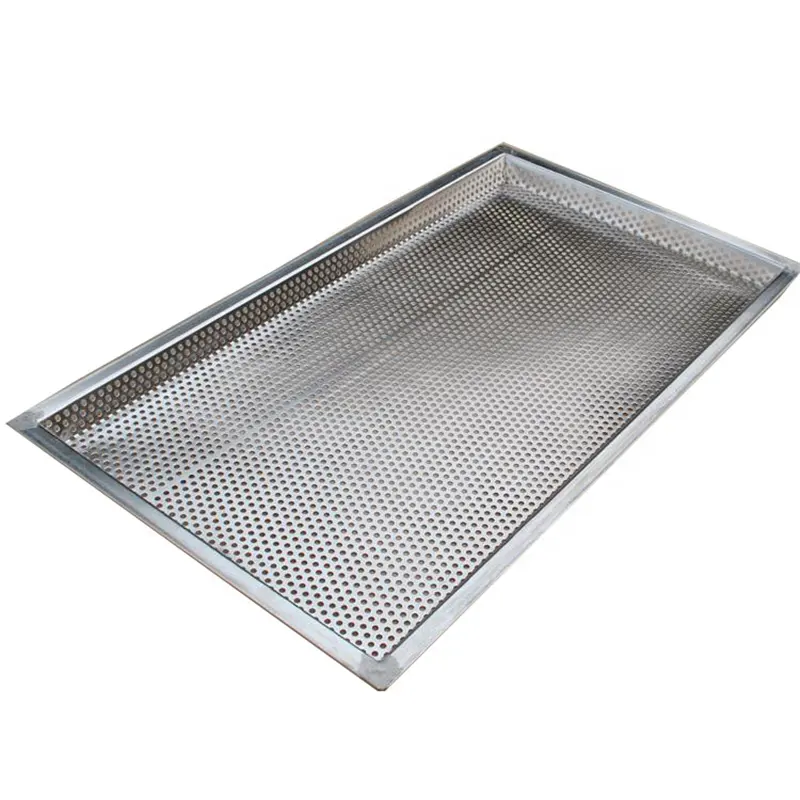
Stainless steel trays are essential in commercial and industrial food dehydration. They support even airflow, hygiene, and durability. Among the popular types are perforated stainless steel trays, woven mesh trays, and welded mesh trays. Each has unique characteristics that make it suitable for specific drying applications. This guide compares them across airflow, particle retention, load capacity, cleaning, edge safety, and corrosion resistance, and offers a selection table for common food categories.
Airflow Comparison
Airflow is critical for uniform drying. Perforated trays have punched holes with a fixed open area (typically 20-40%). They provide consistent vertical airflow but may restrict lateral movement. Woven mesh trays have a higher open area (up to 60%) and a fine weave that allows excellent airflow in all directions, ideal for herbs and tea. Welded mesh trays have a strong but open grid, offering good airflow for larger items like meat or seafood, but the grid pattern can create more turbulent flow that may dry edges faster.
Particle Size Retention
Small items like herb leaves, tea leaves, or diced vegetables can fall through larger openings. Perforated trays with 1-3 mm holes retain small particles but may clog if holes are too small. Woven mesh with fine wire (like 20x20 or 30x30 mesh) prevents small items from falling through, making it ideal for food drying mesh racks used for herbs and tea. Welded mesh usually has larger openings (5-10 mm) and is not suitable for small particles unless a liner is used.
Load Capacity and Durability
For heavy items like meat slabs or large fruit slices, strength matters. Perforated trays are made from solid sheet metal and can handle high loads if the metal thickness is adequate (0.8-1.5 mm). Welded mesh trays are extremely strong – wires are welded at intersections, providing high rigidity and load-bearing capacity, perfect for industrial drying racks. Woven mesh trays are lighter and less rigid; they may sag under heavy loads, so they are better for light or small items.
Cleaning and Hygiene
Food safety requires easy cleaning. Perforated trays have smooth surfaces and no crevices, making them the easiest to clean – a quick rinse or wipe is enough. Welded mesh trays have weld points that can harbor food particles, requiring more thorough brushing. Woven mesh trays have interwoven wires with tiny gaps that can trap residues, so they may need soaking and high-pressure washing.
Edge Safety and Handling
Sharp edges can cause injuries during handling. Perforated trays can be manufactured with rolled or turned edges for safety. Welded mesh trays often have bare cut wire ends that are sharp unless edges are trimmed or folded. Woven mesh edges are relatively smooth but can fray if not reinforced. Choose trays with rounded or sealed edges, especially for busy kitchens.
Corrosion Resistance and Material Options
Stainless steel grades determine corrosion resistance. 304 stainless steel is the standard for most food drying – it resists rust and chemicals. 316 stainless steel is even more corrosion-resistant, ideal for seafood drying where salt may be present. 201 stainless steel is cheaper but less resistant. Both perforated trays and welded mesh trays can be made from these grades. Woven mesh often uses finer wire of 304 or 316. Always verify the grade for your specific food product.
Application-Specific Recommendations for Food Drying
Here are 6 common categories and the best tray types:
Fruits and Vegetables
For apple slices, banana chips, or carrot pieces, use perforated stainless steel trays with 3-5 mm holes and a moderate open area. They offer good support and cleanliness. For softer fruits like strawberries, a woven mesh tray with fine mesh prevents sticking and ensures even airflow.
Meat and Poultry
Jerky and dried meat strips need strong support and good airflow. Welded mesh trays are ideal for heavy loads, and the open grid allows air to circulate around each strip. Ensure the wire diameter is at least 2 mm for durability.
Seafood
Fish fillets and shrimp dry well on perforated trays with 5-8 mm holes for drainage and airflow. If applying salt, choose 316 stainless steel to resist corrosion. For small shrimp, use a fine woven mesh to prevent falling through.
Herbs and Tea Leaves
These delicate leaves require maximum airflow and minimal handling. Woven mesh trays with a fine mesh (e.g., 30x30) provide optimal air circulation and prevent leaf loss. They are lightweight and easy to handle if the edges are reinforced.
Pet Food
For jerky treats or dried meat for pets, the same trays as meat work well. Welded mesh trays are easy to clean and durable. However, ensure no loose wires that could contaminate food.
Selection Table: Choose the Right Tray for Your Food
Here is a quick comparison table for selecting among perforated stainless steel tray, woven mesh tray, and welded mesh tray:
| Factor | Perforated Tray | Woven Mesh Tray | Welded Mesh Tray |
|---|---|---|---|
| Airflow | Good, uniform | Excellent, all directions | Good, but less uniform |
| Particle Retention | Holes 1-10 mm | Fine mesh retains small items | Large openings, not for small bits |
| Load Capacity | High (thicker sheet) | Low to medium | Very high |
| Cleaning | Easy, no crevices | Moderate, may trap residues | Moderate, weld points need care |
| Edge Safety | Can be rolled for safety | Relatively smooth, may fray | May have sharp edges unless trimmed |
| Corrosion Resistance | Depends on grade (304, 316) | Good (304/316) | Good (304/316) |
FAQ: Common Questions About Stainless Steel Drying Trays
Q: What is the difference between a dehydrator tray and an industrial drying rack?
A: A dehydrator tray is typically smaller and fits in a countertop dehydrator, often made of plastic or mesh. An industrial drying rack is larger, robust, and made of stainless steel to handle heavy loads and repeated use in food processing lines. Perforated stainless steel trays are commonly used in industrial settings, while food drying mesh racks refer to the general mesh-type trays.
Q: Can I use stainless steel trays in a dishwasher?
A: Yes, all stainless steel trays are dishwasher-safe, but hand washing with mild detergent is recommended to prolong their life. For woven mesh trays, avoid abrasive scrubbers that can damage the wire.
Q: How do I prevent small food pieces from falling through the holes?
A: Choose a tray with smaller hole sizes or a fine mesh. For perforated trays, select hole diameters like 1-2 mm for small items. Woven mesh trays with 30x30 or 40x40 mesh are ideal for powder-like leaves.
Q: Are stainless steel trays reactive with acidic foods like tomatoes or lemon?
A: Stainless steel is non-reactive, so it won't affect taste or color. However, acidic foods may cause pitting if the metal is low-grade. Use 316 stainless steel for acidic foods to ensure maximum corrosion resistance.
Q: Can I stack trays in a drying rack?
A: Yes, most trays can be stacked. Perforated and welded trays stack well because of their rigid structure. Woven mesh trays may collapse if overloaded, so use them in a single layer or with frame supports.
Meta Information for SEO
Meta Title: Stainless Steel Trays for Food Drying – Perforated vs. Woven vs. Welded Mesh
Meta Description: Compare stainless steel trays for food drying: airflow, load capacity, cleaning, and corrosion resistance. Learn which tray type suits fruits, meat, herbs, and more. Includes selection table and FAQs.
Keywords: food drying mesh racks, dehydrator tray, perforated stainless steel tray, industrial drying rack
Call to Action
Ready to upgrade your food drying process? Explore our range of stainless steel trays for food drying – from perforated stainless steel trays to woven mesh and welded mesh options. Contact us today for a customized quote and expert advice on selecting the right tray for your food products.