


Stainless Steel Trolley Material Selection: A Comprehensive Guide for B2B Buyers
Understanding Stainless Steel Trolleys in Industrial Contexts
Stainless steel trolleys are indispensable in industries ranging from food processing to pharmaceutical manufacturing. They facilitate the safe, hygienic, and efficient movement of goods, tools, and materials. However, not all trolleys are created equal. The choice of material—201, 304, or 316 stainless steel—directly impacts durability, corrosion resistance, and overall lifecycle cost. As a manufacturer with decades of experience, we've seen how improper material selection leads to premature failure, safety hazards, and unexpected downtime. This article provides a technical yet practical framework for stainless steel trolley material selection, tailored to the needs of B2B buyers, engineers, and procurement specialists.
Product Overview: What Is a Stainless Steel Trolley?
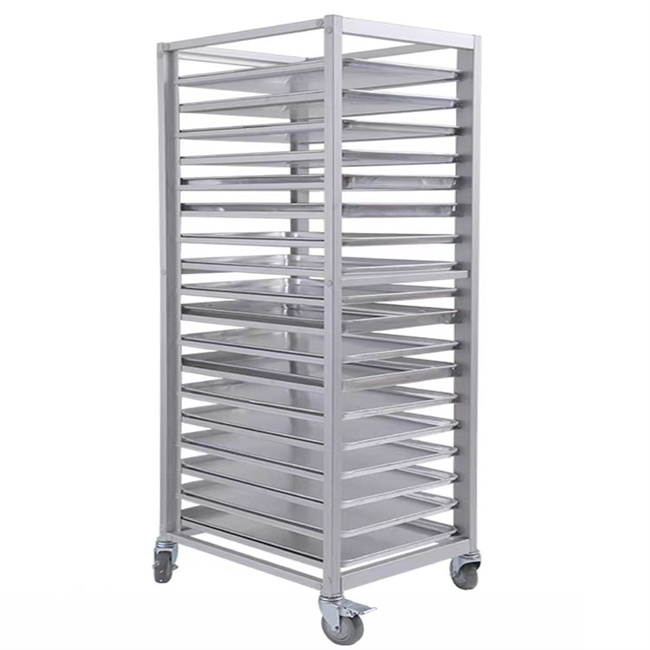
A stainless steel trolley is a wheeled platform or cart designed for transporting items in industrial, commercial, and institutional settings. Common configurations include flatbed trolleys, shelf trolleys, mesh trolleys, and specialized units for cleanrooms or bakeries. These products solve critical material handling challenges: they reduce manual lifting, improve workflow efficiency, and maintain hygiene standards. Unlike generic consumer carts, industrial trolleys are engineered for continuous use, heavy loads, and harsh environments. Our factory produces a wide range of standard and custom trolleys, with load capacities from 100 kg to over 1000 kg.
Key Features and Design Advantages
Industrial trolleys are built with features that enhance functionality and safety. The frame is typically constructed from stainless steel tubes or angles, joined by welding or bolted assemblies. Reinforced corner brackets and cross-bracing improve load stability during repeated transportation and industrial handling. Casters are selected based on floor type and load: nylon for smooth concrete, polyurethane for quiet operation, and stainless steel for washdown areas. Shelves may be solid, perforated, or wire mesh to allow drainage and airflow. Surface finishes range from brushed to mirror-polished, depending on hygiene requirements. These design elements are not arbitrary; they address real-world issues such as corrosion from cleaning agents, impact from rough handling, and contamination risks in food zones.
Application Scenarios Across Industries
Stainless steel trolleys serve diverse sectors, each with unique demands:
- Food Processing: Trolleys must withstand daily washdowns with caustic cleaners. 304 or 316 stainless steel is essential to prevent rust and bacterial growth. Mesh shelves allow water to drain, reducing drying time.
- Bakery: Oven racks and proofing trolleys require materials that resist heat and sugars. 304 stainless steel is common, but 316 may be needed in highly acidic environments.
- Industrial Manufacturing: Trolleys transport heavy parts, tools, and assemblies. Reinforced frames and heavy-duty casters are critical. 201 stainless steel can be a cost-effective option for dry, non-corrosive areas.
- Cleaning and Sanitation: Janitorial carts often carry chemicals. 316 stainless steel offers superior resistance to chlorides and acids.
- Drying and Storage: Trolleys with multiple shelves or drying racks optimize space. Material choice affects longevity in humid or refrigerated rooms.
- Transportation and Logistics: In warehouses, trolleys must endure rough handling. 304 stainless steel provides a balance of strength and corrosion resistance.
In each scenario, the operating environment dictates material selection. For instance, a meat processing plant using chlorine-based sanitizers should specify 316 stainless steel to avoid pitting corrosion, while a dry assembly line can safely use 201 to reduce costs.
Material Selection: 201 vs. 304 vs. 316 Stainless Steel
The three main stainless steel grades used in trolley manufacturing differ in composition, corrosion resistance, and price. Understanding these differences is vital for material selection.
- 201 Stainless Steel: Contains manganese and nitrogen, with lower nickel content. It offers moderate corrosion resistance and is suitable for dry, indoor environments. It is not recommended for washdown or chemical exposure. Cost is lowest among the three.
- 304 Stainless Steel: The industry standard, with 18% chromium and 8% nickel. It provides excellent corrosion resistance in most food and industrial settings. It is not ideal for high-chloride environments (e.g., saltwater, certain sanitizers).
- 316 Stainless Steel: Adds molybdenum (2-3%) for superior resistance to chlorides, acids, and aggressive chemicals. It is the top choice for pharmaceutical, marine, and chemical processing applications. Cost is highest.
Aluminum trolleys are also available but are generally limited to light-duty, non-corrosive applications due to lower strength and susceptibility to galvanic corrosion.
Specifications to Consider When Ordering
B2B buyers should specify the following parameters to ensure the trolley meets operational needs:
- Dimensions: Length, width, and height must fit aisles, doorways, and loading areas.
- Thickness: Tube wall thickness (e.g., 1.2 mm to 2.0 mm) affects load capacity and durability.
- Capacity: Static and dynamic load ratings, typically from 100 kg to 1000 kg.
- Number of Shelves: Single, double, or multi-tier configurations.
- Load per Shelf: Uniformly distributed load limits.
- Mesh Size: For mesh trolleys, aperture size (e.g., 50 mm x 50 mm) influences drainage and containment.
- Tray Compatibility: If used with standard trays or bins, ensure shelf spacing and guides match.
- Surface Finish: Brushed, polished, or electropolished for hygiene and appearance.
- Caster Type: Size, material, brake options, and mounting style.
Our engineering team can assist in translating your process requirements into precise specifications.
Customization and OEM/ODM Services
As a manufacturer with in-house design and production capabilities, we offer extensive customization:
- Custom Size: Tailored dimensions to fit unique workflows.
- Custom Design: Specialized shelves, hooks, or handles for specific tools.
- Logo and Branding: Laser etching or plates for company identification.
- Packaging: Custom crating for safe export.
- Special Requirements: Anti-static casters, HACCP-compliant designs, or cleanroom models.
For custom requirements, please contact our team to discuss your project.
Procurement Guide: How to Choose the Right Trolley
Purchasing stainless steel trolleys involves more than comparing prices. Consider these factors:
- How to Select Size: Map your transport route. Measure tightest turns and door clearances. Allow extra width for load overhang.
- How to Select Material: Assess environment: humidity, chemicals, washdown frequency, and temperature. Use 304 for general food areas, 316 for aggressive chemicals, and 201 for dry storage.
- How to Confirm Specifications: Request detailed drawings and material certificates. Verify load ratings with a safety factor (typically 2:1).
- How to Judge Supplier Capability: Look for ISO 9001 certification, in-house welding and polishing, and experience with similar clients. Ask for references and sample lead times.
We provide full documentation, including material test reports and warranty terms, to ensure transparency.
Common Pitfalls in Material Selection
Many buyers overlook the impact of cleaning agents. For example, quaternary ammonium compounds can corrode 304 stainless steel over time; in such cases, 316 is necessary. Similarly, using 201 in a humid basement will lead to rust within months. Another mistake is specifying a thicker material without considering weight—this can reduce maneuverability and increase operator fatigue. Always consult with the manufacturer to balance cost, performance, and usability.
Frequently Asked Questions (FAQ)
Q1: What is the difference between 201 and 304 stainless steel for trolleys?
A1: 201 contains manganese instead of some nickel, making it less corrosion-resistant but more affordable. It is suitable for dry, indoor environments with no chemical exposure. 304 offers superior corrosion resistance and is the standard for food and wet areas.
Q2: Can I use a 304 stainless steel trolley in a chlorine-rich environment?
A2: No, chlorine can cause pitting corrosion on 304. You should specify 316 stainless steel, which contains molybdenum for enhanced resistance.
Q3: How do I determine the correct load capacity for my trolley?
A3: Calculate the maximum total weight of items you plan to carry, then add a safety margin of at least 30%. Check the dynamic load rating, which accounts for movement and floor conditions.
Q4: What caster options are available for stainless steel trolleys?
A4: We offer nylon, polyurethane, rubber, and stainless steel casters in various diameters and with optional brakes. The choice depends on floor type, load, and noise requirements.
Q5: Do you provide custom sizes and designs?
A5: Yes, we have a dedicated engineering team for OEM and ODM projects. We can manufacture trolleys to your exact dimensions, with special shelves, handles, and branding.
Q6: What surface finishes are available?
A6: We offer brushed, mirror-polished, and electropolished finishes. Electropolishing is ideal for pharmaceutical and cleanroom applications as it removes surface impurities.
Q7: How long does production take for a custom order?
A7: Lead time varies by complexity and quantity. Typically, samples take 2-3 weeks, and mass production 4-6 weeks after approval. We provide a detailed schedule upon order confirmation.
Q8: Can you provide material certificates?
A8: Yes, we supply mill test certificates for all stainless steel materials, ensuring composition and traceability.
Image ALT Text Suggestions
For product images, use descriptive ALT text such as: "304 stainless steel shelf trolley with mesh shelves and swivel casters for food processing" or "316 stainless steel cleanroom trolley with electropolished finish and anti-static wheels".
SEO Information
SEO Title: Stainless Steel Trolley Material Selection Guide | 201, 304, 316
Meta Description: Expert guide for B2B buyers on stainless steel trolley material selection. Compare 201, 304, 316 stainless steel, specs, and custom options. Optimize your procurement.
SEO Keywords: stainless steel trolley, material selection, 201 stainless steel, 304 stainless steel, 316 stainless steel, industrial trolley, custom trolley, B2B procurement, food processing trolley, trolley manufacturer

