





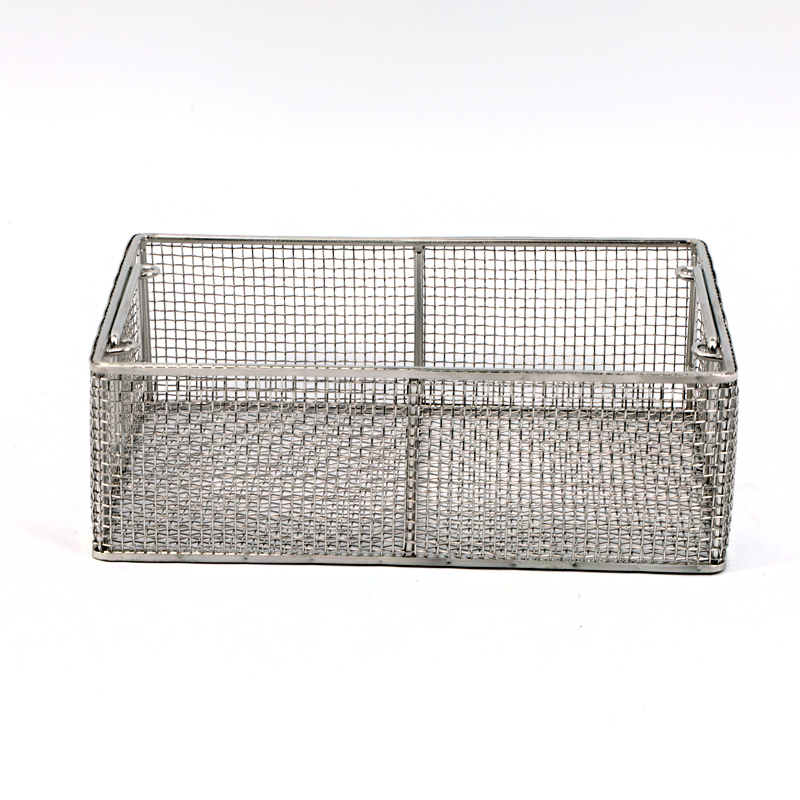
Stainless Steel Wire Mesh Baskets for Vegetable Washing Lines: A Buyer's Guide
The Role of Stainless Steel Baskets in Vegetable Washing Lines
In high-volume vegetable processing, washing lines rely on durable, corrosion-resistant baskets to carry produce through cleaning, rinsing, and drying stages. A vegetable washing stainless steel basket must withstand constant water exposure, detergents, and mechanical stress without compromising hygiene. Unlike plastic alternatives, stainless steel avoids chemical leaching, cracks, and bacterial harboring, making it the preferred choice for food-grade operations. For B2B buyers, selecting the right basket is not just about size—it affects line speed, product quality, and maintenance costs.
Why Stainless Steel Mesh? Key Advantages for Industrial Use
Stainless steel wire mesh baskets offer specific benefits that other materials cannot match. Corrosion resistance prevents rust and pitting even with continuous contact with water and sanitizers. High temperature resistance allows use in hot water washing or steam sterilization without deformation. The welded structure provides rigidity, handling heavy loads without bending, while the open mesh design ensures excellent drainage and ventilation, reducing drying time and preventing moisture buildup. These baskets are also easy to clean—smooth surfaces and minimal crevices meet food safety standards. Over years of service, the long service life of stainless steel reduces replacement frequency, lowering total ownership cost.
Choosing the Right Material: SUS 201, 304, or 316?
Material grade determines performance in specific environments. For vegetable washing, SUS 304 is the standard choice: it offers balanced corrosion resistance and formability, suitable for most food processing applications. SUS 316 adds molybdenum, enhancing resistance to chlorides and acidic chemicals, which is beneficial when using aggressive cleaning agents or processing salty vegetables. SUS 201 is a lower-cost alternative with less corrosion resistance, appropriate for dry handling or non-critical cleaning steps. Procurement managers should evaluate the chemical exposure, temperature range, and regulatory requirements—for most wash lines, SUS 304 provides the best longevity-to-cost ratio.
Structural Design and Manufacturing Processes
A robust basket starts with precise wire drawing and weaving. The wire mesh structure determines opening size, which directly impacts cleaning efficacy (smaller openings retain smaller particles, but reduce water flow). Welding process—typically TIG or spot welding—must produce strong joints that resist fatigue. Reinforced edges prevent distortion under heavy loads, and a handle design that ensures ergonomic lifting without snagging. Optional lids keep produce contained during washing or spraying. Surface treatment (pickling, passivation, or electropolishing) improves cleanliness and corrosion resistance. Finally, each basket undergoes quality inspection—dimensional checks, weld integrity tests, and surface finish verification—to meet international standards.
Applications Beyond Vegetable Washing
This basket design is versatile across industries. In ultrasonic cleaning, the open mesh allows cavitation waves to reach parts effectively. For industrial parts washing, baskets hold metal components during degreasing and rinsing. In food processing, they handle fruits, vegetables, and seafood. Bakery production uses them for proofing, cooling, and transporting dough products. Medical sterilization requires baskets that withstand autoclave temperatures. Laboratory cleaning and drying processes benefit from uniform drainage. In material handling, stackable designs improve storage efficiency.
Customization: Tailoring Baskets to Your Line
As a manufacturer, we provide OEM customization to match exact line specifications. You can specify size (L×W×H), mesh opening (from 1mm to 50mm), wire diameter (1mm to 8mm), basket height, loading capacity, handle type (foldable, fixed, or side-mounted), material selection (grade as above), and packaging (bulk, carton, or export wooden case). Our engineering team works with your drawings or samples to produce prototypes before mass production.
Procurement Guide: Selecting the Right Basket
When sourcing, consider these factors: How to select the right stainless steel basket? Start with the washing process—chemicals, temperature, and load weight. How to choose mesh size? Match to product size; too fine restricts water flow, too coarse may allow small parts to escape. How to choose stainless steel grade? Refer to corrosive elements in your water and chemicals; SUS 316 for aggressive solutions, SUS 304 for general use. What factors affect service life? Proper handling, avoiding impacts, and regular cleaning extend lifespan. Request certifications like FDA or EU food-grade compliance to ensure safety.
Common Questions
Q: Can stainless steel mesh baskets be customized for my existing washing line? A: Yes, we offer full customization in dimensions and features to match your equipment, with free consultations.
Q: Which stainless steel grade is suitable for industrial vegetable washing? A: For most vegetable washing, SUS 304 is ideal due to corrosion resistance and cost. If using chloride-based sanitizers, consider SUS 316.
Q: What industries use stainless steel wire baskets? A: Beyond vegetable washing, they are used in food processing, ultrasonic cleaning, medical sterilization, and automotive parts washing.
Q: How do you ensure quality for bulk orders? A: We implement IQC (incoming quality control), IPQC (in-process quality control), and OQC (outgoing quality control) to guarantee consistency across batches.
Partner With an Experienced Manufacturer
With over 15 years in wire mesh fabrication, we serve global clients in food and industrial sectors. Our factory adheres to ISO 9001, and our engineering team supports 3D drawings and samples. We offer competitive pricing, realistic lead times, and dependable after-sales support. Contact us for customized stainless steel wire mesh basket solutions—send your specifications for a prompt quote.