





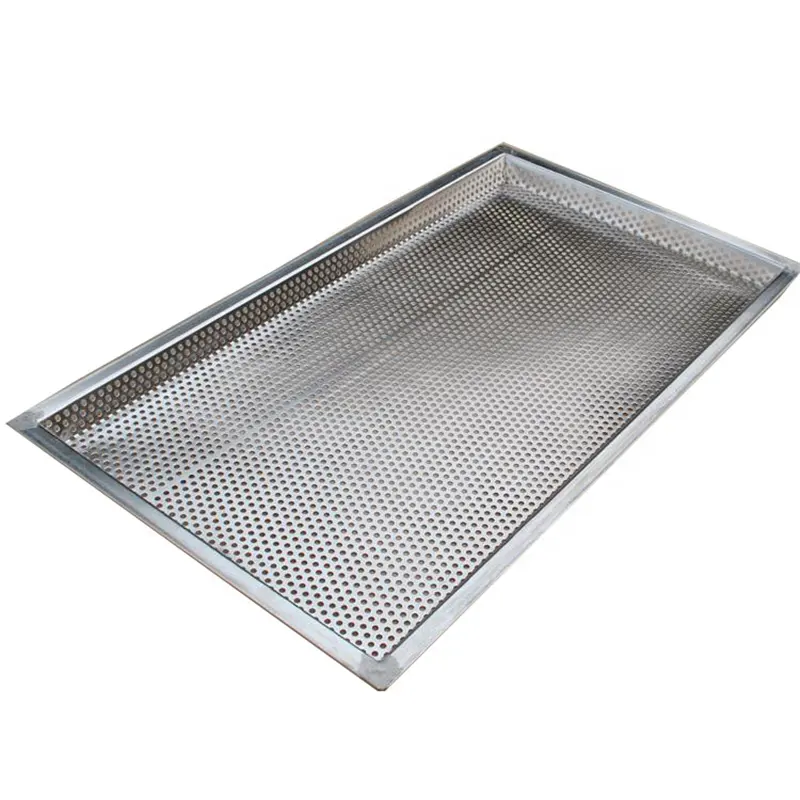
The Complete Guide to Stainless Steel Baking Trays: Commercial, Industrial & Custom Options
Introduction to Stainless Steel Baking Trays
A stainless steel baking tray is an essential tool in any commercial kitchen, bakery, or food processing facility. Known for its durability, heat resistance, and hygiene, the stainless steel baking tray outperforms aluminum or carbon steel alternatives in longevity and food safety. Whether you run a small artisan bakery or a large food factory, choosing the right commercial stainless steel baking tray can impact your production efficiency and product quality.
Common Sizes and Dimensions
Standard bakery tray sizes vary by region and application. The most common full-size sheet pan measures 26 x 18 inches (660 x 460 mm), while half-size (18 x 13 inches) and quarter-size (13 x 9 inches) are popular for smaller ovens. In Europe and Asia, metric sizes like 600 x 400 mm and 400 x 300 mm are prevalent. For industrial baking tray applications, custom dimensions are often required to fit specific ovens, proofers, or conveyor systems. Common thicknesses range from 0.5 mm to 2.0 mm; thinner trays (0.5–0.8 mm) are suitable for lightweight pastries, while thicker trays (1.0–2.0 mm) are needed for heavy products like meat loaves or large batch baking.
SUS 304 vs SUS 201: Which Stainless Steel to Choose?
The material grade of your stainless steel sheet pan directly affects its performance and lifespan. SUS 304 (18/8 stainless steel) is the industry standard for food contact surfaces due to its excellent corrosion resistance, non-reactivity, and durability. It withstands acidic ingredients like tomato sauce or citrus without pitting. SUS 201 is a lower-cost alternative with less nickel and manganese; it offers moderate corrosion resistance but may rust under prolonged moisture or acidic conditions. For most commercial bakeries and industrial food processing, SUS 304 is recommended for long-term reliability. However, SUS 201 can be a budget-friendly option for dry goods or short-term use.
Solid vs Perforated Baking Trays
Custom baking tray designs include both solid and perforated (punched) versions. Solid trays are ideal for wet batters, cookies, and sheet cakes, as they prevent dripping. Perforated trays feature holes (typically round, 1–10 mm diameter) that allow airflow for crispier crusts, faster baking, and even heat distribution. They are widely used for bread, pizza, and pastries. Perforation patterns—hole size, spacing, and open area percentage—can be customized to your recipe requirements. Common hole diameters include 2 mm, 3 mm, 4 mm, and 5 mm. The open area typically ranges from 20% to 50%, depending on the product.
Edge Types: Rolled vs Reinforced
The edges of a commercial stainless steel baking tray affect both strength and ease of handling. Rolled edges (rounded wire rim) provide a smooth, comfortable grip and prevent warping. Reinforced edges (thicker or folded rim) increase rigidity for heavy loads and high-temperature cycles. For industrial ovens with automated handling, reinforced edges are often required to withstand mechanical stress. Both edge types can be customized to fit your existing rack or conveyor systems.
Surface Finish and Corrosion Resistance
The surface finish of a stainless steel sheet pan influences release properties and sanitation. Common finishes include: #2B (matte/satin) for general use, #4 (brushed) for improved scratch resistance, and #8 (mirror) for easy cleaning. A textured or embossed surface can reduce sticking. Proper surface treatment also enhances corrosion resistance. Although stainless steel is naturally rust-resistant, exposure to chlorides (e.g., salt, bleach) can cause pitting. Regular passivation or electropolishing can extend tray life.
Cleaning and Maintenance
To maximize the life of your bakery tray, clean immediately after use with warm water and mild detergent. Avoid abrasive pads or steel wool that can scratch the surface, creating hiding spots for bacteria. Never use bleach or chlorine-based cleaners, as they can attack the passivation layer. For stubborn residues, soak in a non-chlorine cleaning solution. Periodic deep cleaning with a stainless steel cleaner can restore shine and protect against corrosion.
Customization Options
Many suppliers offer custom baking tray services: you can specify size (length, width, edge height), material (SUS 304, SUS 316, or aluminum alloys like 1060, 3003, 5052), thickness (0.5–2.0 mm or more), perforation pattern, edge style, and surface finish. Aluminum trays are lighter and conduct heat faster, ideal for rapid baking. Custom trays are essential for specialized ovens, proofers, or production lines.
Procurement Checklist
- Material grade: Confirm if SUS 304 or SUS 201 meets your hygiene and durability needs.
- Dimensions: Measure your oven or rack interior precisely.
- Thickness: Balance weight capacity and cost.
- Edge type: Choose rolled for comfort or reinforced for heavy use.
- Perforation: Specify hole diameter, spacing, and pattern for airflow.
- Surface finish: Select a non-stick or easy-clean option.
- Certification: Request material test certificates or food-grade documentation.
Frequently Asked Questions
1. Can I use a stainless steel baking tray in a microwave?
No, stainless steel is not microwave-safe as it reflects waves and can cause sparks. Use glass or ceramic instead.
2. How do I prevent food from sticking to stainless steel trays?
Use parchment paper, silicone mats, or lightly grease the tray. A textured surface also helps.
3. What is the maximum temperature for a stainless steel baking tray?
Most SUS 304 trays can withstand up to 500°C (932°F), but warping may occur above 400°C. Check manufacturer specs.
4. Are stainless steel baking trays dishwasher safe?
Yes, but repeated dishwashing may dull the finish. Hand washing is recommended to maintain appearance.
5. Can I get custom sizes for my industrial baking line?
Yes, many manufacturers offer custom dimensions, edge types, and perforation patterns. Provide a drawing or sample for accurate quoting.