





The Essential Guide to Industrial Stainless Steel Trays: Durability, Hygiene, and Versatility
What Are Industrial Stainless Steel Trays?
Industrial stainless steel trays are heavy-duty, corrosion-resistant containers designed for demanding environments. Made from alloys like 304 or 316 stainless steel, they withstand high temperatures, chemicals, and repeated cleaning. Unlike plastic or aluminum trays, they do not rust, stain, or harbor bacteria, making them ideal for sanitation-critical industries.
Key Benefits of Using Stainless Steel Trays
Durability: Stainless steel trays resist dents, cracks, and deformation under heavy loads, lasting years longer than alternatives. Hygiene: Non-porous surfaces prevent bacterial growth and meet FDA and NSF standards. Heat Resistance: They can handle temperatures from -40°F to 1200°F, suitable for autoclaving, ovens, and freezers. Chemical Resistance: They endure exposure to acids, alkalis, and cleaning agents without degradation. Recyclability: At end of life, 100% of the material can be recycled, supporting sustainability goals.
Common Applications Across Industries
In food processing, trays are used for baking, cooling, freezing, and transporting ingredients. Pharmaceutical facilities rely on them for sterile handling of powders and liquids. Manufacturing uses trays for parts washing, storage, and assembly lines. Laboratories use them for sample holding and autoclaving. Even in automotive and aerospace, trays manage small components during production.
How to Select the Right Industrial Stainless Steel Tray
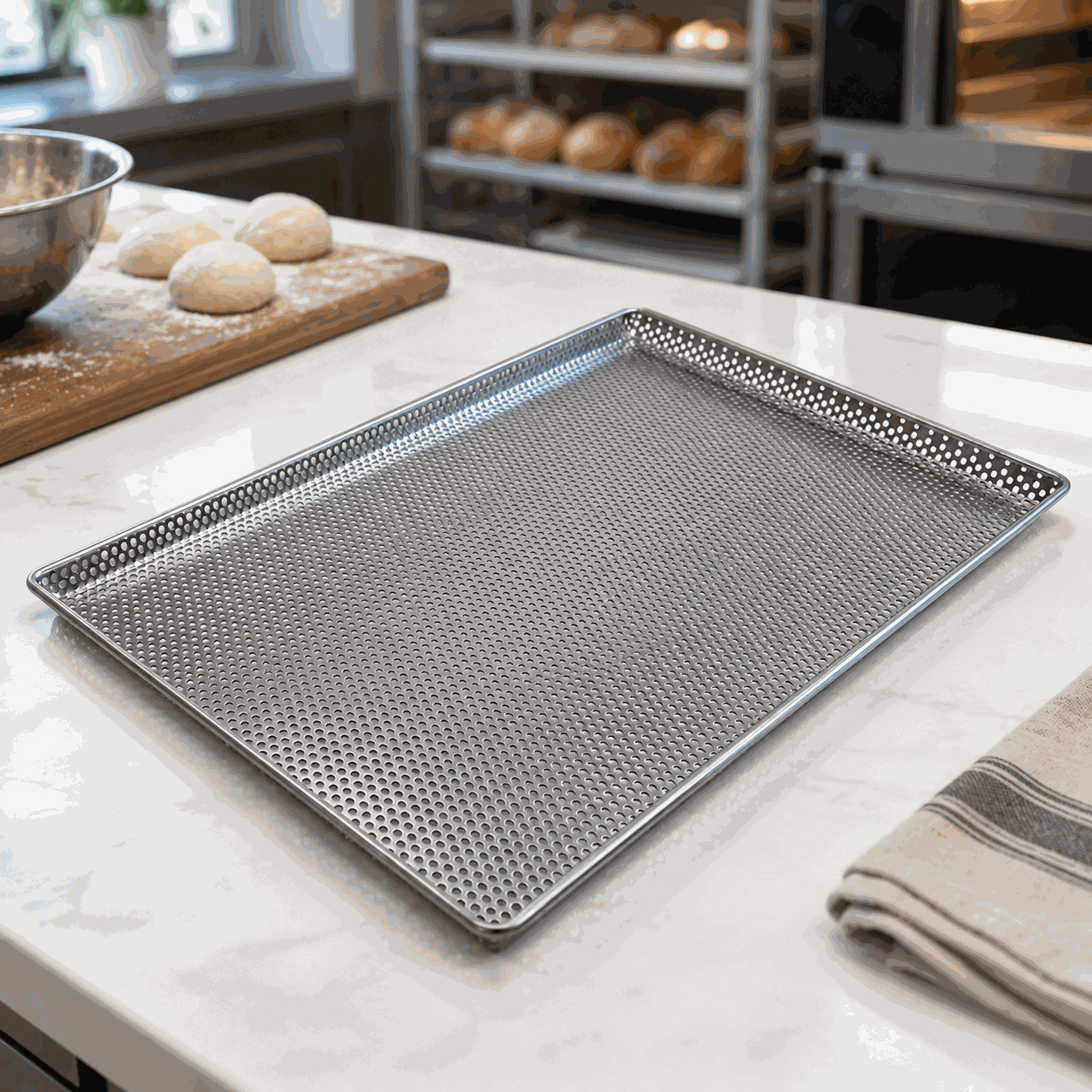
Consider material grade: 304 is cost-effective for general use, while 316 offers superior corrosion resistance for salty or acidic environments. Surface finish affects cleanability: a #4 brushed finish hides scratches, while a 2B finish is smoother for easy wiping. Size and shape must fit your racks or conveyors. Edge design (rolled, flanged, or wire-reinforced) impacts strength and ease of handling. Perforations are available for drainage or airflow.
Maintenance and Cleaning Best Practices
Wash trays with mild detergents and soft cloths, avoiding abrasive pads that scratch the surface. Passivation after welding restores corrosion resistance. For heavy grease, use alkaline cleaners. Avoid prolonged contact with chlorides (e.g., bleach) which can cause pitting. Rinse thoroughly and dry immediately to prevent water spots. Regular inspection for dents or cracks ensures safety.
Cost vs. Long-Term Value
Initial cost is higher than plastic, but stainless steel trays offer 5–10 times longer lifespan, reducing replacement frequency. Their resistance to contamination decreases downtime for cleaning. Many industries recover the investment within 2–3 years through reduced waste and improved efficiency.
Frequently Asked Questions
Yes, but ensure they are not sealed (e.g., lids) to avoid pressure buildup. Most can withstand oven temperatures up to 500°F, but check manufacturer specs for specific limits.
Grades 304 and 316 are food-safe. 304 is standard for dry foods, while 316 is recommended for acidic or salty foods to prevent corrosion.
Heat tint can be removed with a stainless steel cleaner and a non-abrasive pad. For stubborn stains, a paste of baking soda and water works gently.Q: Can stainless steel trays be used in microwaves or ovens?Q: Are there different grades for food contact?Q: How do I remove discoloration from heat?