





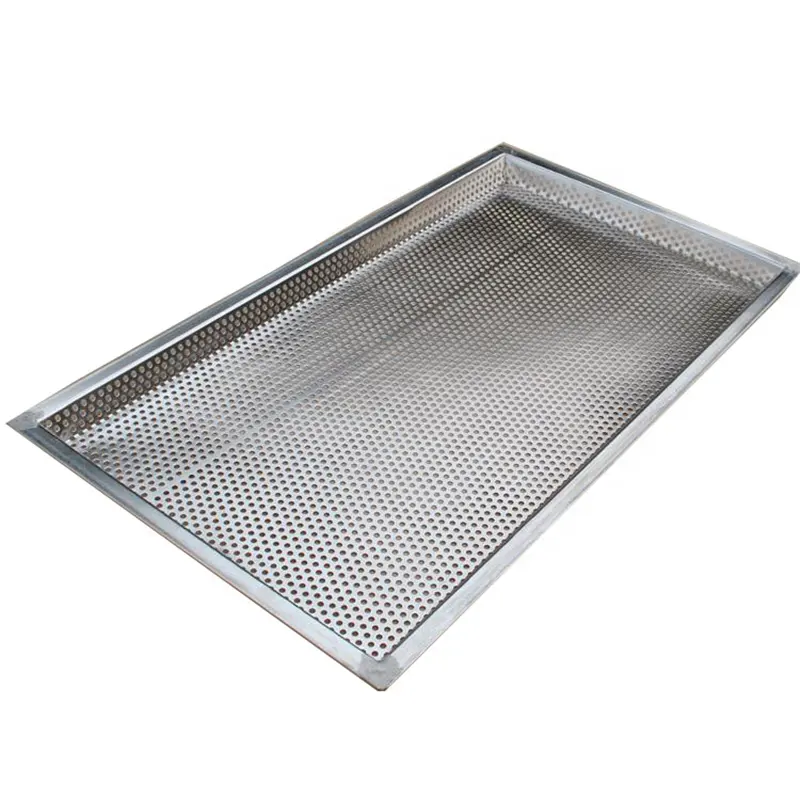
The Ultimate Bakery Tray Sizes Guide: 600×400 mm, 400×600 mm, 40×60 cm & More
Why Bakery Tray Sizes Matter
Whether you run a small artisan bakery or a large industrial production line, the size of your baking trays directly impacts your workflow, oven capacity, and product consistency. Using the wrong tray size can lead to wasted space, uneven baking, and even safety hazards. This guide helps you navigate the confusing landscape of tray dimensions across different markets and equipment.
Common Bakery Tray Sizes: 600×400 mm, 400×600 mm, and 40×60 cm
The most common bakery tray size in many countries is the 600×400 mm tray, often referred to as a large sheet pan or commercial oven tray. This size is widely used in Europe and many parts of Asia. However, you'll also see the same dimensions expressed as 400×600 mm – it's the same tray, just rotated. In metric countries, this size is often called 40×60 cm (or 60×40 cm).
But why are there different ways to say the same thing? It comes down to convention and the orientation of the tray in relation to the oven rack or the direction of loading. Always verify the actual dimensions, not just the name.
Other Standard Sizes in Different Markets
While 600×400 mm is a common standard, other sizes are prevalent depending on your region and equipment:
- GN 1/1 (530×325 mm): Common in the foodservice industry, especially for gastronorm containers.
- Half Sheet Pan (460×330 mm): A US standard size for baking sheets.
- Full Sheet Pan (660×460 mm): The largest US standard, often used in large-scale commercial kitchens.
- 400×300 mm: A smaller size for ovens with limited capacity.
- 800×600 mm: For large industrial ovens and rack systems.
These variations exist because different oven manufacturers design their cavities and rack systems around specific tray sizes. Always check your oven's specifications before buying trays.
How to Measure Your Bakery Tray Correctly
To avoid guesswork, follow this simple method:
- Use a steel ruler or tape measure.
- Measure the length (the longer side) and width (the shorter side) of the tray from the outside edges.
- Measure the depth (the height of the rim) if needed for capacity.
- Record measurements in millimeters (mm) and centimeters (cm) for comparison.
Always include the unit (mm or cm) to avoid confusion. For example, write 600×400 mm or 40×60 cm – both are correct but need context.
Baking Tray Size Conversion Table
Here's a quick reference table for common sizes:
| Millimeters (mm) | Centimeters (cm) | Inches (approx.) | Common Name |
|---|---|---|---|
| 600×400 | 60×40 | 24×16 | Large sheet pan |
| 400×300 | 40×30 | 16×12 | Medium tray |
| 530×325 | 53×32.5 | 21×13 | GN 1/1 |
| 460×330 | 46×33 | 18×13 | Half sheet pan |
| 660×460 | 66×46 | 26×18 | Full sheet pan |
| 800×600 | 80×60 | 31×24 | Industrial tray |
This table helps when comparing trays from different suppliers or regions.
Factors to Consider When Buying Commercial Oven Trays
Beyond length and width, consider the following:
- Material: Stainless steel is durable and corrosion-resistant. Stainless steel tray 40 x 60 is a popular choice for its food safety and ease of cleaning. Aluminum trays conduct heat well but may warp at high temperatures.
- Thickness: Common thicknesses range from 0.5 mm to 2.0 mm. Thicker trays are more rigid and suitable for heavy loads, while thinner trays heat up faster.
- Edge design: Rolled edges add strength, while open edges allow stacking.
- Perforations: Some trays have holes for airflow, ideal for products like bread and pastries.
For example, baking tray 600 x 400 is often available in both solid and perforated versions. Choose based on your baking needs.
Customization Options for Bakery Trays
Many manufacturers offer custom sizes and features:
- Custom dimensions: You can order trays to fit your exact oven or rack.
- Material options: Choose from 201, 304, or 316 stainless steel, or aluminum alloys like 1060, 3003, 5052.
- Thickness options: From 0.5 mm for light use to 2.0 mm for heavy-duty industrial use.
- Perforation patterns: Round holes in diameters from 1 mm to 10 mm, with custom spacing and arrangement.
If you run a high-volume bakery, investing in custom trays can optimize your production line.
Frequently Asked Questions (FAQ)
They are the same size, just expressed in different orientations. Always confirm the actual length and width with your supplier.
Yes, they are equivalent. However, some ovens may have specific loading directions, so check the clearance.
304 stainless steel is the most common for food safety and durability. For high-corrosion environments, choose 316. Aluminum is lighter but less durable.
Measure the available space in your oven (width and depth) and subtract 5-10 mm clearance for heat circulation. Then choose a tray that fits within those dimensions.
Yes, but standards vary by manufacturer and region. Always refer to your oven's manual or consult the manufacturer.1. What is the difference between 600×400 mm and 400×600 mm?2. Can I use a 40×60 cm tray in an oven designed for 600×400 mm?3. What is the best material for bakery trays?4. How do I measure a tray for my oven?5. Are there standard sizes for commercial ovens?