





The Ultimate Guide to 600x400 Perforated Baking Trays: Selection, Applications, and Key Differences
Introduction to 600x400 Perforated Baking Trays
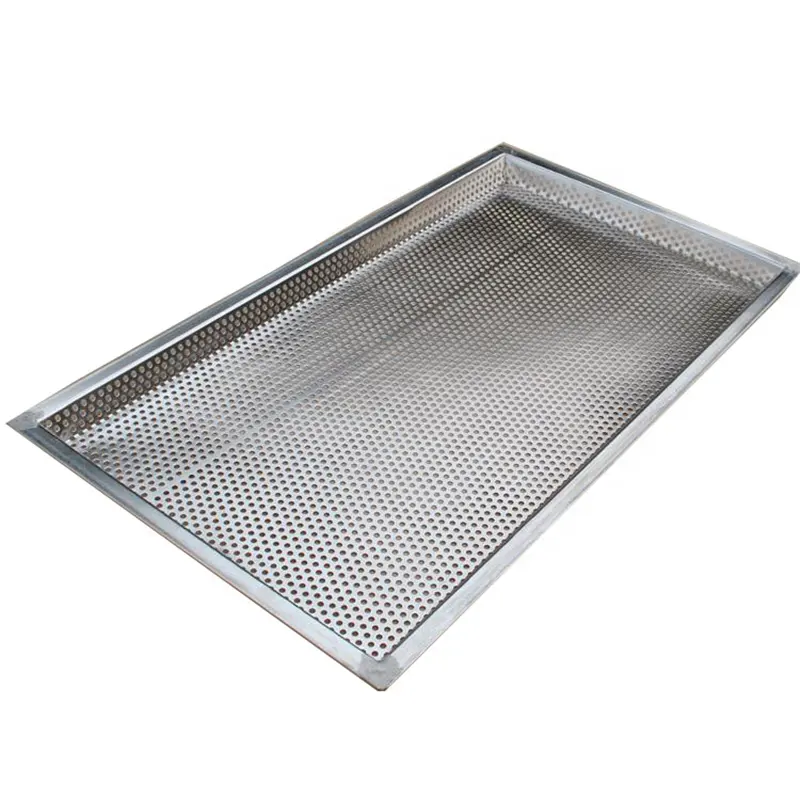
When it comes to professional baking, the perforated bakery tray 600x400 is a versatile workhorse. This size, also known as an oven tray 40x60, fits standard bakery racks and ovens, offering optimal airflow and even browning. The perforations make a significant difference in heat circulation, moisture release, and product quality. In this guide, we'll explore how the same tray can be customized for different baked goods and processes.
Key Differences: Bread, Baguettes, Cookies, Pizza, Cooling, and Drying
Each application demands specific perforation patterns. For bread tray bakery use, larger holes (5-8 mm) with a higher open area (around 40-50%) allow steam to escape, resulting in a crispier crust. For baguettes, elongated holes (slot or oblong) are better to minimize dough sticking and promote even baking. Cookies require smaller holes (2-3 mm) to prevent dough from sagging, while pizza benefits from a medium open area to ensure a crispy base without burning. For cooling and drying, maximum airflow is key; therefore, a larger open area (up to 60%) with holes of 4-6 mm is ideal to quickly remove moisture and cool products evenly.
Hole Size, Pitch, and Open Area: What to Choose?
The hole diameter and pitch (distance between centers) determine the open area. Common hole sizes range from 1 mm to 10 mm, with 1.5 mm, 2 mm, 3 mm, and 5 mm being popular. For instance, a stainless steel perforated tray with 3 mm holes on a 5 mm pitch yields an open area of about 33%, striking a balance between support and airflow. For heavy dough products like bread, a larger open area (above 40%) is recommended. For lighter items like cookies, 30-35% open area works well. Always consider the product's weight and stickiness when selecting hole size.
Edge Height and Board Thickness: Structural Considerations
The edge height of the tray (also called rim) is crucial. For most baking, a low edge (10-20 mm) is sufficient, allowing easy access and airflow. For cooling and drying, a higher edge (up to 40 mm) can prevent items from sliding off. The board thickness, typically 0.5-2.0 mm, affects durability and weight. A 0.8 mm thickness is common for balanced performance. For heavy loads or large trays, choose a thicker board (1.0-1.5 mm) to prevent warping. The oven tray 40x60 with a thickness of 1.0 mm is robust and long-lasting.
Reinforcement and Surface Finish
Reinforcements, such as extra folds or welded supports, can prevent bending under heavy loads. For trays that will carry multiple loaves or large sheet cakes, consider a reinforced bottom. Surface finish is equally important. A brushed or matte finish reduces sticking, while a mirror finish is easier to clean. For perforated bakery tray 600x400, a non-stick coating (like PTFE or silicone) is optional but beneficial for sticky doughs. For stainless steel trays, a passivation treatment improves corrosion resistance.
Material Selection: Stainless Steel vs. Aluminum
Materials significantly impact performance and cost. Stainless steel perforated tray (201, 304, 316) is durable, sturdy, and resistant to corrosion. 304 is the industry standard for most bakery applications, while 316 is better for highly acidic foods. Aluminum alloys (1060, 3003, 5052) offer lightweight and excellent heat conduction, but they are softer and may dent. For long-term use, stainless steel is recommended; for budget and easy handling, aluminum is a good option.
Application-Specific Recommendations
For bread tray bakery, use 304 stainless steel with 3-5 mm holes, a 1.0 mm thickness, and a low edge. For baguettes, choose a tray with elongated slots to support the dough's shape. For cookies, a 2-3 mm hole size with a higher edge can prevent sliding. Pizza requires a medium hole size (4-5 mm) and a thicker board to handle the weight. For cooling and drying, a tray with 6-8 mm holes and a high open area is ideal. Always match the tray to your specific oven and rack size (600×400 mm is standard).
Specification Comparison Table
Here is a quick comparison for different uses:
Bread: Hole 5 mm, pitch 8 mm, open area 40%, edge 15 mm, thickness 1.0 mm
Baguette: Slot 30x5 mm, open area 45%, edge 15 mm, thickness 1.0 mm
Cookies: Hole 2.5 mm, pitch 4 mm, open area 35%, edge 20 mm, thickness 0.8 mm
Pizza: Hole 4 mm, pitch 7 mm, open area 30%, edge 15 mm, thickness 1.2 mm
Cooling: Hole 6 mm, pitch 10 mm, open area 50%, edge 25 mm, thickness 0.8 mm
Drying: Hole 8 mm, pitch 12 mm, open area 55%, edge 20 mm, thickness 1.0 mm
FAQ: Common Questions About Perforated Trays
What is the standard size of a 600x400 baking tray?
The size is 600 mm by 400 mm, and it fits most standard ovens and rack systems. It is also known as 40x60 cm or approximately 24x16 inches.
Can I use a perforated tray directly on the oven rack?
Yes, but ensure the tray is placed on a stable rack to avoid bending. For heavy loads, use a solid support beneath.
How do I clean a stainless steel perforated tray?
Use warm soapy water and a soft cloth. Avoid abrasive cleaners to prevent scratching. For stuck residues, soak in warm water.
Does a higher open area mean better baking?
Not always. High open area improves airflow but may reduce support. Balance is key based on the product.
Meta Information
Title: 600x400 Perforated Baking Tray: The Ultimate Selection Guide
Meta Description: Learn how to choose the right 600x400 perforated baking tray for bread, baguettes, cookies, pizza, cooling, and drying. Explore hole sizes, edge height, materials, and get expert tips.
Keywords: perforated bakery tray 600x400, stainless steel perforated tray, oven tray 40x60, bread tray bakery
Request a Quote
Ready to upgrade your baking efficiency? Contact us today for a customized 600x400 perforated baking tray tailored to your needs. Get a quote now!