





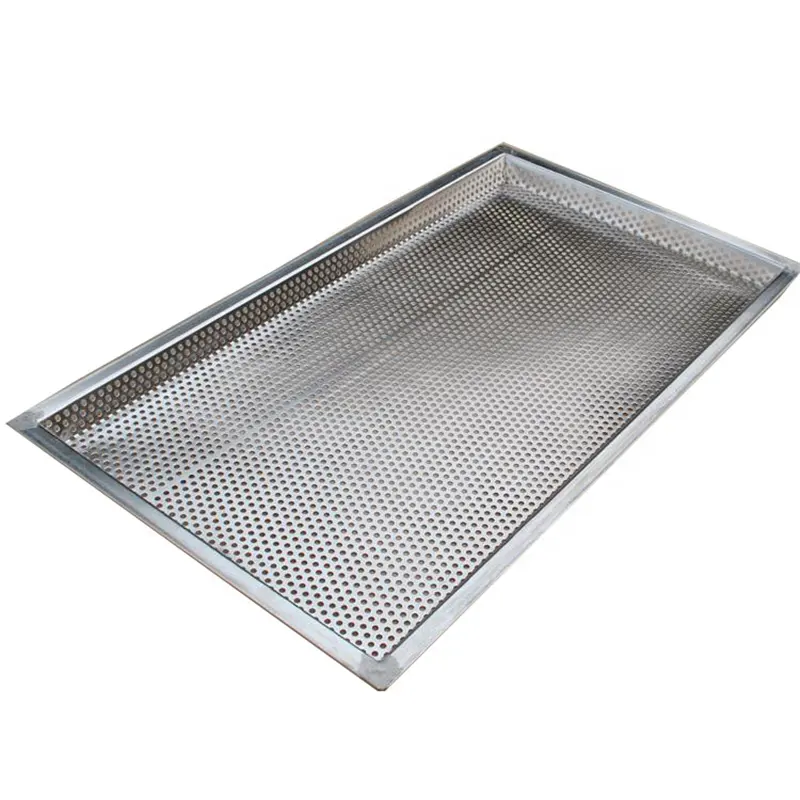
The Ultimate Guide to Perforated Stainless Steel Baking Trays: Enhancing Airflow, Heat Distribution, and Baking Performance
Introduction: Why Perforation Matters in Baking Trays
When it comes to professional baking, the choice of tray can significantly impact the final product. Perforated stainless steel baking trays are designed with tiny holes that allow for superior airflow, even heat distribution, and efficient moisture release. Unlike solid trays, these perforated versions promote a crisper bottom crust, reduce baking time, and prevent soggy undersides. Whether you're baking artisan bread, delicate cookies, or crispy pizzas, understanding the science behind perforation is key to achieving bakery-quality results.
The Science of Airflow and Heat Distribution
The primary advantage of a tray perforated with holes is the enhanced circulation of hot air. In a convection oven, the fan forces air through the perforations, ensuring that heat reaches every part of the food evenly. This eliminates hot spots and cold zones, resulting in uniform baking. For doughs like bread and pizza, this even heat transfer helps develop a consistent crust and fluffy interior. Moreover, the open structure allows heat to rise directly from below, effectively 'frying' the bottom of the food, which is essential for a crispy texture.
Moisture Release and Bottom Texture
One common baking issue is a soggy bottom, often caused by trapped steam between the tray and the food. Perforated sheet pans solve this by allowing moisture to escape through the holes. This is particularly beneficial for items like quiches, pies, or roasted vegetables that tend to release water during cooking. The result is a drier, crispier base that enhances the overall eating experience. For cookies, the perforations also promote even spreading and browning, preventing the edges from over-cooking while the center remains soft.
Hole Patterns and Customization Options
The effectiveness of a perforated bakery tray depends largely on its hole configuration. Common options include round holes (ranging from 1mm to 10mm in diameter), elongated slots, and custom patterns tailored to specific products. The open area (percentage of holes relative to the tray surface) typically varies between 10% and 40%, depending on the application. For example, a higher open area is ideal for drying herbs or fruit, while a lower one might be used for heavy items like pizza to maintain structural integrity. Additionally, trays can be customized in size (e.g., 400×300mm, 600×400mm, 800×600mm) and edge height to fit your oven or rack system.
Material Selection and Thickness
Stainless steel remains the gold standard for baking trays due to its durability and food-safe properties. Grades like 304 and 316 offer excellent corrosion resistance, while 201 provides a cost-effective alternative. For lighter-weight options, aluminum alloys such as 1060, 3003, or 5052 are popular, offering rapid heating and easy handling. The thickness of the tray also matters: 0.5–0.8mm is suitable for light baking, while 1.0–2.0mm is recommended for heavy-duty use or larger trays to prevent warping. Reinforced edges and ribbed structures can further enhance stability under high temperatures.
Applications Across Bakery and Food Processing
Perforated stainless steel trays are versatile tools in any kitchen. For bread baking, the holes allow steam to escape, yielding a crispy crust and airy crumb. Cookies benefit from even browning and reduced spreading. Pizza cooks faster with a properly charred base. Beyond baking, these trays serve as excellent food drying trays for herbs, fruits, and vegetables, facilitating consistent dehydration. They are also widely used in commercial cooling racks, where airflow is crucial for quick temperature reduction.
Application Comparison Table
Here's a quick reference for choosing the right perforated tray based on your application:
- Bread (artisan loaves, baguettes): Round holes (3-6mm), open area 15-25%, thickness 0.8-1.2mm
- Cookies and biscuits: Round holes (1-3mm), open area 10-20%, thickness 0.5-1.0mm
- Pizza: Elongated slots or round holes (5-10mm), open area 20-30%, thickness 1.0-2.0mm
- Drying (fruits, vegetables, herbs): Round holes (4-10mm), open area 25-40%, thickness 0.8-1.5mm
- Cooling: Round holes (1.5-3mm), open area 15-25%, thickness 0.5-1.0mm
These specifications serve as a starting point; always test with your specific product to optimize results.
Selecting the Right Tray: Formula and Considerations
While there's no one-size-fits-all formula, a practical approach is to balance open area with tray strength. A higher open area improves airflow but reduces load-bearing capacity. Consider the weight of your products and the tray's support system. For example, if you're baking heavy pizza doughs, choose a thicker tray (≥1.5mm) with moderate perforation. For lightweight cookies, a thinner tray with more holes will suffice. Always ensure the tray fits your oven and can withstand repeated temperature cycles without deforming.
Maintenance and Durability
To prolong the life of your stainless steel baking tray, hand washing is recommended, especially if the tray has a non-stick coating. Avoid abrasive cleaners that can scratch the surface and create crevices for bacteria. For stubborn residues, soak in warm soapy water. Also, allow the tray to cool before washing to prevent warping. With proper care, a high-quality perforated tray can last for years, making it a worthwhile investment for any serious baker.
Frequently Asked Questions
Q1: Can I use a perforated tray directly on the oven rack?Yes, perforated trays are designed to be placed directly on the rack, but ensure the tray is sturdy enough to support the weight. For heavy items, consider using a solid tray underneath to catch drips.
Q2: Will food stick to the perforations?Some sticking can occur, especially with sticky doughs. Using parchment paper or a light oil spray can help. Alternatively, consider trays with a non-stick coating.
Q3: How do I clean a perforated tray effectively?Soak the tray in warm soapy water to loosen debris, then scrub with a soft brush. A baking soda paste can help remove stubborn stains. Rinse thoroughly and dry immediately.
Q4: What open area is best for baking bread?For bread, an open area of 15-25% works well, allowing for moisture escape while providing adequate support. Test with different patterns to find your ideal crust.
Conclusion and Call to Action
In summary, perforated stainless steel baking trays are a game-changer for bakers seeking professional results. By understanding how perforation affects airflow, heat distribution, and moisture release, you can select the perfect tray for your needs. Whether you're a home baker or a commercial producer, consider incorporating perforated trays into your setup to elevate your baked goods and streamline your drying processes. Ready to upgrade your baking tools? Explore our range of customizable perforated trays and find the perfect match for your kitchen!