





The Ultimate Guide to Stainless Steel Bread Pans: Loaf Pans vs. Flat Trays, Materials & Buying Tips
Introduction to Stainless Steel Bread Pans
When it comes to commercial baking, the choice of stainless steel bread pan can significantly impact the quality of your baked goods and the efficiency of your bakery operation. Unlike traditional carbon steel or aluminum pans, stainless steel offers superior durability, corrosion resistance, and ease of cleaning. However, not all bread pans are created equal. In this guide, we will break down the differences between loaf pans and flat bread trays, explore the various types of pans available, and provide essential tips for selecting the right one for your bakery.
Loaf Pan vs. Flat Bread Tray: Key Differences
Loaf pans are designed for baking bread with a defined shape, such as sandwich loaves, brioche, or pound cakes. They typically have tall, straight or slightly tapered sides, which help the dough rise upward and create a uniform crumb structure. On the other hand, flat bread trays (also known as baking sheets or trays) are used for items like baguettes, rolls, flatbreads, and pastries. They have no sides or very low edges, allowing for maximum airflow and even browning on all sides. The choice between the two depends on the products you plan to bake. For a bakery that produces both sandwich breads and artisan rolls, investing in both types of stainless steel baking pans is essential.
Types of Stainless Steel Bread Pans
Within the category of bread pans, there are several specialized forms:
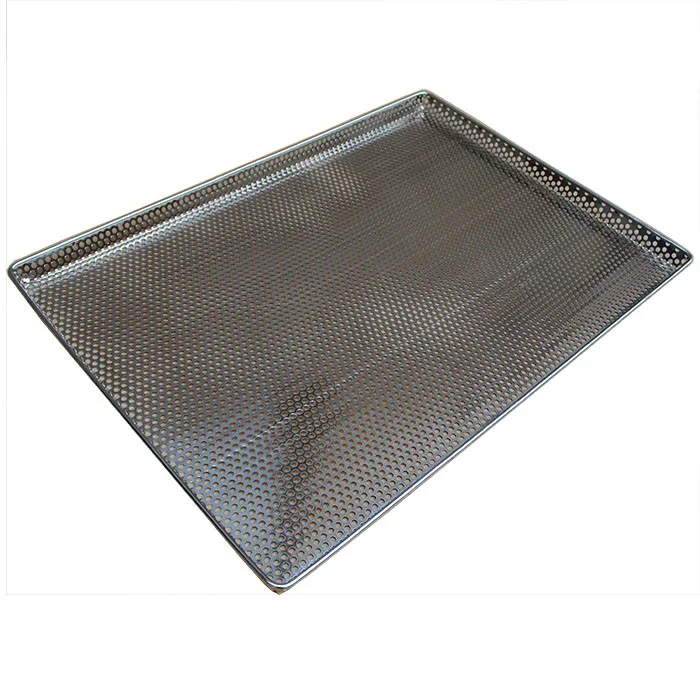
Stainless steel loaf pans are the most common, available in various sizes (e.g., 9x5x3 inches). They are perfect for home bakers and small bakeries alike. Covered loaf pans (also called Pullman pans) come with a sliding lid, which enables you to produce square, even-shaped sandwich bread. These are ideal for making uniform slices for commercial use. Multi-loaf pans (or muffin-top style) feature multiple compartments in a single pan, increasing productivity while saving oven space. These are excellent for producing small individual loaves or rolls. On the tray side, flat bread trays are essential for free-form loaves, while perforated bread trays (with small holes) enhance airflow, resulting in crispier crusts – a favorite for artisan bakers. Each type serves a unique purpose, and understanding their benefits will help you make an informed purchase.
Material Quality: Why SUS 304 Matters
When selecting a commercial bread pan, the material is the most critical factor. The industry standard is SUS 304 stainless steel, which contains 18% chromium and 8% nickel. This composition provides excellent resistance to rust and corrosion, even when exposed to acidic dough ingredients or frequent cleaning. In contrast, lower-grade steels like 201 may be more affordable but are prone to corrosion over time. For a long-lasting investment, always choose SUS 304. Some high-end pans use SUS 316, which includes molybdenum for enhanced resistance to salt and chemicals – ideal for bakeries that use high-sodium doughs or harsh cleaning agents.
Manufacturing Considerations for Quality and Durability
The performance of a stainless steel loaf pan is not just about the material; the manufacturing process equally impacts its lifespan and usability.
Plate Thickness: The thickness of the stainless steel sheet typically ranges from 0.5 mm to 2.0 mm. Thinner sheets (0.5-0.7 mm) are suitable for lightweight items like muffins or small loaves, while thicker sheets (1.0-1.5 mm) are required for heavy doughs or large pans. Thicker steel resists warping and ensures even heat distribution, but it also increases weight and cost. For most commercial applications, a thickness of 0.8-1.0 mm offers a good balance.
Bending and Forming: The way a pan is bent determines its structural integrity. Look for seamless, smooth bends without sharp angles that could cause weak points or food trapping. High-quality pans use precision bending to create uniform corners and edges.
Welding: If the pan has seams, they should be spot-welded or seam-welded with precision. Poor welding can lead to rust spots and hygiene issues. A properly welded pan should have smooth, polished joints that are easy to clean and free of crevices.
Demolding (Non-stick) Treatment: To prevent dough from sticking, many pans undergo a demolding treatment. This can be a physical coating (like Teflon) or a chemical passivation layer on the stainless steel surface. Some bakeries prefer untreated stainless steel and use parchment paper or oiling. If you choose a treated pan, ensure it is FDA-approved and safe for food contact.
Edge Finishing and Corner Radius: Sharp edges can damage gloves or cause injury. Look for pans with rounded corners and rolled or turned edges. A slightly rounded corner radius also helps with cleaning and prevents dough accumulation. Customization: Many manufacturers offer custom sizes to fit your specific ovens or recipes. When ordering custom pans, consider the dimensions of your baking sheets, your oven capacity, and the type of bread you produce. Customization might also include special hole patterns for perforated trays.
Comparison Table: Loaf Pans vs. Flat Trays (Visual Guide)
Here is a quick comparison to help you decide:
| Feature | Loaf Pan | Flat Bread Tray |
|---|---|---|
| Best For | Sandwich loaves, pound cakes | Baguettes, rolls, flatbreads |
| Shape | Tall, rectangular with high sides | Flat with low or no sides |
| Airflow | Restricted (sides direct heat) | Excellent (open surface) |
| Crust Texture | Soft and even | Crispy and blistered |
| Common Sizes | 9x5x3 inch, 12x4x4 inch | 18x13 inch, 17x12 inch |
| Productivity | High for batch baking | High for variety baking |
Buying Guide: How to Choose the Right Pan
When purchasing bread baking trays for your bakery, follow these steps:
1. Identify your product range and determine whether you need loaf pans, flat trays, or both. 2. Choose the appropriate gauge (thickness) based on your production volume and dough weight. 3. Decide on the material: SUS 304 for most bakeries, SUS 316 for high-corrosion environments. 4. Consider whether you need perforations for specific products. 5. Verify the pan’s dimensions fit your oven or rack. 6. Inspect the finishing for smooth edges and proper welding. 7. Ask about custom options if you have unique requirements.
Frequently Asked Questions (FAQ)
Q: Can I use stainless steel pans in a commercial dishwasher? A: Yes, SUS 304 pans are dishwasher-safe, but frequent washing with high-alkaline detergents may dull the surface. Hand washing is gentler and extends the pan’s appearance.
Q: How do I prevent bread from sticking to a stainless steel pan? A: Even with demolding treatment, it’s wise to grease the pan or use parchment paper. For stainless steel loaf pans, a light coat of oil or butter before adding dough works well.
Q: Are perforated bread trays worth the extra cost? A: If you bake artisan crusty bread, yes. The holes allow moisture to escape and promote even browning, giving you that professional bakery texture.
Q: What is the lead time for custom-size pans? A: Typically 2-4 weeks, depending on the manufacturer. Provide precise dimensions and any special features to speed up the process.
Q: How long do stainless steel pans last? A: With proper care, they can last a decade or more. They resist corrosion, rust, and warping better than aluminum or carbon steel.
Conclusion
Investing in high-quality stainless steel loaf pans and bakery trays is a smart move for any bakery. They offer durability, hygiene, and superior baking performance. By understanding the differences between loaf pans and flat bread trays, and focusing on material and manufacturing details, you can make an informed choice that will serve your business for years. For commercial buyers, consider partnering with a reputable manufacturer who can provide custom solutions and bulk pricing.
Ready to upgrade your bakery equipment? Contact us today for a quote on high-quality stainless steel bread pans, or request a free sample to test our craftsmanship.