





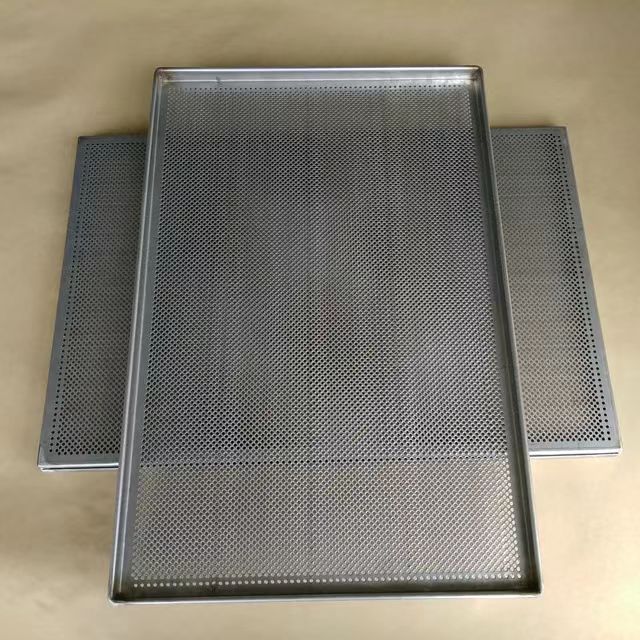
The Ultimate Guide to SUS 304 Cookie Baking Tray: Advantages, Limitations, and Buying Tips
Introduction to SUS 304 Cookie Baking Tray
The SUS 304 cookie baking tray is a premium choice for both home bakers and commercial kitchens. Made from 304-grade stainless steel, it offers a balance of durability, hygiene, and performance. Whether you are baking delicate cookies or hearty biscuits, this tray ensures even heat distribution and long-lasting service. In this article, we explore its advantages and limitations, with comparisons to ordinary steel, aluminum, and lower-grade stainless steel trays.
Food Contact Safety and Non-Toxic Sheet Pan
A key advantage of SUS 304 is its suitability for direct food contact. Unlike some coatings or low-grade metals, 304 stainless steel does not leach harmful substances under normal baking conditions. This makes it a popular material for a non toxic sheet pan. It is widely used in commercial settings where food safety regulations are strict. However, it is important to note that no material is absolutely "non-toxic" in all scenarios; proper use and maintenance are essential.
Corrosion Resistance and Durability
SUS 304 contains 18% chromium and 8% nickel, forming a passive layer that resists corrosion from acidic foods like tomato sauce or citrus. This makes it ideal for baking fruit-filled cookies or savory treats. In contrast, ordinary steel trays may rust over time, especially when exposed to moisture. Aluminum baking pans are lightweight but can corrode with acidic foods and may react with certain ingredients. Lower-grade stainless steel (e.g., SUS 201) offers less corrosion resistance and may discolor after repeated use.
Heat Tolerance and Anti-Warping Design
SUS 304 can withstand temperatures up to 900°C (1650°F) in intermittent service, well above typical baking temperatures of 175-230°C (350-450°F). However, thin trays may warp under rapid temperature changes. To counter this, quality stainless steel baking tray often features a reinforced edge structure or a thicker gauge. Look for trays with a rolled or shaped edge to minimize warping. Thicker gauges (1.0-1.5 mm) are recommended for heavy-duty commercial use, while 0.5-0.8 mm suits light home baking.
Surface Finish and Cleaning
The surface finish of a SUS 304 tray affects both food release and cleaning ease. A smooth, polished finish (e.g., 2B or BA) reduces sticking and makes wiping down simple. Unlike aluminum, which can scratch easily, stainless steel maintains its appearance. For sticky cookie dough, a light grease or parchment paper helps. Cleaning is straightforward: soak in warm soapy water, then scrub with a non-abrasive pad. Avoid steel wool to preserve the surface.
Thickness, Edge Structure, and Deformation Prevention
Tray thickness directly impacts performance. Thin trays (0.5-0.8 mm) heat up quickly but may bend under heavy loads. Thicker trays (1.0-2.0 mm) offer better stability and longevity. The edge structure is critical: a closed or encapsulated edge prevents moisture and debris from accumulating, reducing the risk of corrosion. Some trays feature a shaped edge with a wire reinforcement to combat warping. For the best commercial cookie baking tray, choose an SUS 304 tray with a thickness of at least 1.0 mm and a reinforced edge.
Material Comparison Table
| Material | Corrosion Resistance | Heat Tolerance | Weight | Cost | Food Safety |
|---|---|---|---|---|---|
| SUS 304 Stainless Steel | Excellent | High (up to 900°C) | Moderate | Mid-High | Excellent |
| Ordinary Steel | Poor (rusts easily) | High | Heavy | Low | Poor (coating may chip) |
| Aluminum | Fair (reacts to acids) | Moderate | Light | Low-Mid | Fair (reactive) |
| SUS 201 Stainless Steel | Moderate | High | Moderate | Low-Mid | Good |
Stainless Steel Cookie Sheet vs. Alternatives
A stainless steel cookie sheet made from SUS 304 outperforms aluminum in durability and food safety. Aluminum pans are lighter and heat faster but may warp and react with foods. Ordinary steel trays require careful seasoning or coating, which can fail. SUS 304 is also more hygienic than low-grade stainless steel, which may contain higher impurities. For high-volume bakeries, the investment in SUS 304 pays off through longer service life and consistent results.
Procurement FAQ
A: For commercial ovens, a thickness of 1.0-1.5 mm is recommended. Thicker trays (1.5 mm) resist warping better under heavy use and large loads. Thin trays (0.5-0.8 mm) are suitable for home use or light items like meringues.
A: Yes, SUS 304 is resistant to acidic ingredients like lemon juice or vinegar. However, prolonged exposure to highly acidic marinades may cause minor surface dulling over time. Rinse promptly after use.
A: Use a paste of baking soda and water, scrub gently with a non-abrasive sponge, and rinse. For burnt-on residue, soak in hot water with dish soap. Avoid harsh chemicals that can damage the surface.
A: SUS 304 is considered food-safe and does not leach harmful metals under normal baking conditions. However, it is best to avoid scratching the surface and to follow manufacturer guidelines.
A: Rolled or closed edges prevent moisture ingress and reduce the risk of rust at the edges. They also add strength against bending. Some trays have wire-reinforced edges for extra anti-warping capability.
B2B Inquiry Call to Action
If you are looking for a reliable supplier of SUS 304 cookie baking trays, we offer custom sizes and thicknesses to meet your baking needs. Contact us today for bulk pricing and samples. Our trays are designed for commercial cookie baking tray performance, ensuring durability and consistent results. Request a quote now and upgrade your bakery with premium stainless steel baking trays.Q: What gauge of SUS 304 cookie baking tray is best for commercial use?Q: Can I use SUS 304 trays with acidic cookie recipes?Q: How do I clean stubborn stains on a stainless steel tray?Q: Is SUS 304 a non-toxic sheet pan material?Q: How does the edge structure affect performance?