


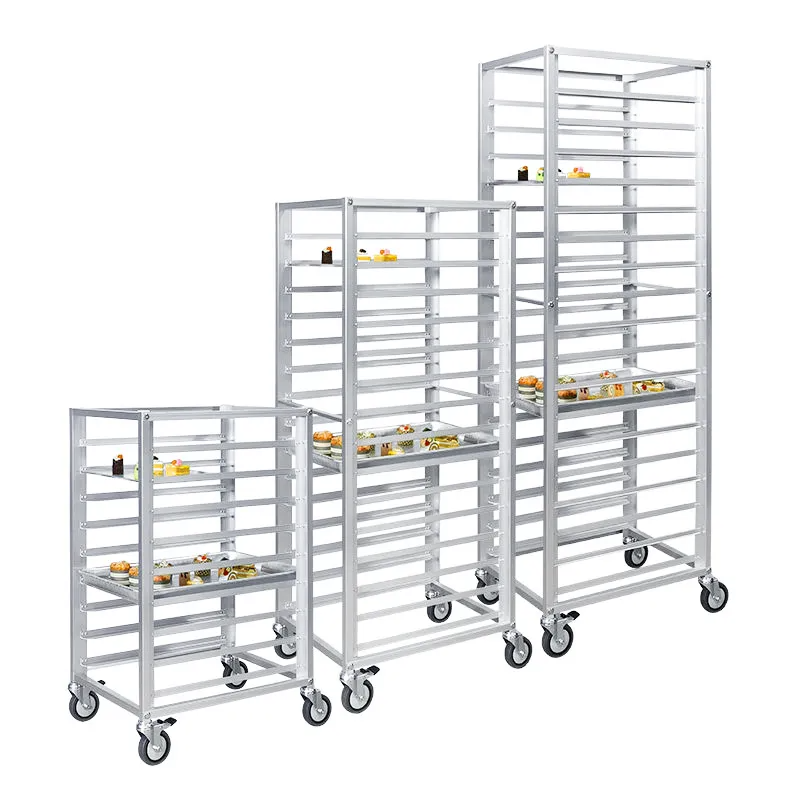
Vegetable Drying Trolley Stainless Steel: The B2B Buyer's Guide to Industrial Drying Solutions
Product Introduction: What Is a Vegetable Drying Trolley Stainless Steel?
A vegetable drying trolley stainless steel is a mobile, multi-tier rack system designed to hold mesh trays or screens during the dehydration of vegetables, fruits, and other food products. Unlike generic shelving, these trolleys are engineered for industrial drying environments—they must withstand high temperatures, humidity, and frequent washdowns while maintaining structural integrity. In a typical vegetable processing line, trolleys are loaded with sliced or blanched vegetables, then wheeled into hot air dryers, solar drying rooms, or freeze-drying units. The primary problem they solve is batch handling efficiency: they allow uniform airflow around each piece, reduce labor during loading/unloading, and protect products from contamination. Without a purpose-built trolley, processors risk uneven drying, product loss, and costly downtime.
Product Features: Engineering for Industrial Durability
Industrial drying trolleys are not simply welded shelves. Key design features include:
- Reinforced frame structure: The load stability during repeated transportation is improved by cross-bracing and corner gussets, which prevent racking (twisting) when moving heavy loads over uneven floors.
- Perforated or mesh trays: High open-area ratio ensures optimal airflow, reducing drying time by up to 20% compared to solid trays.
- Stainless steel construction: Resists corrosion from moisture, acidic vegetable juices, and cleaning chemicals—critical for HACCP compliance.
- Heavy-duty casters: Swivel wheels with brakes allow smooth movement between processing zones and lock securely during drying.
- Stackable or nesting design: Saves floor space when not in use, a major advantage in crowded facilities.
From a procurement standpoint, the gauge of stainless steel (e.g., 18 gauge vs. 14 gauge) directly impacts load capacity and lifespan. A trolley built with 14-gauge 304 stainless steel frame can handle up to 500 kg per trolley versus 200 kg for lighter 20-gauge alternatives. Always request material certificates to verify grade and thickness.
Applications: Where Stainless Steel Drying Trolleys Excel
These trolleys are indispensable across multiple industries:
- Food processing: Drying onions, garlic, carrots, peppers, and herbs. Trolleys must fit seamlessly into conveyor-fed dryers or batch ovens.
- Bakery: Cooling and drying bread, pastries, and crackers. Stainless steel prevents rust and maintains hygiene.
- Industrial manufacturing: Drying components after washing, such as metal parts or ceramics, where chemical resistance is key.
- Cleaning and sanitation: Post-wash drying of utensils, trays, and containers in central kitchens.
- Storage and transportation: Temporary storage of dried goods before packaging, and safe transport between production areas.
For example, a California-based vegetable dehydrator switched from plastic racks to 304 stainless steel trolleys with 40 mesh trays. The result: reduced drying cycle by 15% and eliminated recurring replacement costs due to cracking. In another case, a spice manufacturer required trolleys that could withstand 120°C for 12 hours—only 316 stainless steel with high-temperature casters met the specification.
Material Selection: 304 vs. 316 vs. 201 Stainless Steel and Aluminum
Choosing the right material is a balance of corrosion resistance, cost, and operating environment:
- 304 stainless steel: The industry standard for food contact. Excellent resistance to organic acids and moisture. Suitable for most vegetable drying up to 80°C. Cost-effective and widely available.
- 316 stainless steel: Superior corrosion resistance, especially against chlorides and harsh cleaning agents. Recommended for high-humidity environments, coastal facilities, or when drying acidic products like tomatoes. Higher cost but longer service life.
- 201 stainless steel: Lower nickel content, lower cost, but reduced corrosion resistance. Not recommended for frequent washdowns or high-humidity drying. Often used for budget applications where stainless appearance is desired but chemical exposure is minimal.
- Aluminum: Lightweight and good thermal conductivity, but prone to oxidation and not as durable under heavy loads. Suitable for low-temperature drying or temporary use, but not ideal for industrial food processing where hygiene and longevity matter.
For B2B buyers, specify 304 or 316 stainless steel for all food-contact surfaces. If your drying process involves salt or brine, insist on 316. Always request a mill test report (MTR) to confirm grade.
Specifications: What to Include in Your RFQ
When sourcing vegetable drying trolleys, provide or request these parameters:
- Dimensions: Overall length x width x height (e.g., 1200 x 800 x 1800 mm). Consider door opening sizes of your dryer.
- Thickness: Frame tube thickness (1.2 mm to 2.0 mm) and tray material thickness (0.8 mm to 1.5 mm).
- Capacity: Number of trays per trolley (typically 20 to 60) and maximum load per tray (5 kg to 25 kg).
- Number of layers: 10, 20, 30, or custom. Layer spacing must accommodate product height.
- Load capacity: Total trolley load (200 kg to 800 kg).
- Mesh size: Aperture (e.g., 5 mm x 5 mm for large pieces, 2 mm x 2 mm for small slices).
- Tray compatibility: Standard tray sizes like 600 x 400 mm, 800 x 600 mm, or custom.
- Surface treatment: Polished, brushed, or passivated for enhanced corrosion resistance.
For example, a European buyer requested trolleys with 25 mm pitch mesh and 30 layers, each holding 10 kg. The supplier provided a CAD drawing for approval before production—a standard step for OEM orders.
Customization Services: OEM and ODM Capabilities
A reliable manufacturer offers full customization to match your production line:
- Custom size: Modify length, width, height, and layer count.
- Custom design: Adjust frame reinforcement, caster type, and handle position.
- Logo: Laser-engraved or stenciled branding on frame or trays.
- Packing: Custom crates or pallet packing for sea freight.
- Special requirements: Anti-static wheels, high-temperature casters (up to 250°C), or food-grade lubricants.
When evaluating a supplier, ask for their production capability: monthly output, in-house welding and polishing, and quality control process. A factory with automated tube cutting and robotic welding ensures consistent quality across large orders. For custom requirements, please contact our team to discuss your specifications and receive a quote within 48 hours.
Procurement Guide: How to Choose the Right Trolley and Supplier
How to choose size? Measure your dryer chamber and door. The trolley must fit with at least 50 mm clearance on all sides for airflow. Also consider the turning radius in your production area.
How to choose material? For most vegetable drying, 304 stainless steel is sufficient. Upgrade to 316 if you dry acidic products or use chlorinated cleaners. Avoid 201 for wet environments.
How to confirm specifications? Request a detailed drawing and material certificate. Check weld quality (no porosity or sharp edges) and caster load ratings.
How to judge supplier capability? Look for ISO 9001 certification, food-grade material certificates, and references from similar industries. A good supplier will offer a sample or video inspection before shipment.
Common pitfalls: underestimating load capacity, ignoring caster quality (cheap casters fail first), and not specifying mesh size for your product. Always order a sample for pilot testing.
Frequently Asked Questions (FAQ)
Q1: What is the typical lead time for a custom vegetable drying trolley?
A: For standard sizes, 15-20 days. For fully custom OEM orders, 25-35 days after drawing approval. Rush orders may be possible with expedited fees.
Q2: Can these trolleys be used in a freezer or blast chiller?
A: Yes, if specified. Stainless steel 304 performs well at low temperatures. Ensure casters are rated for -40°C to avoid brittleness.
Q3: What is the maximum temperature for 304 stainless steel trolleys?
A: Continuous use up to 400°C, but for food drying, typical operating temperatures are 60-120°C. For higher temperatures, consider 316 or specialized alloys.
Q4: How do I clean and maintain the trolleys?
A: Use warm water with mild detergent. Avoid chlorine-based cleaners on 304 to prevent pitting. Rinse and dry promptly. Regular inspection of welds and casters is recommended.
Q5: Do you provide sample trolleys for testing?
A: Yes, we offer sample orders (typically 1-2 units) for evaluation. Contact our team for sample pricing and delivery.
Q6: What is the MOQ for custom orders?
A: MOQ is typically 10 units for custom sizes, but we can accommodate smaller trial orders. Please inquire.
Q7: How are the trolleys packed for shipping?
A: Knock-down packing or assembled with protective film and wooden crates. We ensure safe sea freight transport.
For further technical assistance or to request a quote, please reach out to our engineering team. We are a manufacturer with over 15 years of experience serving food processing clients across North America and Europe.
Image ALT text suggestion: "Stainless steel vegetable drying trolley with mesh trays in a food processing facility."
SEO Information
SEO Title: Vegetable Drying Trolley Stainless Steel | Industrial Supplier
Meta Description: Industrial vegetable drying trolley stainless steel. 304/316 options, custom sizes, OEM. Buy direct from manufacturer for food processing. Request a quote.
SEO Keywords: vegetable drying trolley stainless steel, industrial drying rack, food processing trolley, stainless steel drying cart, vegetable dehydrator trolley, custom drying trolley, OEM drying trolley, 304 stainless steel trolley, vegetable drying rack manufacturer, drying trolley supplier.

